
Lieferung heute & morgen

Qualitätsgarantie

Willkommens-Angebote freischalten: KOSTENLOSE Lieferung | Bis zu 80 % RABATT | Kostenlose 30-Tage-JoyPlus-Testphase
App herunterladen
A wooden puzzle for children and adults can be a simple grasping toy, an educational game or a challenging DIY project, depending on its design. This wide range is precisely what makes choosing the right one so difficult. A puzzle with small components is unsuitable for toddlers, while a simple shape-matching puzzle can quickly leave adults feeling underchallenged.
Before buying, you should therefore consider more than just the design and price. Recommended age, piece size, material information, intended use and space requirements are all important. This helps you avoid common purchasing mistakes.
A product labelled “from 1 year” is not automatically suitable for every child of that age. Developmental stage, grasping ability and the way children handle objects can vary. Loose small parts are particularly problematic for children under three.
With a wooden puzzle from 1 year, the pieces should be large enough and easy to grip. A children’s puzzle with handles can make handling easier. Even so, direct adult supervision is essential. Damaged pieces or loose handles no longer belong in a child’s playroom.
The term sustainable wooden toy says little on its own about the wood’s origin, coating or processing. Look for specific information such as FSC-certified wood, a material declaration, the manufacturer’s address and safety instructions.
According to the product description, the hauck puzzle is made using FSC-certified wood. The HABA model is described as using solid wood and sustainably printed film technology. However, information about chemical properties should always be checked in the product details or with the seller.
A wooden shape-matching puzzle with just a few shapes is aimed at a different audience from a mechanical wooden puzzle with gears and moving parts. 3D models may include numerous small components, a lengthy assembly time and detailed instructions.
If you are looking for a gift, clarify the following in advance: Is a ready-to-play game wanted, or would a longer craft project be more suitable? Should the model later be used as a decoration? Is a USB connection required? These questions help prevent a puzzle from being left unused after a short time.
For toddlers aged 12 months and over, simple designs with a few large pieces are ideal. An educational puzzle for toddlers should make it easy to distinguish between shapes and colours. Large wooden knobs or handles make the pieces easier to remove and insert.
The following points are particularly important for products intended for children under three:
Manufacturer information does not replace an individual assessment of the play situation. Even an age-appropriate product should not be used for chewing or throwing.
The type of wood, paintwork and printing process all affect everyday usability. For a children’s puzzle, durable surfaces and clear material information are useful. FSC information may indicate more responsible forestry practices, but it should not be equated with a complete safety assessment.
Also check whether the seller provides the name of a manufacturer or responsible person within the EU. For products intended for toddlers, information about chemicals, coatings and possible fragrances should be transparent and verifiable. If this information is missing, it is advisable to contact the seller before buying.
A classic shape-matching puzzle generally requires very little space. A 3D wooden puzzle or puzzle construction kit for adults, on the other hand, can be considerably larger. You should therefore check:
Some mechanical models work manually, while others can also be powered via USB. This may make operation easier, but it means that cables, moving parts and a stable surface must all be taken into account.
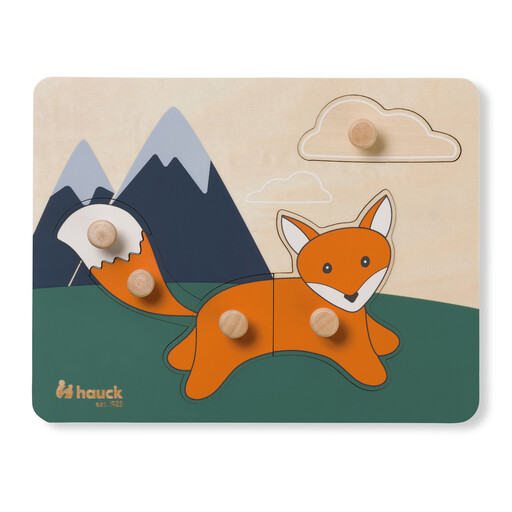
Why this product suits this profile: According to the product information, this simple shape-matching puzzle is intended for children aged 12 months and over and does not require batteries. The handles are designed for small hands.
The design with a small number of animal shapes is more manageable than a complex 3D model. The product description mentions FSC-certified wood and rounded edges.
Dimensions of 22 × 17 × 2 cm, wooden handles and an age recommendation from 12 months.
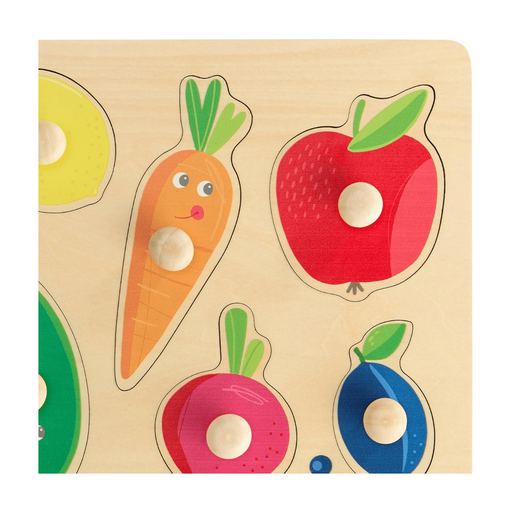
Why this product suits this profile: This first wooden puzzle combines large wooden knobs with colours, fruit and simple shapes. According to the product information, the puzzle board measures 30 × 21 cm.
The large handles help avoid the common mistake of choosing pieces that are too small. Before buying, the information on chemical safety and the coating should be checked in full.
Age recommendation from 12 months, solid wood and a design for matching colours and shapes.
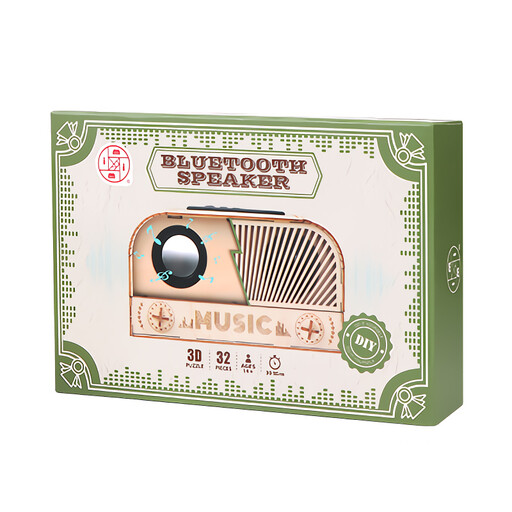
Why this product suits this profile: This DIY puzzle kit combines assembly with Bluetooth speaker functionality. Measuring 23 × 15,6 × 7 cm, it is suitable as a creative indoor or outdoor project for older users.
The age limit of 3 years and the warning about small parts make it clear that this is not a puzzle for toddlers. Assembly should be carried out according to the instructions and under supervision.
Wood and fibreboard materials, DIY assembly and an integrated Bluetooth speaker function.

Why this product suits this profile: According to the product information, this model is intended for people aged 14 and over. It combines a multi-level marble run with gears, a USB motor and LED lighting.
The age and safety information clearly distinguishes this complex mechanical wooden puzzle from toys intended for toddlers. Assembly is best carried out on a sufficiently large, well-lit work surface.
Approximate assembled dimensions of 31,2 × 25,1 × 23 cm, USB-powered motor and ten steel balls according to the product description.
We have put together a complete, regularly updated list of products that fully meet these strict selection criteria and the safety regulations applicable in the EU.
Wooden puzzles should be stored in a dry place away from direct heat. For children’s puzzles, a slightly damp cloth with mild soap is usually sufficient. The pieces should then be dried immediately. Immersing them in water or cleaning them in the dishwasher can warp the wood and damage prints or coatings.
A soft, dry cloth is recommended for 3D and mechanical models. Gears, marble runs and connections should be checked regularly for loose parts. Actual service life depends on use, storage and material quality; a general figure in months or years would not be reliable.
For children aged 12 months and over, simple shape-matching puzzles with large pieces and sturdy handles are suitable. Designs with clearly recognisable shapes and just a few elements are ideal. The manufacturer’s age recommendation must be followed. Direct supervision is required because of the potential choking hazard.
A shape-matching puzzle is assembled flat on a board. It helps children match shapes and designs by inserting individual pieces. A 3D wooden puzzle is assembled into a three-dimensional model and may contain considerably more components as well as requiring more time to assemble. These models are often aimed at older children, teenagers or adults.
That depends on the design. A manual model does not require a power source. According to the product information, the Robotime-Rokr-Marble-Spaceport operates via a USB cable at 5 volts; batteries are not intended for use with it. Before buying, check the connection type, cable length and the available space near a power source.