
Lieferung heute & morgen

Qualitätsgarantie

Willkommens-Angebote freischalten: KOSTENLOSE Lieferung | Bis zu 80 % RABATT | Kostenlose 30-Tage-JoyPlus-Testphase
App herunterladen
A wooden shelf and organiser can neatly store books, plants, kitchen utensils or personal accessories. At the same time, models vary considerably in dimensions, load capacity, materials and assembly. A rustic finish alone says little about how practical a product will be in everyday use.
Typical purchasing mistakes arise from three factors:
Before buying, it is therefore worth checking the technical specifications rather than focusing solely on the design, product photos or terms such as “solid wood” and “industrial design”.
“Wood” can mean solid wood, MDF, chipboard or a combination of different materials. A wooden bookcase with a metal frame, for example, may be designed for stability, while a lightweight organiser is more likely to be intended for smaller items.
Look out for the following details:
For kitchens and bathrooms, check whether the supplier expressly states that the product is suitable for use in damp environments. Wooden surfaces should not be left wet for extended periods.
A freestanding shelf, corner shelf or decorative shelving unit must not only fit into the available alcove; it must also be safe to load. Therefore, check:
One example is a seven-tier corner shelf measuring 60 × 60 × 200 cm. According to the product information, each shelf can hold up to 45 kg. Another bookcase, 180 cm tall and fitted with a metal frame, states a capacity of up to 34 kg per shelf. Such figures are only meaningful when the load is distributed evenly and the unit is assembled correctly.
For a desk shelf or jewellery organiser, compact dimensions and the layout of the compartments are more important than a high load capacity. A watch holder, ring holder or jewellery tray should be sized so that accessories remain visible and do not rub against one another.
Freestanding shelves with a considerable height require a stable surface. Adjustable feet can compensate for unevenness, but they do not replace anti-tip protection. For tall models, use the supplied anti-tip kit and choose the appropriate fixings for the wall.
For a wall shelf, there are additional points to consider:
Small organisers that require no assembly, such as a jewellery tray or display stand, are more flexible. However, they should be placed on a level, dry surface.
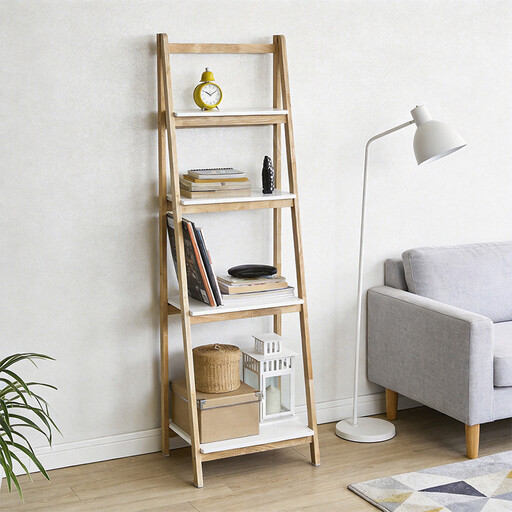
Why this product suits this profile: The folding shelf is ideal for smaller rooms, rented homes or locations that change regularly. It can be used as a bookcase, kitchen shelf or plant stand, then stored away to save space when not in use.
The product details state specific dimensions of approximately 42 × 140 × 34 cm and a capacity of up to 15 kg per shelf. This makes it easier to assess the space required before buying.
Four shelves, a rubberwood frame, MDF shelves and a folding design. According to the supplier, the assembly accessories and instructions are included.
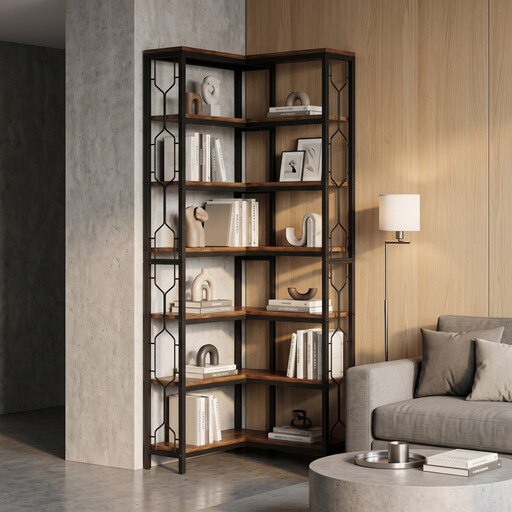
Why this product suits this profile: The L-shaped design makes use of corners in the living room, kitchen or home office. Seven shelves provide organised space for books, plants and decorations.
The specifications include external dimensions of 60 × 60 × 200 cm, a capacity of up to 45 kg per shelf and a wall-mounted anti-tip kit.
E0 chipboard, a powder-coated metal frame, adjustable feet and side barriers to help prevent smaller items from falling.
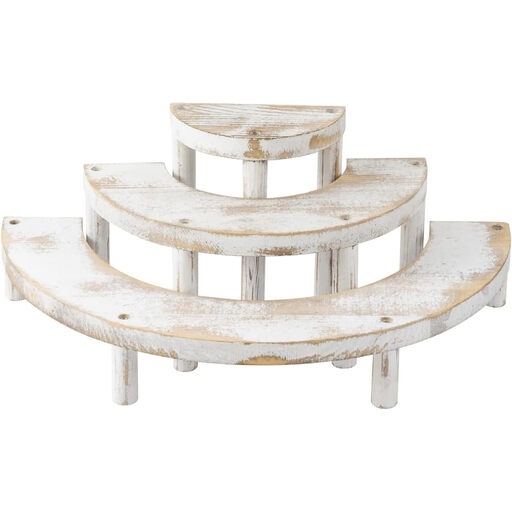
Why this product suits this profile: The three-tier display stand is designed for jewellery, cosmetics, spices, figurines or small food items. According to the product description, the individual sections can also be arranged separately.
The three tiers make items visible at different heights. The stated dimensions of approximately 19 × 38.6 × 15.3 cm help with planning space on a worktop or sales counter.
Wooden construction with a whitewashed finish, three tiers and versatile use as a jewellery organiser, spice rack or decorative display stand.
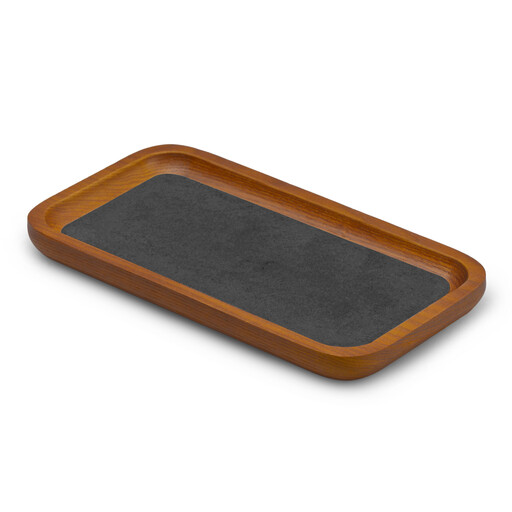
Why this product suits this profile: The flat jewellery tray is suitable for rings, bracelets, necklaces, earrings and watches – at home, in a shop window or for product presentations.
The dimensions of 18 × 10 × 1.5 cm are clearly stated. A microfibre lining separates the jewellery from the wooden surface; jewellery is not included.
Solid wood, a microfibre interior, no assembly required and a compact design for a bedside table, chest of drawers, shop counter or photography.
We have put together a complete, regularly updated list of products that fully meet these strict selection criteria and the safety regulations applicable in the EU.
The service life of a wooden shelf depends heavily on the load, moisture and assembly. For most models, the following measures are advisable:
A rustic shelf or industrial-style shelf can complement many interior styles. However, when choosing, the available space, material and intended use should take priority. Retailers, jewellers and boutiques should also check whether the surface is suitable for the intended display purpose and whether there is enough room to arrange merchandise safely.
For many paperbacks, a depth of around 20 to 25 cm is sufficient. Folders, coffee-table books and larger decorative objects require more space. The usable shelf width is also important, as frames or side barriers can reduce the area that is actually available.
A wall shelf saves floor space and is suitable for hallways, desks or small rooms. However, it requires suitable wall fixings. A freestanding shelf is easier to move, but needs sufficient floor space and should be secured against tipping if it is particularly tall.
Sort rings, necklaces, bracelets and watches by type or frequency of use. A lined tray, ring holder or separate watch holder can help reduce contact between pieces. Keep organisers dry and clean delicate interior surfaces only in accordance with the manufacturer’s instructions.