
Lieferung heute & morgen

Qualitätsgarantie

Willkommens-Angebote freischalten: KOSTENLOSE Lieferung | Bis zu 80 % RABATT | Kostenlose 30-Tage-JoyPlus-Testphase
App herunterladen
A freestanding wooden shelf is more than just a storage solution; it's a piece of furniture that creates order while defining a room's character. However, the search for the perfect model can quickly become overwhelming. Many buyers only realise after assembly that the shelf wobbles, the material doesn't meet their expectations, or the dimensions are impractical. As your Joybuy Product Recommendation Officer, I'm here to help you navigate these pitfalls and make an informed decision.
Before you invest, you should be aware of the typical problems that often only become apparent once you get home.
To avoid buyer's remorse, you should carefully examine three core aspects. These parameters determine the quality, safety, and functionality of your new shelf.
The choice of material affects not only the look but also the sturdiness and price.
A shelf must stand securely and be able to support the weight of its contents.
The shelf must fit your space and your needs.
Here are some recommendations tailored to different user profiles that meet the quality criteria mentioned above.
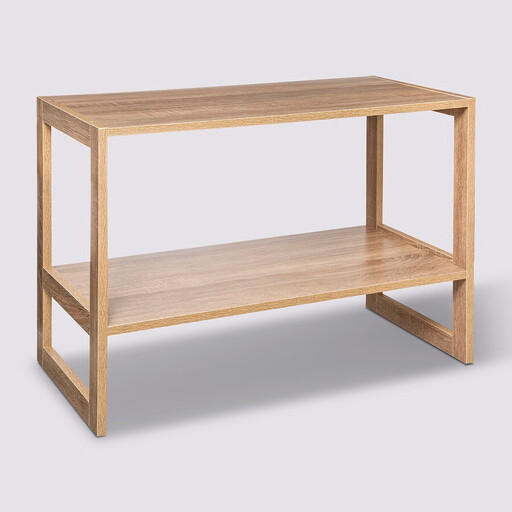
Why it's a great fit: Ideal for a first apartment, a home office, or as a flexible addition. It offers functional storage at a very accessible price point without compromising on basic stability.
The product description clearly states that it is made of particle board—no false promises. As part of a modular system, it avoids the trap of a rigid, inflexible design.
Stackable and expandable to grow with your needs. The maximum load capacity of 20 kg is sufficient for everyday use.
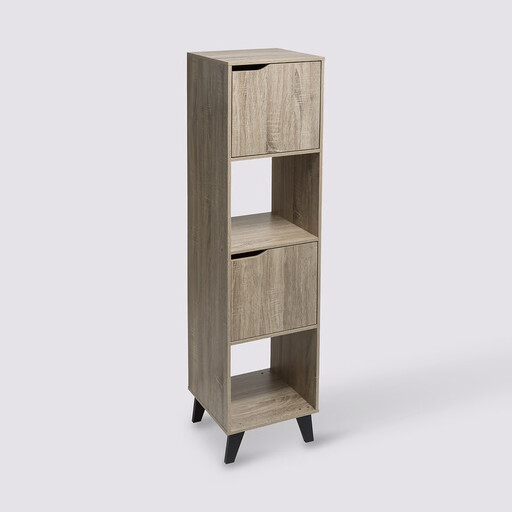
Why it's a great fit: Perfect for the living room or home office. The combination of open shelves for decor and books, along with closed compartments for binders and miscellaneous items, creates a tidy, organised look.
This shelf solves the problem of impractical designs by combining different types of storage in one slim unit. The material specifications (particle board, pine legs) are transparent.
A combination of 2 open and 2 closed compartments. The maximum load capacity of 35 kg and the FSC certification are clear advantages.
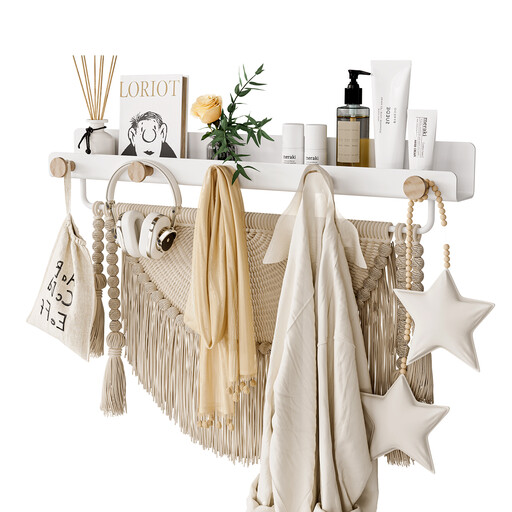
Why it's a great fit: A smart solution for entryways, bathrooms, or small kitchens where every inch counts. It combines shelf space with hooks and a rail to maximise wall storage.
This wall-mounted shelf is the direct answer to bulky freestanding units in tight spaces. The material combination of FSC-certified rubberwood and powder-coated steel is clearly declared and modern.
Multifunctional 3-in-1 solution (shelf, 5 hooks, towel rail). The maximum load capacity of approx. 20 kg (44 lb) is very solid for a wall shelf of this type.
We have compiled a complete, up-to-date list of products that fully meet these strict selection criteria and all applicable safety standards.
Most manufacturers include what is known as an anti-tip kit. This is usually a bracket or a strap that connects the shelf to the wall. Use wall plugs and screws appropriate for your wall type (e.g., hollow-wall anchors for plasterboard, expansion anchors for concrete). Mount the anti-tip kit at the top of the shelf to minimise leverage and effectively prevent it from tipping over.
FSC stands for "Forest Stewardship Council". A product with this seal guarantees that the wood used comes from forests that are responsibly managed according to strict ecological and social criteria. This includes protecting ecosystems, upholding workers' rights, and preventing illegal logging.