Who this camera set-up is right for

Photographers focused on carving details

If you want to show fine notches and wood grain up close, check the lens’s magnification ratio rather than just the camera’s megapixel count. Canon Academy explains that depth of field is shallower in close-up photography than when shooting from further away.

Photographers creating shop or portfolio images

For consistent overall shots from several angles, a flexible composition and a fixed camera position are helpful. Canon Germany describes product photography of hand-carved wooden objects, while the Canon R50 kit includes a zoom lens for framing your shots in different ways.

Photographers who want accurate wood colours

If the window light changes, check the white balance and adjust it if needed. Nikon Germany notes that changing light conditions may mean you need to adjust the white balance.

What to look for when buying

Buying priority What to check before buying Who it matters most to
Show carving details up close Check the magnification ratio of the specific lens and the available working distance. If you want notches or tool marks to fill the frame, the lens’s close-focusing capability matters. Around 36% of consumers put magnifying details first.
Take consistent shots of whole spoons Consider the flexibility of the framing, the included lens and a stable camera position. Consistent composition matters for shop or portfolio images showing several similar angles. Around 29% of consumers prioritise consistent overall shots.
Control wood colours in window light Check how easy it is to adjust the white balance, and take a test shot if the light changes. If you want wood tones to look consistent in changing daylight, you’ll need a controlled shooting set-up. Around 21% of consumers put colour accuracy first.
Understand what’s included and the overall system cost Check whether it’s a body or a kit, as well as the lens mount and any additional items you may need to buy. If you’re mainly looking for a complete, straightforward system, what’s included in the specific offer is key. Around 14% of consumers prioritise the overall equipment package.

Avoid common buying mistakes

  • Assuming a short minimum focusing distance means 1:1 macro

    Minimum focusing distance and magnification ratio describe different properties. Canon lists a maximum magnification of 0.26x for the RF-S 18–45 mm when focusing manually.

    Compare the magnification ratio of the lens actually included with the size you want the carved details to appear in your image.

  • Assuming a smaller aperture is a free way to increase depth of field

    Close-up shots have shallow depth of field. Stopping down can increase it, but lets less light reach the sensor and may require longer exposure times.

    Keep the camera and spoon steady, and check the results in the window light you’ll actually be using.

  • Comparing camera bodies and kits as if they include the same equipment

    A camera body offer doesn’t automatically include a lens. Nikon lists the Z50II as a camera body, while the Canon EOS R50 kit includes an RF-S 18–45 mm lens.

    Check what’s included and the lens mount before deciding which equipment you need for your shots.

Relevant brands at a glance

Canon

The EOS R50 kit with RF-S 18–45 mm is a flexible starting point for overall shots. The RF 35 mm F1.8 Macro is a close-up option sold separately.

  • Canon lists a maximum magnification of 0.14x to 0.26x for the kit zoom, depending on the focal length and focusing method.
  • Canon lists a magnification ratio of 1:2 for the RF 35 mm Macro. The kit zoom is therefore not equivalent to a 1:1 macro lens.

Nikon

The Z50II is a DX camera body; the NIKKOR Z MC 50 mm 1:2.8 is a separate macro option for the Z system.

  • Nikon lists a magnification ratio of 1:1 for the lens and a distance of around 5 cm between the lens and subject when focusing close up.
  • Check the camera body and lens separately for compatibility and what’s included.

Sony

APS-C E-mount cameras such as the α6700 can be paired with the E 30 mm F3.5 Macro SEL30M35, sold separately.

  • Sony lists a magnification ratio of 1:1 and a minimum focusing distance of 2.4 cm for the SEL30M35.
  • The very close focusing distance can limit the space available for lighting in front of the subject. These lens specifications don’t automatically apply to another E-mount lens or an α6700 kit.

Fujifilm

The XF30mmF2.8 R LM WR Macro is a 1:1 macro option for the X system, suitable if you want to capture both carving details and more general compositions.

  • Fujifilm lists a 30 mm focal length, a magnification ratio of 1:1 and a minimum focusing distance of 0.1 m, measured from the focal plane.
  • The focusing distance isn’t the same as the clear space in front of the front element. You’ll also need a compatible X camera.

OM SYSTEM

According to the manufacturer, the OM-5 Mark II offers Focus Stacking. The M.Zuiko Digital ED 30 mm F3.5 Macro is a separate close-up option.

  • The Focus Stacking feature may be useful for subjects with several planes of focus.
  • OM SYSTEM lists a minimum working distance of 14 mm for the lens. Check that the feature is supported by your specific camera and lens combination; the short working distance can make lighting more difficult.

Joybuy products

The following Joybuy camera options differ in design and how you frame your shots. For close-ups of carved spoons, also check whether a suitable lens is included and what magnification ratio it offers.
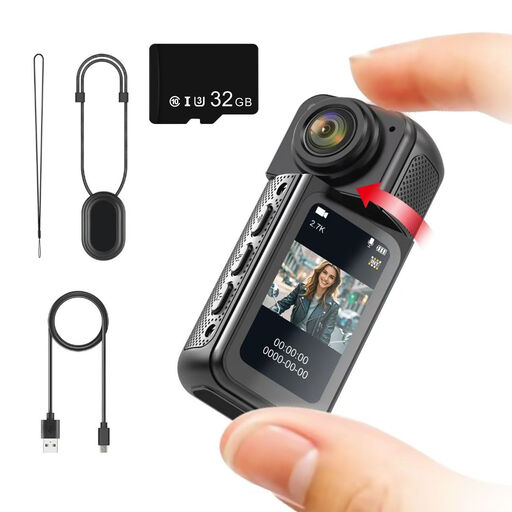
KINSI 2.7K mini action camera with rotating lens and display

KINSI 2.7K mini action camera, 180° rotating lens

The rotating lens and display let you shoot in different orientations, but this doesn’t establish whether the camera is suitable for capturing carving details up close.

Specifications listed in the product title: 1.47-inch IPS display, magnetic mount and weight of 35.6 g.

View at Joybuy
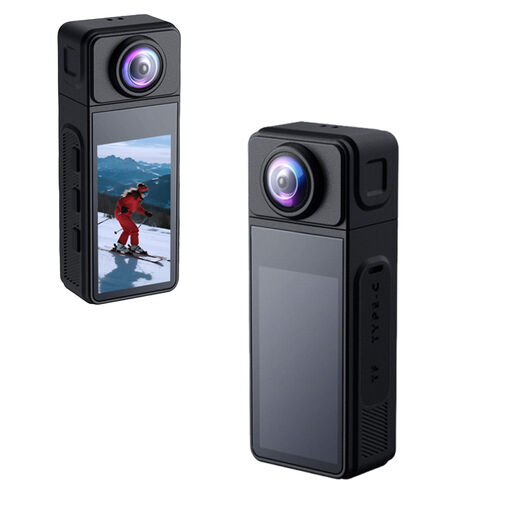
KINSI 2K mini action camera with 270° rotating lens

KINSI 2K mini action camera, 270° rotating lens

The rotating lens lets you shoot in different orientations, but that doesn’t show whether the camera can capture small carving details at a larger scale.

Specifications listed in the product title: 1.86-inch IPS display, Type-C port, TF card slot and 1/4-inch thread.

View at Joybuy

Sony Alpha 6100 APS-C camera with 16–50 mm power zoom lens

Sony Alpha 6100 APS-C camera with 16–50 mm power zoom lens

According to the product details, the zoom lens lets you vary your framing. The tilting display can also make it easier to check your shots from different angles.

Specifications listed in the product title: autofocus with eye detection for people and animals, 4K video and a tilting display. No macro magnification ratio is specified, so check whether the lens is suitable for your close-up shots.

View at Joybuy
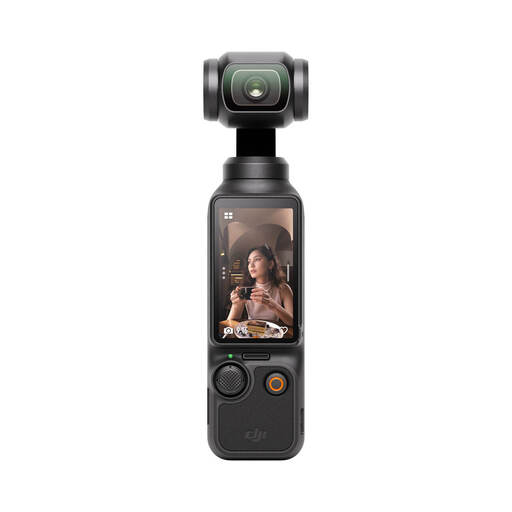
DJI Osmo Pocket 3 with rotating touchscreen

DJI Osmo Pocket 3

The rotating touchscreen helps you check your shots in different orientations, but the product details don’t automatically confirm that it’s suitable for macro shots of carving details.

Specifications listed in the product title: 1-inch CMOS sensor, 4K/120fps video, 3-axis stabilisation and 2-inch touchscreen.

View at Joybuy

Frequently asked questions

Do I need a macro lens to photograph a whole spoon?

No, a suitable zoom lens may be enough for overall shots. If you want small carving marks to fill the frame, compare the magnification ratio of the specific lens with a macro option. Canon lists a maximum magnification of 0.26x for the RF-S 18–45 mm when focusing manually.

What can I do if only part of the carving is in focus in a close-up?

Close-up shots have shallow depth of field. Stopping down can increase it, but often requires longer exposure times, so keep the camera and stationary spoon steady. Focus bracketing is another option, if your specific camera and lens combination supports it.

How can I avoid wood tones looking different between shots?

Keep the lighting as consistent as possible and check the white balance with a test shot. Adjust it if the window light changes; this is a shooting technique, not a guarantee of a particular level of colour accuracy from a camera.

What should I check about what’s included and what to do if there’s a fault?

Before buying, check whether a lens is included and whether it can capture the details you want. If an item bought from a business seller is faulty, your statutory rights are against the seller. The consumer advice centre Verbraucherzentrale distinguishes these rights from a voluntary manufacturer’s guarantee.

Can I cancel an online camera purchase in Germany?

For a typical online consumer purchase from a business, you generally have a 14-day right to cancel from the day you receive the goods. Exceptions and return postage costs may apply. The European Union’s guidance on returns and cancellations distinguishes this right from claims relating to faulty goods.