
Lieferung heute & morgen

Qualitätsgarantie

Willkommens-Angebote freischalten: KOSTENLOSE Lieferung | Bis zu 80 % RABATT | Kostenlose 30-Tage-JoyPlus-Testphase
App herunterladen
A wooden table lamp brings natural warmth and stylish design to any room. However, the market is flooded with models whose true quality is often revealed only after you buy them. Many buyers find themselves frustrated with unstable construction, inferior materials advertised as real wood, or inadequate light output. To help you make an informed decision, we'll illuminate the most common pitfalls and show you which technical features truly matter.
Before you choose a model, you should be aware of the typical problems often hidden behind an attractive exterior.
To avoid a bad purchase, focus on three objective criteria that determine the longevity and functionality of your new wooden table lamp.
The quality of the wood is fundamental. Look for terms like solid wood or specific wood types such as pine, ash, rubberwood, or oak in the product description. These woods are robust, durable, and give the lamp an authentic feel. In contrast, engineered woods like MDF (Medium-Density Fiberboard) are less resilient. An indicator of sustainability is an FSC certification, which confirms responsible forest management. A modern wooden table lamp may also combine materials like metal and wood, but the wood component should be of high quality.
Stability is a critical safety feature. A solid, sufficiently heavy lamp base prevents the lamp from tipping over easily.
Scandinavian table lamp style): Check the leg connections. Sturdy metal screw fittings are a mark of quality here.The socket determines which bulb you can use. The most common types are:
Be sure to check the maximum wattage specified by the manufacturer. This information is crucial if you plan to use the lamp as a wooden desk lamp and need bright illumination. LED bulbs are almost always the right choice here, as they are energy-efficient and produce little heat, which is especially important for a table lamp with a fabric shade.
Here are some recommendations tailored to different needs and interior styles that meet the quality criteria mentioned.
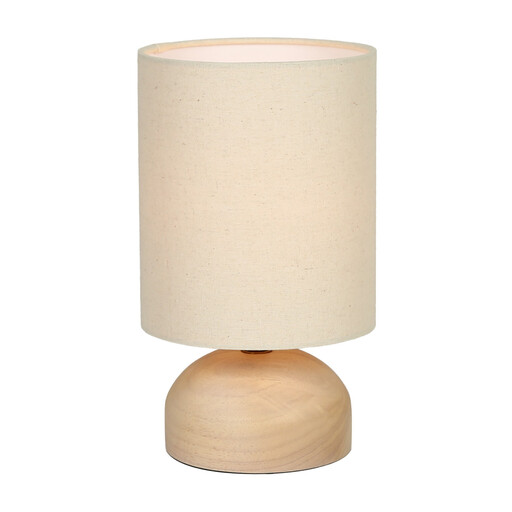
Why This Fits Their Persona: Ideal for anyone seeking a simple, functional, and space-saving solution. Its compact design fits perfectly on small nightstands or side tables, adding a natural accent without overwhelming the space.
The solid and compact rubberwood base ensures a secure footing, avoiding the wobbly construction trap. The clear specification of an E14 socket with a 25W max provides transparency for bulb selection.
Uses real rubberwood instead of a wood imitation; very compact build, ideal for limited spaces.

Why This Fits Their Persona: Perfect for those who appreciate the clean and cozy Scandinavian style. The classic tripod design in light-colored wood and the linen lampshade create an inviting atmosphere in the living room or bedroom.
The description highlights the stable tripod construction made of solid wood, directly addressing concerns about instability. Using a standard E27 socket makes choosing a bulb straightforward.
Timeless tripod design made of solid real wood; a compatible LED bulb is already included.

Why This Fits Their Persona: This lamp combines natural materials with modern technology. It's ideal for a home office or as a reading lamp where flexible lighting is needed. The touch controls and dimmability offer superior convenience.
It bypasses the bulb trap with a built-in, long-lasting LED unit featuring adjustable brightness and color temperature. The solid wood base combined with the metal frame ensures excellent stability.
Integrated LED with touch controls, stepless dimming, and 3 adjustable color temperatures (warm white to cool white).
We have compiled a complete, up-to-date list of products that fully meet these strict selection criteria and safety regulations.
What type of wood is suitable for a table lamp? Solid woods like pine, ash, oak, or rubberwood are durable and stable. Check the product description to ensure it's not just a "wood-look" finish or veneered particleboard. FSC-certified wood is also a sustainable choice.
How many lumens does a wooden nightstand lamp need? For a cozy atmosphere as a bedside reading light, around 250 to 400 lumens is sufficient. This is roughly equivalent to a classic 25-40-watt incandescent bulb or a 4-6-watt LED lamp. Dimmable models offer the most flexibility here.
Can I use an LED bulb in any wooden table lamp? Yes, as long as the LED bulb has the correct socket (e.g., E27 or E14) and its shape fits inside the lampshade. LEDs are an excellent choice because they generate little heat—which is especially beneficial for fabric shades or proximity to wood—and they are very energy-efficient. Always check the manufacturer's specified maximum wattage, even though LEDs typically fall well below it.