For consistent wooden tones under artificial light, adjustable white light, a suitable white balance and test shots of your subject all matter; a high CRI rating alone won’t guarantee a particular result in your photos. A larger, positionable panel with diffusion is better suited to lighting a whole toy or arrangement. A compact rechargeable light can be more practical when space is limited or you’re lighting details, but it won’t necessarily illuminate the same area. Also check whether a diffuser, stand, power supply or battery is included with the version you’ve chosen.
Who are the different lighting options for?
Wooden toy sellers
If you photograph products regularly, you’ll want to show their colours and visible details accurately. Adobe describes product photography as a way to bring features such as shape and colour to life; a repeatable lighting set-up can help you do that.
Photographers working at the kitchen table
For individual toys or small scenes at home, a simple set-up may be enough, provided you can control harsh shadows. Adobe highlights soft light for still-life photography; according to Lazi Akademie, a reflector can brighten the shadow side.
Photographers short on space
If you often change your shooting location or mainly light details, compact dimensions, mounting options and power supply are especially important. SmallRig and Ulanzi both offer compact rechargeable lights in their ranges.
What should you look for when buying?
First decide whether your priority is controlling wooden tones, shaping shadows, lighting a whole arrangement or keeping your set-up compact. The points below relate to photographing wooden toys under artificial light.
| Consideration |
What to check when buying |
Who should particularly consider this? |
| Consistent wooden tones |
Check the white-light range and dimming options for the specific version; take test shots using a neutral reference under consistent lighting. |
If I want to assess wooden tones reliably for product photos, I need adjustable light as well as a suitable white balance. Around 36% of consumers rank colour rendering as their top buying consideration. |
| Soft shadows |
Check whether a diffuser is included and how the light can be positioned to the side; assess shadows around edges and grain in a test set-up. |
If I want to show the toy’s shape and surface clearly, I pay attention to how the light and shadows fall on the subject. Around 29% of consumers put shadow control first. |
| Lighting the subject |
Decide on the subject area and available distance; compare lux values only at the same measuring distance and test the edges of the frame. |
If I’m photographing a whole toy or several pieces against a background, the light needs to cover the scene, not just one detail. Around 21% of consumers prioritise lighting the entire scene. |
| Space and what’s included |
Check the mounting options, stand, diffuser, power supply, battery and charging port for the specific version. |
If I often set up and pack away my shooting space, compact dimensions and a suitable power supply are essential. Around 14% of consumers put space requirements and set-up first. |
Common buying misconceptions
-
A high CRI guarantees natural-looking wooden tones
A CRI rating describes one characteristic of a light, but it doesn’t guarantee how a camera will capture the colour of wood under artificial light.
Check the white balance against your own subject and take test shots under consistent lighting.
Allow time for test shots and colour correction.
-
A mini panel will automatically work as a soft main light
Soft shadows depend on factors including diffusion and the size of the light source in relation to the subject. A brightness rating alone won’t tell you whether the light will illuminate a whole arrangement evenly.
Decide on the subject size and panel distance, then check the shadows across the entire frame.
You may need additional light-shaping or fill materials for your set-up.
-
Accessories shown in pictures are always included
Different versions in a model range may vary in whether they include a stand or require separate batteries. NEEWER states that NP-F batteries are not included with the NL660.
Check the exact version against the contents list before planning your set-up.
An overview of relevant brands
NEEWER
The NL660 Bi-Color is designed for a positionable tabletop or studio set-up; the manufacturer offers versions with and without a stand.
- The manufacturer lists 3200–5600 K, dimming, a diffuser and a power supply.
- NP-F batteries are not included, according to the manufacturer. Colour-rendering specifications are no substitute for testing the light on wooden toys.
Jinbei
The P30Bi is a Bi-Color panel which the manufacturer describes as providing indirect lighting and offering battery or mains power.
- Jinbei lists 30 W, dimming and an adjustable range of 2700–7500 K.
- Claims about the lighting effect come from the manufacturer. Check the accessories and power supply for the specific version.
Nanlite
The PavoSlim 60B is suited to set-ups using a softbox, diffuser and controlled light spill.
- The manufacturer’s manual lists 2700–6500 K and several power options.
- The manual calls for a dry, well-ventilated location with clear ventilation openings. The set-up involves more components than a mini panel.
SmallRig
The P96 is a small rechargeable panel for detail lighting and shooting locations that change frequently.
- The manufacturer lists 2700–6500 K, a built-in battery and a cold shoe mount.
- The illumination level stated on the product page decreases as the measuring distance increases. A CRI rating alone doesn’t prove that a large scene will be lit sufficiently.
Ulanzi
The VIJIM VL120 Bi-Color is a compact white light for small set-ups and should not be confused with the VL120 RGB.
- The Bi-Color product page lists 3200–6500 K, a built-in battery and a silicone diffuser.
- This doesn’t independently confirm its range or how well it lights a whole toy. Check the exact model name when comparing products.
Joybuy products for tabletop and detail shots
This selection includes desk lamps, compact photo lights and small light boxes for tabletop still lifes and product details. Light boxes enclose the subject; they are not separately positionable LED panels.
 No image available
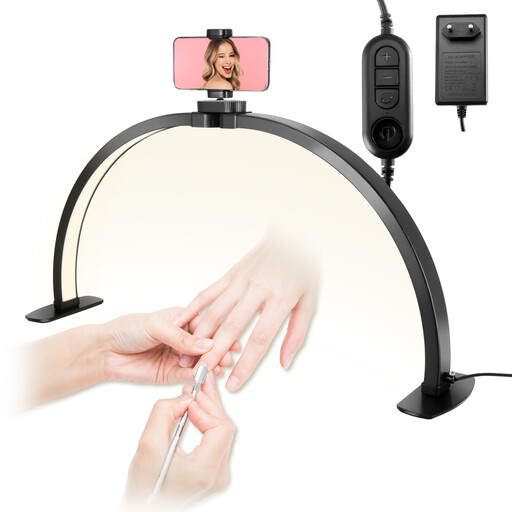
30-inch foldable LED desk lamp, 3 colour temperatures
Described as suitable for tabletop still lifes; the arched desk lamp is not a separately positionable LED panel.
The product details list three colour temperatures from 3000K–6000K and a 10-step dimmer.
View at Joybuy
 No image available
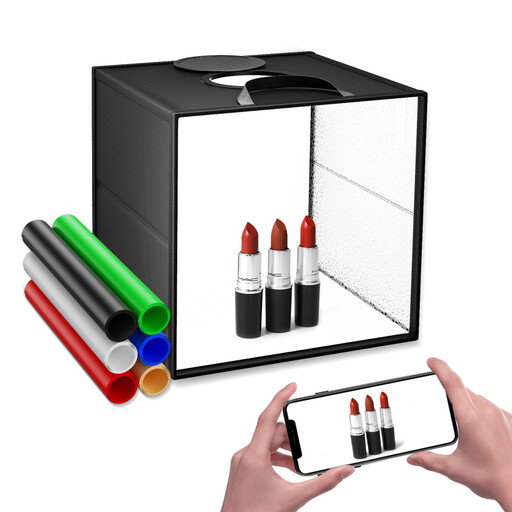
30 cm foldable LED photo light box, 120 LEDs
This enclosed light box is described as suitable for small tabletop subjects; it is not a freely positionable panel.
Features listed include 120 LEDs, three colour temperatures, nine dimming levels, openings for front and overhead shots, and six coloured background papers.
View at Joybuy
 No image available
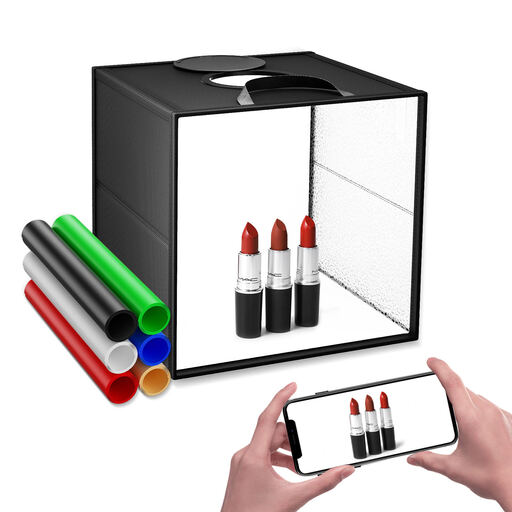
40 cm foldable mini photo light box, 120 LEDs
Described as suitable for smaller product set-ups; as a light box, it encloses the subject rather than letting you position the light freely around the room.
The product details list 120 LEDs, three colour temperature modes, dimming, diffusion fabric and six background colours.
View at Joybuy
 No image available
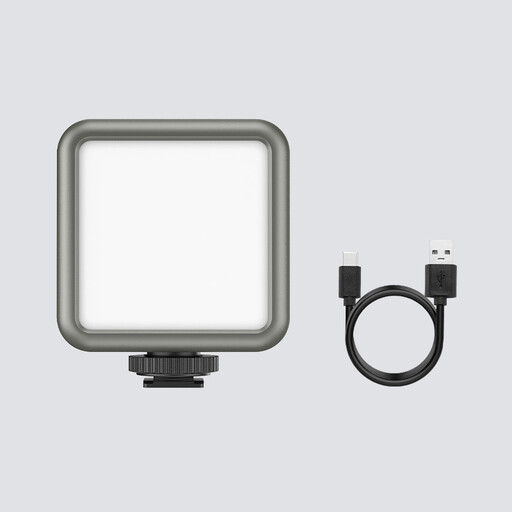
Ulanzi VL49 RGB LED light
Described as a compact light for macro and product photography; check how well it illuminates your own set-up if you’re photographing a whole arrangement.
The product details list a built-in 2000-mAh battery, 2500K–9500K and a magnetic back.
View at Joybuy
 No image available
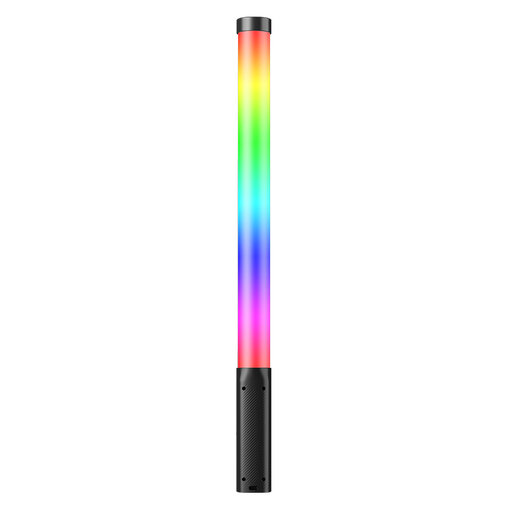
Ulanzi VL119 LED light wand, 10 W
Described as a portable light for product photography; the light wand is not a separately positionable panel.
The product details list 10 W, 360 lux at 0.5 m, a built-in 3300-mAh battery and 2500K–9000K.
View at Joybuy
Frequently asked questions
Is a high CRI rating enough to capture wooden tones accurately?
No. A CRI rating on a product page doesn’t guarantee how a camera will capture the colour of wood. Adjust the light to suit your set-up and check the white balance against a white or neutral grey reference placed by the subject.
Do I need two panels for soft shadows?
Not necessarily. Start with a main light positioned to the side and add diffusion; a reflector on the shadow side can initially take the place of a second fill light.
How can I use a studio panel safely?
Follow the instructions for the specific model. The Nanlite manual recommends using the PavoSlim 60B in a dry, well-ventilated location with clear ventilation openings; these instructions for one model won’t necessarily apply to other panels.
Are a stand and battery always included when you buy a panel?
No. For the NEEWER NL660, the manufacturer offers versions with and without a stand and states that NP-F batteries are not included. So check the contents list for the specific version. A voluntary manufacturer’s guarantee is also separate from your statutory rights against the seller.
What should I look for in an electric light sold in Germany?
When carrying out market surveillance, the German Federal Network Agency checks points including CE marking, manufacturer details, instructions in German and a declaration of conformity. CE marking is a declaration by the manufacturer, not an assessment of how the light performs in photos of wooden toys. According to the German Environment Agency, waste electrical equipment must not be disposed of with household rubbish; removable batteries must be removed and disposed of separately.


