Sellers photographing toys regularly
If you photograph several wooden toys against the same white background, a repeatable set-up and controlled colours help you create consistent images.


If you already have a suitable photography light and want to bring out the grain and shape of the shadows, a compatible light modifier is a good option. If you don’t have a suitable light, choose a kit that clearly lists lamps and stands as included; for small subjects arranged in a similar way each time, a photo box may work, as long as the toy and desired framing fit inside. Whichever option you choose, the right white balance and an exposure that keeps the background bright without losing detail in the lighter parts of the wood are also important.
If you photograph several wooden toys against the same white background, a repeatable set-up and controlled colours help you create consistent images.
If you don’t already have a suitable photography light, check whether the product actually includes light sources and the right set-up. A softbox shapes light, but doesn’t produce it.
If you already own a compatible light, you can use a suitable light modifier to change the direction of the light and influence how the grain and shape of the shadows appear.
Suitable if: You have a light with a compatible fitting and want to change the direction of the light to bring out the grain, edges or shape of the shadows.
The trade-off: A softbox is a light modifier, not a light source. The fitting and contents of the chosen version need to match your existing equipment.
Suitable if: You don’t have suitable photography lighting and want to take photos without relying on light from a window.
The trade-off: A kit with several lights and stands needs floor space. Check the parts list, power supply and fitting for the specific product.
Suitable if: You regularly photograph small toys individually against an uncluttered background, and they fit inside with the framing you want.
The trade-off: A photo box limits the size of your subject and the camera angle more than lighting you can position freely. It can also make it harder to create deliberate shadows from the side.
Suitable if: You mainly take photos in daylight and the light at your shooting location is bright enough for your subject.
The trade-off: Light levels vary with the time of day and shooting conditions. Check the white balance and the shadow side before buying extra lighting.
Adobe notes that a white background can help reduce distractions. White balance also affects every colour in the image, including how the wood colour appears.
| Priority | What to check before buying | Who is it important to? |
|---|---|---|
| Reproducing the wood colour and white background | The light’s colour and adjustability; white balance under the lighting conditions you’ll use. | If I want the wood colour and white background to look right, I pay attention to consistent lighting conditions and the right white balance. Around 33% of consumers put colour reproduction first. |
| Getting usable lighting | Whether the specific product includes lights, stands and compatible fittings. | If I don’t already have a suitable photography light, I need a light source and the necessary parts—not just a light modifier. Around 27% of consumers prioritise a set-up that actually includes lighting. |
| Showing the grain and shape | How easily the light can be positioned, the size of the light source and the fitting; only factor in a grid if it’s included with that version. | If I want the grain and shape to remain visible, I want to be able to choose the direction of the light rather than smoothing out all the shadows. Around 20% of consumers prioritise being able to control the direction of the light. |
| Fitting the subject and set-up into your space | Compare your largest toy, including the white space you want around it, with the usable space inside the box; allow room for the stand legs. | If space is limited, the toy and desired framing need to fit inside the box, while stands need room alongside it. Around 20% of consumers prioritise space requirements and subject size. |
A passive light modifier doesn’t produce light by itself. Without a compatible light, the set-up is incomplete.
Start by checking what equipment you already own, then compare it with the parts list for the specific version.
A Bowens light modifier and a light with an E27 socket use different fitting systems.
Check the full model names and compare the physical fittings on the light and light modifier.
The toy, the white space you want around it and the camera angle all need to fit within the usable shooting area. Very even lighting won’t suit every look you might want for the wood grain.
Measure your largest assembled toy and decide on the camera angle and the shape of the shadows you want before buying.
Light modifiers with a Bowens fitting, including the rectangular SB-FW6090.
The product ranges include individual softboxes, lighting kits and compact photo boxes.
Rectangular softboxes and kits with a Bowens fitting and honeycomb grid.
Light modifiers with a Bowens fitting, including a 60 × 90 cm Essential softbox.
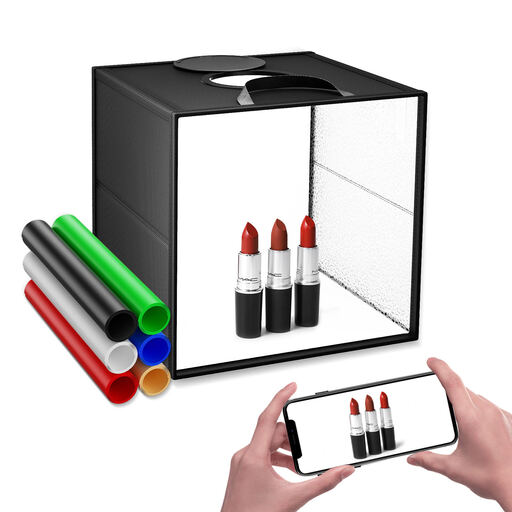
The selection below includes a compact LED photo box for product photography against a white background.
 No image available
A compact photo box may suit small subjects arranged in a similar way each time, provided the toy and desired framing fit inside.
The product title lists 120 dimmable LEDs, 5600K, six coloured backgrounds and diffuser cloths.
Set the white balance to match the light source you’re actually using, and check the background and toy together. Otherwise, artificial light can create a colour cast that also changes how the wood colour appears.
Not just because they look a similar shape or size. Godox describes the SB-FW6090 as a Bowens light modifier, while NEEWER lists E27 sockets for the NK103 kit. Compare the fitting on the specific light modifier with the one on your light.
Set up stands securely, keep cables out of the shooting area and follow the instructions for each electrical light. For consistent photos, try to keep the camera and light in the same positions, and check the diffusers and background before shooting.
Consumers generally have a right to withdraw from a distance contract; Section 355 of the German Civil Code (BGB) sets out a usual 14-day period, although when it begins and any exceptions depend on the circumstances. Your statutory rights against the seller for faulty goods are separate from a voluntary guarantee, as the Verbraucherzentrale also explains.
Whether CE marking is required depends on whether the specific product falls under relevant EU rules that require it. For an electrical light or LED photo box, check the marking, manufacturer’s information and that the mains connection is suitable for your use. The EU explains that CE requirements depend on the rules that apply to each product.