
Lieferung heute & morgen

Qualitätsgarantie

Willkommens-Angebote freischalten: KOSTENLOSE Lieferung | Bis zu 80 % RABATT | Kostenlose 30-Tage-JoyPlus-Testphase
App herunterladen
By Joybuy Product Recommendation Officer, July 29, 2026
Wooden toys are a popular choice among parents and gift-givers, valued for being durable, sustainable, and offering a pleasant tactile experience. However, the market can be overwhelming, and not every product delivers on its promise. Before you make a purchase, it's crucial to recognise common marketing traps and understand which criteria truly matter.
Many buyers invest in expensive wooden toys, only to find them sitting unused in a corner after a short time or raising safety concerns. The most common problems include:
To find a wooden toy that is safe and provides long-lasting enjoyment, you should check three core parameters.
Material quality is critical for durability and safety. Look for precise workmanship with no sharp edges or splinters. Official certifications are also crucial:
A good toy matches the child's current developmental stage, challenging them without being overwhelming.
A well-thought-out design often reveals itself in its longevity. Check if the toy can "grow with the child." Height-adjustable elements, like those on some play kitchens or desks, extend the period of use. Modular systems that can be expanded offer new incentives over time and represent a sustainable investment.
Instead of making a blanket recommendation, we have matched products to different needs and age groups.
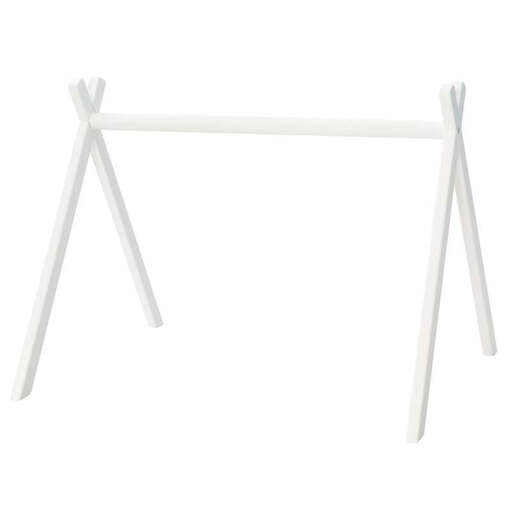
Why this product is a great fit: Ideal for parents who want to specifically encourage their baby's motor development from birth. The design is focused on the fundamental needs of infants: grasping, touching, and discovering.
This play gym is not just a decorative object. Its function is clearly designed to promote hand-eye coordination according to Montessori principles, thus avoiding the empty "educationally valuable" slogan.
The universal design is expandable with various separately available play and grasping trainer sets, allowing it to grow with the child's abilities.
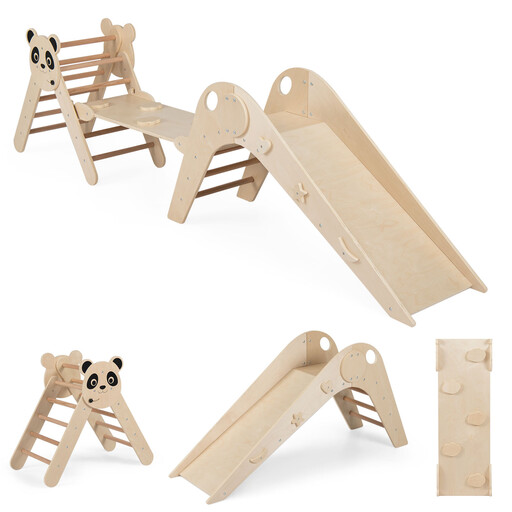
Why this product is a great fit: Perfect for families with active toddlers. It supports the development of gross motor skills, balance, and self-confidence in a safe environment.
This climbing triangle solves a common problem with bulky play equipment: it's foldable and can be stored to save space. Its purpose as a functional Montessori toy is clearly defined and not just a marketing term.
Promotes independent, physically active play and can be easily accommodated even in smaller living spaces thanks to its folding function.
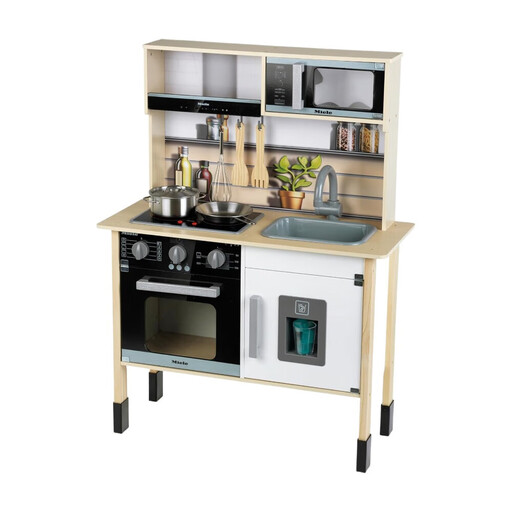
Why this product is a great fit: An excellent choice for preschoolers who are beginning to imitate everyday situations in role-play. The realistic design with interactive features provides long-lasting play appeal.
The material specification is transparent, using FSC-certified wood (MDF). The interactive elements, like the hob with light and sound, offer concrete play value that goes beyond just being a wooden box.
The Miele design with a battery-operated hob and the included metal and wood accessories create a high-quality and realistic play experience.
We have compiled a complete, up-to-date list of products that fully meet these strict selection criteria and German safety regulations.
1. How can I identify safe wooden toys? Primarily, look for the CE marking and, ideally, the EN 71 standard specification. Physically check the toy for a smooth surface without splinters or sharp edges. For toys intended for children under three, there must be no small, swallowable parts. Paints should be declared as saliva-resistant.
2. What does FSC-certified wood mean for toys? The Forest Stewardship Council (FSC) seal confirms that the wood used for the toy comes from forests that are managed responsibly according to strict ecological and social standards. It is a reliable indicator of sustainable forestry.
3. How do I care for wooden toys properly? A slightly damp cloth is usually sufficient for cleaning. Avoid harsh cleaning agents or complete immersion in water, as the wood can swell and crack. Regularly inspect the toy for any damage or loose parts to ensure safety.