
Lieferung heute & morgen

Qualitätsgarantie

Willkommens-Angebote freischalten: KOSTENLOSE Lieferung | Bis zu 80 % RABATT | Kostenlose 30-Tage-JoyPlus-Testphase
App herunterladen
Wooden toys for children often seem durable and educational at first glance. But the material alone doesn’t determine whether a toy is right for family life. What matters is the age recommendation, the size of the pieces, how the toy is played with, its construction and whether your child can manage the level of difficulty.
Before buying, parents, grandparents and other family members should look out for three common pitfalls:
The age recommendation on a product page is a useful starting point, but it doesn’t replace adult supervision. For example, children aged 12 months and over may enjoy simple posting and matching games with pieces that are easy to grasp. Wooden puzzles for toddlers are more practical when they have large knobs and simple shapes.
If a product contains small pieces, balls or marbles, check whether it’s explicitly labelled as unsuitable for children under three. A dexterity game with small pieces may be suitable for older children, but could pose a choking risk for younger ones.
Good educational wooden toys should have a clear purpose. Different types of play suit different ages:
The age recommendation should match your child’s stage of development. A toy may appeal to an older sibling but still be unsuitable for a younger child.
Smooth surfaces, rounded edges and sturdy joints are important features of wooden toys. According to the product information, several of the products below are made from FSC-certified wood. This refers to the origin of the wood and shouldn’t be taken as a general statement about the safety or durability of every individual component.
Before each use, it’s worth giving the toy a quick visual check:
For toys with small components, make sure all the pieces are collected after play and stored out of reach of younger siblings.
The recommendations below aren’t ranked in a single overall list. Instead, they’re grouped by age, type of play and typical use.
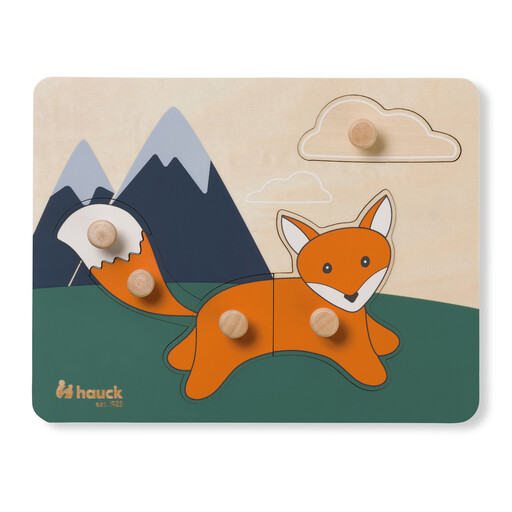
Why it suits this type of buyer: This simple wooden puzzle is designed for children aged 12 months and over. It offers an accessible introduction to matching shapes.
The large wooden knobs and limited number of shapes reduce the risk of choosing a puzzle that’s too complex for a beginner.
Suitable from 12 months, with a rounded design and FSC-certified wood according to the product information.
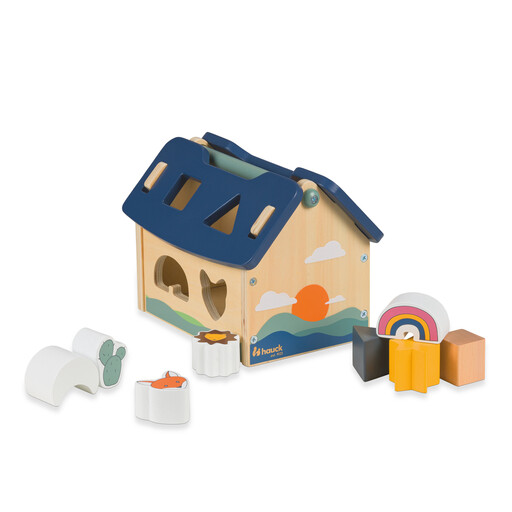
Why it suits this type of buyer: This sorting and stacking toy combines a clear learning activity with compact storage inside its wooden house.
The eight blocks and differently shaped openings make the activity clear, rather than relying on vague promises about learning.
Suitable from 12 months, with a carry handle and FSC-certified wood according to the product information.
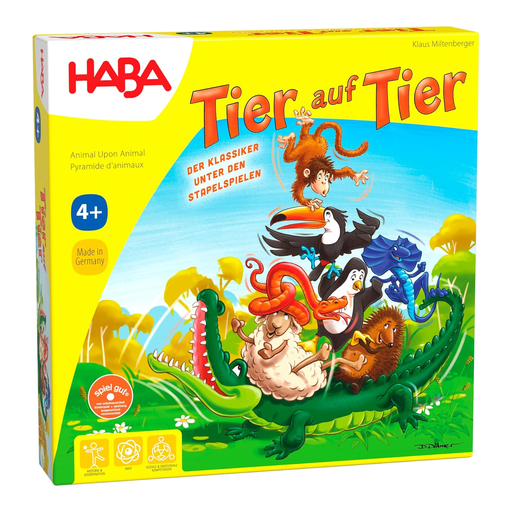
Why it suits this type of buyer: This stacking game is designed for two to four players aged four and over, and can also be played alone.
The number of players, recommended minimum age and game concept are all clearly stated. This makes it easier to plan how the family can play together.
Wooden figures, play for two to four people and a stated recommended age of four and over.
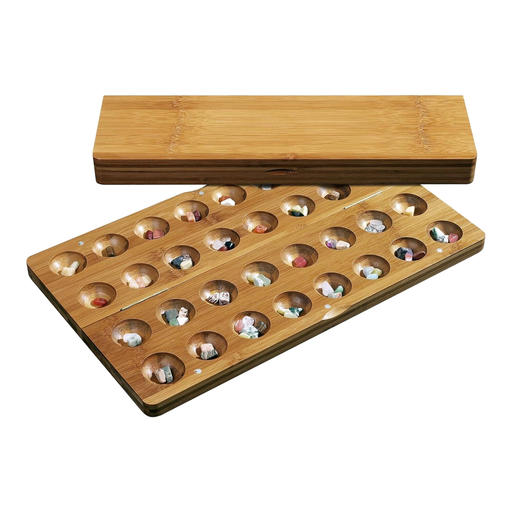
Why it suits this type of buyer: Designed for two players aged six and over, this game combines board game rules with counting and strategic decision-making.
The recommended age, number of players and set of 64 playing pieces are all clearly listed. This makes it easier to decide whether it’s right for regular two-player games.
Bamboo game board, 64 natural playing pieces, instructions in several languages and a stated recommended age of six and over.
We’ve put together a complete, regularly updated list of products that meet these strict selection criteria and fully comply with the safety regulations in force in the EU.
It depends on the type of play and the size of the pieces. Simple posting toys and wooden puzzles with large knobs are available for children from around 12 months, when labelled accordingly. Products with small pieces, balls or complex rules are often designed for older children. Always check the manufacturer’s age recommendation against the safety information.
Their lifespan depends on the materials, construction, use and care. Sturdy toys can be used for a long time or passed on to other children in the family. Even so, check them regularly for cracks, splinters, loose pieces and damaged surfaces. Damp storage and intensive cleaning with water can affect the wood and its finish.
No. Wood is simply the material. The educational value comes from the activity itself: a sorting game can introduce shapes and colours, a motor skills toy encourages controlled movements, and a wooden board game can help children practise following rules, planning or taking turns. The key is choosing a toy that suits your child’s age and interests.