
Lieferung heute & morgen

Qualitätsgarantie

Willkommens-Angebote freischalten: KOSTENLOSE Lieferung | Bis zu 80 % RABATT | Kostenlose 30-Tage-JoyPlus-Testphase
App herunterladen
Wooden toys for fine motor skills from 1 year are designed to encourage little hands to grip, fit, sort and stack. At the same time, parents face a wide choice of wooden puzzles, shape sorters and motor skills toys. However, not every product suits a child’s stage of development or the intended place for play.
A toy may look suitable for babies but still contain small parts. The decisive factors are the manufacturer’s age recommendation and safety information. For toys suitable from 12 months, regular checks for cracks, splinters and loose parts are also advisable. Children should not use wooden toys for chewing or teething unless they are specifically designed for this purpose.
A shape-sorting toy with lots of different activities can overwhelm a younger child. For wooden toys from 12 months, clearly recognisable shapes, easy-to-grip elements and a manageable number of parts are generally best. A peg puzzle from 1 year should initially be easy to understand without help. More complex activities, such as matching numbers or using a magnetic maze, can be introduced later.
The term “wooden toy” alone says little about where the material comes from, how the surface has been treated or how the toy should be cared for. A description such as FSC-certified wood indicates that the material comes from appropriately certified forests. Parents should also look for rounded edges, solid workmanship and clear care instructions. Water, direct heat sources and harsh cleaning products can warp wood or damage its surface.
Large, easy-to-grip knobs or components are helpful for children from 12 months. With peg puzzles and sorting toys, parents should follow the guidance on small parts and supervise play initially. For children from 3 years, more complex activities may be suitable, such as a magnetic game with colour fields and numbers. The age recommendation is not a guide to an individual child’s development; it is an important safety and usage indication.
A wooden motor skills toy should stand firmly or rest securely on a surface. A peg board that is too light may slide around as the pieces are inserted. With a puzzle, easy-grip wooden knobs, rounded edges and a clear baseboard make it easier to handle. The product dimensions also help you assess whether the toy will fit on a small table, on a shelf or in a bag when you are out and about.
The material information for wooden toys should be as specific as possible. According to the product information, some of the products featured here are made from FSC-certified wood or natural wood. Depending on the model, they should be cleaned with a dry or slightly damp cloth. The wooden puzzles and sorting toys mentioned here are not designed to be fully immersed in water.
The following products meet a range of needs, from a simple wooden baby puzzle to more advanced educational toys for toddlers from 3 years.
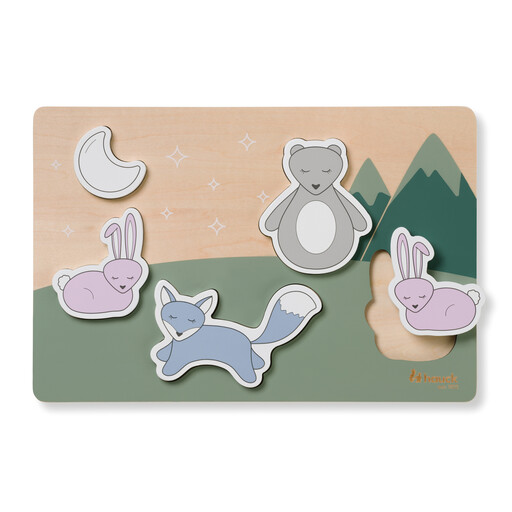
Why this product suits this profile: The animal design and easy-to-grip puzzle pieces provide a manageable introduction to gripping and matching from 12 months.
The stated suitability from 12 months and the rounded edges make the choice more transparent than a purely promotional statement without age and safety details.
30 × 20,5 × 2 cm; FSC-certified wood and animal shapes for matching, according to the product information.
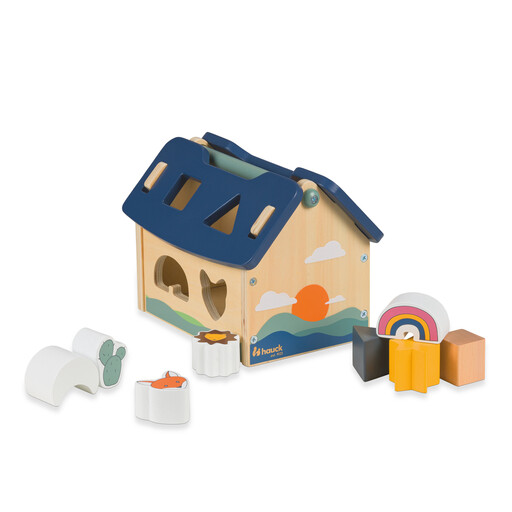
Why this product suits this profile: The wooden house combines sorting, stacking and storage in a clearly structured play set-up for children from 12 months.
The eight building blocks and removable roof structure are described clearly. This makes it easier to assess the actual range of functions before buying.
FSC-certified wood, practical storage inside the house and a carry handle, according to the product information.
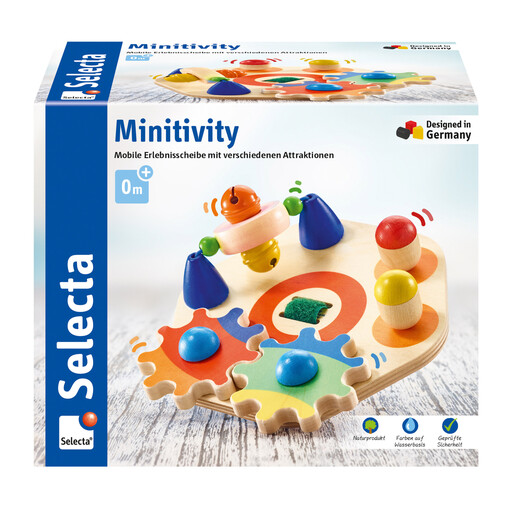
Why this product suits this profile: According to the product information, the compact activity unit can be attached to a cot, playpen or buggy, making it suitable for different play locations.
Instead of lots of loose small parts, this model offers three permanently integrated play stations. The hook-and-loop fastenings should be checked before every use.
14 cm size, three play stations and natural wood according to the product information; no batteries required.
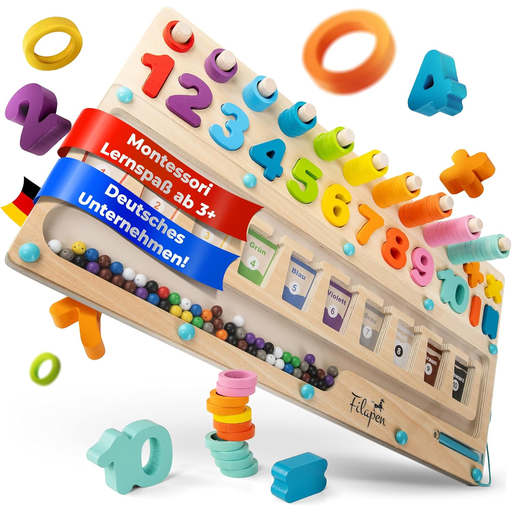
Why this product suits this profile: This motor skills toy for children from 3 years is aimed at children who want to practise hand-eye coordination as well as matching colours and numbers from 1 to 10.
The minimum age of 3 years and the warning about small parts are clearly stated. This prevents it from being chosen prematurely for babies or younger toddlers.
Wooden construction, magnetic pen, colour sorting and number slots from 1 to 10, according to the product description.
We have put together a complete, regularly updated list of products that fully meet these strict selection criteria and the safety regulations applicable in the EU.
For children from 12 months, simple gripping and matching activities are suitable. These include a wooden baby puzzle, a peg puzzle from 1 year or a small stacking toy with just a few clearly distinguishable pieces. Parents can begin by offering one or two activities and explain further possibilities later.
From around 2 years, shape sorters and stacking towers become more interesting as children increasingly compare shapes, colours and sizes. With Montessori toys, the activity should ideally be solvable independently. This does not mean adults cannot provide support: short prompts and naming animals, colours or shapes together can enhance play without giving away the solution.
For children from 3 years, a more complex educational toy for toddlers may be suitable. Magnetic mazes, number slots and combination sorting games offer several levels of difficulty. The manufacturer’s information, the size of the parts and the child’s ability to understand rules and activities remain the key considerations.
The lifespan of a wooden toy depends on its material, workmanship and how it is used. To keep it in use for as long as possible, we recommend the following steps:
Simple peg puzzles, wooden puzzles with large knobs, stacking toys and clearly structured shape sorters may be suitable. The relevant age recommendation, easy-to-grip parts and supervision by an adult are important. Products with small parts must not be given to children below the stated age limit.
This depends on the type of toy and the child’s developmental stage. A puzzle can initially be used for fitting the pieces and later for naming animals or colours. Stacking cubes can be used individually, as a tower or for sorting. Models with several activities, such as number and colour matching, can be used over a longer period of development.
No. FSC describes where the wood comes from, not the toy’s overall safety. Parents should also check the age recommendation, warnings, workmanship, surfaces and care instructions. FSC-certified wooden toys should still be checked regularly for damage and used only as intended.