
Lieferung heute & morgen

Qualitätsgarantie

Willkommens-Angebote freischalten: KOSTENLOSE Lieferung | Bis zu 80 % RABATT | Kostenlose 30-Tage-JoyPlus-Testphase
App herunterladen
A wooden puzzle for a baby aged 12 months or over can be a suitable first educational toy, as long as its shapes, piece size and finish are right for your child’s stage of development. Many products are marketed with terms such as Montessori, motor skills development or sustainably sourced wood. On their own, however, these claims say little about how practical a toy will be in everyday use.
That’s why parents, grandparents and other family members should look for details they can check: Is the puzzle specifically approved for children aged 12 months and over? Can the pieces be gripped safely? Are the edges and handles finished with little hands in mind? And will the toy stay sturdy after frequent use?
A puzzle with large, sturdy-looking pieces is not automatically suitable for a one-year-old. Products with lots of small pieces may be approved only for children aged 3 or 4, even if they have a child-friendly design. What matters is the manufacturer’s age recommendation, not just the picture or product name.
Conflicting information should also give you pause. For example, a product listing may include an earlier age recommendation in its technical details, while the safety warning says it is suitable only from 12 months. In such cases, follow the stricter or clearer information on the packaging and in the safety instructions.
“Montessori”, “educational” and “supports development” are no guarantee of a safe design. Instead, look for specific features such as:
A puzzle that supports fine motor skills can encourage children to grip and match pieces. However, it is no substitute for age-appropriate adult supervision, and the toy should not be left within reach of your child’s mouth when unattended.
For FSC wooden toys, the product description should actually mention FSC certification or provide relevant information about the materials. The FSC label relates to the wood’s origin and responsible forestry requirements. It does not automatically tell you anything about the size of the pieces, the finish or whether the toy is suitable for children under three. These details need to be checked separately.
A puzzle with large knobs is usually easier for little hands to pick up in a controlled way than a flat piece with nothing to hold on to. Wooden knobs should be firmly attached to the puzzle pieces. Check before each use that nothing has come loose.
For a baby’s first learning puzzle, a few clearly recognisable shapes are often more useful than a large number of pieces. Animal shapes, fruit or simple colours can make a good starting point. A wooden animal puzzle can also be used to name animals and colours, without promising a guaranteed learning outcome.
Solid or certified wood can be long-lasting, but the quality of the finish is what really matters. The surface should be smooth, with no sharp edges or splinters. For many wooden puzzles, a soft, slightly damp cloth is all you need for cleaning. Don’t leave the toy soaking in water or put it in the dishwasher, as the wood may warp.
Warnings about small parts are particularly important for toys intended for children under 36 months. A puzzle for children aged 12 months and over is suitable only if the age recommendation, design and play environment are all appropriate. Remove all packaging and regularly check the toy for:
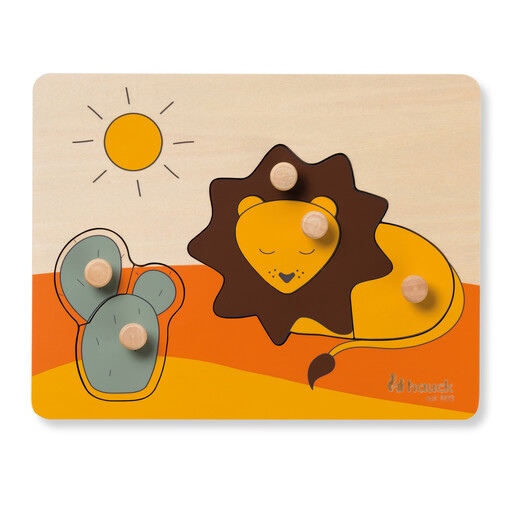
Why this product fits the bill: This compact shape-sorting puzzle is designed for children aged 12 months and over, with a manageable number of animal shapes.
The 12-month age recommendation, wooden knobs and rounded shapes are more meaningful than a purely promotional label describing it as an educational toy.
FSC-certified wood according to the product listing; measures 22 x 17 x 1 cm and features an animal design.
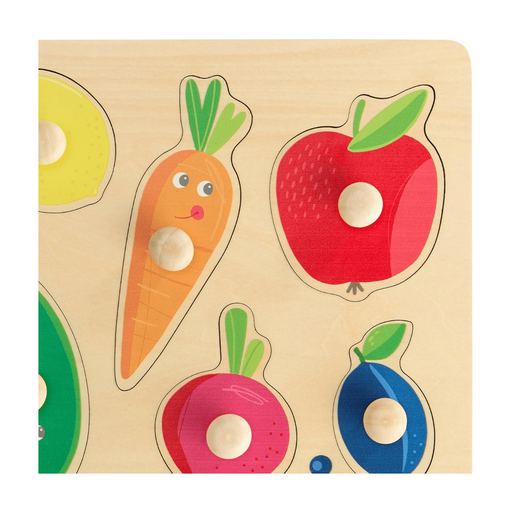
Why this product fits the bill: Large wooden knobs and a mix of fruit, colours and shapes make this a good choice for first matching activities with an adult alongside.
The product details specifically mention large knobs, solid wood and suitability from 12 months. This makes it easier to check some of the key buying criteria.
Solid wood according to the product description; puzzle board measuring 30 x 21 cm; no batteries required.
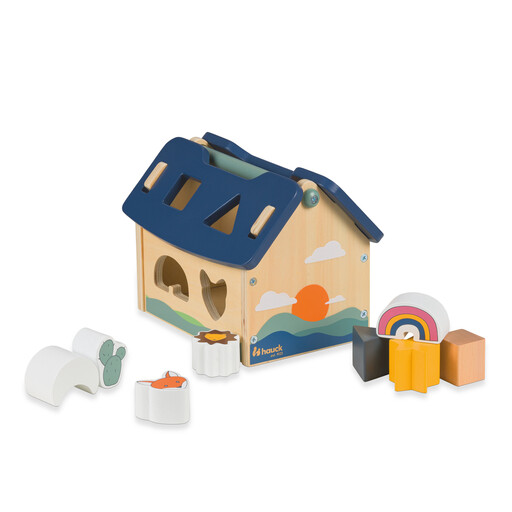
Why this product fits the bill: This shape-sorting house adds eight building blocks and storage inside the house to the classic shape-sorting puzzle.
The shape-matching activity is clear at a glance. The pieces can also be stored inside the playhouse, so fewer loose parts are left lying around.
FSC-certified wood according to the product listing; eight different blocks; carry handle and removable roof.
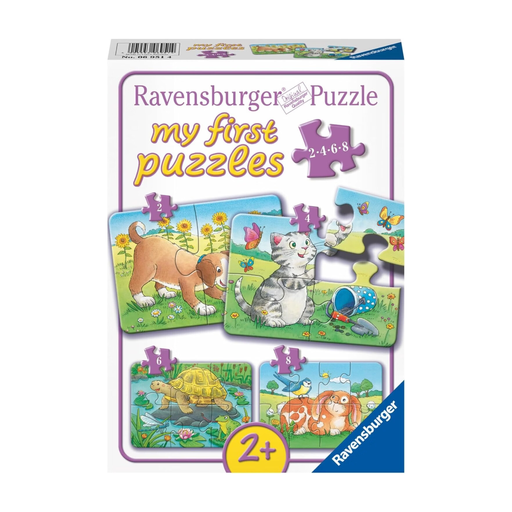
Why this product fits the bill: According to the product details, these four puzzles are for children aged 2 and over, making them a possible next step after a simple Montessori puzzle for a child aged 12 months and over.
The age recommendation of 2 years and over is clearly stated. This makes it clear that the set is not intended as a puzzle for one-year-olds.
Four puzzles with gradually increasing levels of difficulty; sturdy cardboard pieces and animal designs according to the product description.
We’ve put together a complete, regularly updated list of products that meet these strict selection criteria and the safety regulations in force in the EU.
Simple shape-sorting puzzles with a few sturdy pieces, large knobs and clear shapes are usually a good choice. The key thing is the age recommendation of 12 months and over. A puzzle with 15 or 24 small pieces, on the other hand, may be intended for older children, even if the picture appeals to toddlers.
Its lifespan depends on the quality of the wood, the coating, how it is stored and how it is used. Storing it in a dry place and cleaning it with a cloth can help protect the surface. Check the puzzle before each use and replace it if you find cracks, splinters, loose knobs or damaged pieces.
The wooden puzzles and shape-sorters mentioned here work without batteries. In most cases, all you need is a flat surface to play on and an adult to supervise. Toys for children aged 12 months and over should not be treated as something they can play with unattended.