Which type of camera is right for you?

Detail photographers

If you want to make leaf veins, edges or water droplets fill the frame, key points to compare include maximum magnification, distance from the subject and depth of field. Canon Germany, Nikon Germany and Canon Academy explain the features of macro lenses and close-up photography.

Photographers on walks

If you want to take your camera along easily on woodland walks, including in damp conditions, and switch between close-ups and wider scenes without changing lenses, it’s worth looking at robust compact cameras with a close-up mode. OM SYSTEM Germany and Ricoh Imaging Europe describe suitable models and features.

Creative nature photographers

If you want to photograph both individual petals and the path around them, with control over the focus point and composition, a mirrorless camera with a suitable lens can give you more choice. Canon Germany, Nikon Germany and Sony Germany list specific camera and lens combinations.

What matters when photographing petals?

Robust compact camera with close-up mode

A good fit if: You want to switch quickly between a petal and the surrounding scene while out walking, without changing lenses. OM SYSTEM says the TG-7’s Microscope mode can focus from 1 cm; Ricoh Imaging describes a close-up function for the WG-90 that also starts at 1 cm.

The trade-off: A short focusing distance doesn’t mean the camera offers 1:1 magnification, and a fixed lens can’t be swapped for a different macro lens later.

Mirrorless camera with a versatile close-up lens

A good fit if: You want to create close-ups and wider compositions with one lens, and a maximum magnification of 1:2 is enough. Canon specifies this magnification for the RF 35mm F1.8 Macro IS STM, which is compatible with the EOS R50’s RF mount.

The trade-off: Canon says the EOS R50 doesn’t have in-body image stabilisation, so consider the camera body and the lens you’ll actually use together.

Mirrorless camera with a 1:1 macro lens

A good fit if: You want tiny leaf veins or surface details to take up a large part of the frame. Nikon and Sony specify 1:1 magnification for the NIKKOR Z MC 50mm f/2.8 and Sony E 30mm F3.5 Macro respectively.

The trade-off: You’ll need to buy a macro lens as well as a compatible camera body. At high magnifications, the depth of field is shallow and you may have very little room between the lens and your subject.

What you’re looking for What to check before buying Who is it important to?
Show leaf details at a large size Compare the maximum magnification and working distance of the specific camera and lens combination. Canon Germany specifies a maximum of 1:2 for the RF 35mm F1.8 Macro IS STM; Nikon Germany and Sony Germany give 1:1 for the macro lenses mentioned. If I want to photograph leaf veins or droplets at a large size, I pay particular attention to magnification; around 33% of consumers put fine leaf details first.
Easy to use in damp weather Check the protection rating for the exact model and the conditions it applies to. OM SYSTEM describes the TG-7 as waterproof, freeze-proof, dustproof and shockproof; Ricoh Imaging specifies a close-up mode starting at 1 cm for the WG-90. On a damp woodland walk, I want an easy-to-use camera that doesn’t require a lens change; around 25% of consumers prioritise simple outdoor use.
Focus in low light Check the focusing aids and options for keeping the camera steady. Canon Academy points out that even small camera movements can affect close-up shots; shutter speed also matters when petals are moving. If I want to get the sharpest possible photos in low light, I take movement and shallow depth of field into account; around 25% of consumers put this first.
Show the leaf and path together Check the angle of view and close-up capabilities of the lens actually included. If you’re buying a kit, consider the camera body’s features and the lens’s capabilities separately. If I want the petal and woodland path in the same shot, getting the composition right matters more to me than maximum magnification; around 17% of consumers prioritise capturing the wider scene.

Common camera-buying misconceptions

  • “1 cm focusing distance” means 1:1 macro

    Focusing distance and magnification describe different things. A camera may be able to focus very close without reproducing the subject at 1:1 magnification.

    If you want to show tiny details at a large size, check the maximum magnification of the specific camera and lens combination.

  • A camera kit automatically includes a macro lens

    A kit may include a different lens from the one you need for macro photography. The EOS R50 kit listing we checked included an RF-S 18–45 mm lens, not the RF 35mm Macro.

    Before buying, compare the full lens name and the contents of the specific offer.

  • Image stabilisation eliminates all blur

    Image stabilisation or a tripod can reduce camera shake, but they won’t keep a moving petal still. The depth of field is also shallow at close range.

    For moving subjects, consider your shutter speed and decide which part of the petal you want to appear sharp.

Camera brands to consider

OM SYSTEM

The Tough TG-7 is a robust compact camera with macro modes for close-up photography without changing lenses.

  • OM SYSTEM says its Microscope mode can focus from 1 cm and describes the camera as waterproof, freeze-proof, dustproof and shockproof.
  • The short focusing distance doesn’t mean it offers 1:1 magnification; these specifications apply to the model mentioned.

PENTAX

The WG-90 is an outdoor compact camera with a digital microscope function.

  • Ricoh Imaging Europe specifies a close-up function starting at 1 cm for this model.
  • Its built-in lens can’t be swapped for a different close-up or macro lens.

Canon

The EOS R system can be paired with the EOS R50 and compatible RF lenses for close-up photography.

  • Canon Germany specifies a maximum magnification of 1:2 for the RF 35mm F1.8 Macro IS STM; the EOS R50 has an RF mount.
  • Canon says the EOS R50 doesn’t have in-body image stabilisation. Close-up capabilities vary depending on the lens.

Nikon

The Z system can be paired with the NIKKOR Z MC 50mm f/2.8, available separately, for macro photography.

  • Nikon Germany specifies 1:1 magnification for this lens and a distance of around 5 cm between the lens and subject at the closest focusing distance.
  • Macro capability comes from the right lens, not the camera body alone. The Z50II offer we checked doesn’t include a charger.

Sony

An APS-C E-mount system such as the α6700 can be paired with the E 30mm F3.5 Macro.

  • Sony Germany specifies 1:1 magnification and a minimum focusing distance of 0.095 m for this lens.
  • These specifications apply to the macro lens mentioned, not to all Sony zoom lenses.

Joybuy cameras at a glance

The Joybuy models below range from a pocket vlogging camera to action cameras. For close-ups of petals, check the minimum focusing distance and whether a dedicated macro mode is specified for each model.
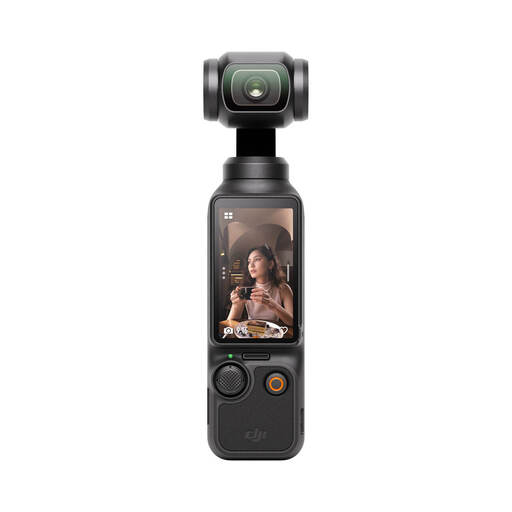
DJI Osmo Pocket 3

DJI Osmo Pocket 3

Listed as a vlogging camera, it could be a good option for general photography on the go. For tiny petal details, check the minimum focusing distance of the specific model.

The product name specifies a 1-inch CMOS sensor and 4K/120fps video recording.

View at Joybuy
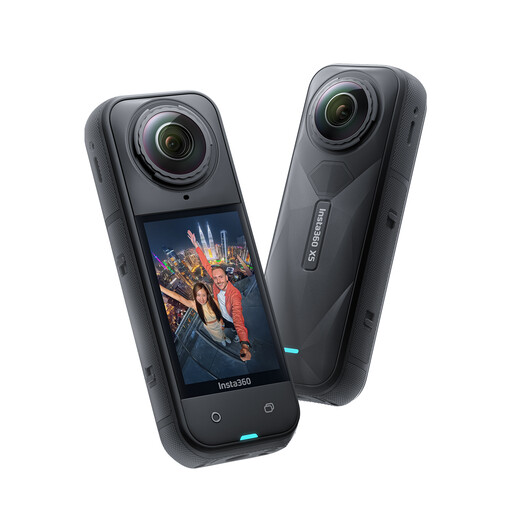
Insta360 X5 8K 360° action camera

Insta360 X5 8K 360° action camera

Listed as a 360° action camera, this model is designed for general outdoor footage; its product name doesn’t establish whether it’s suitable for close-ups of small petals.

The product name specifies 8K 360° video and a replaceable lens. For close-up subjects, also check the minimum focusing distance of the specific configuration.

View at Joybuy
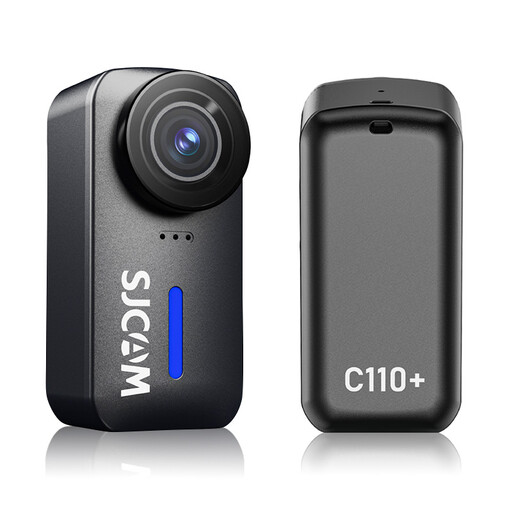
SJCAM C110+ 4K action camera

SJCAM C110+ 4K action camera

The product name specifies a 20 MP photo resolution; for detailed petal shots, also check how close the specific model can focus.

Other specifications in the product name include a 170° wide-angle lens, f/1.8, up to 120 minutes of recording time and waterproofing to 30 m with the housing. Compact dimensions of 6,4 × 3,1 × 3,3 cm are also listed.

View at Joybuy

Frequently asked questions

Is a focusing distance of 1 cm enough for a true 1:1 macro photo?

No. That specification alone doesn’t mean the camera offers 1:1 magnification. OM SYSTEM specifies 1 cm for the TG-7’s Microscope mode, while Ricoh Imaging Europe gives the same distance for the WG-90’s close-up function. If you’re looking specifically for 1:1 magnification, compare the maximum magnification of the lens you’re considering.

What can I do if only part of a petal is in focus?

First, decide which part of the petal you want to appear sharp. Depth of field is shallow at close range; stopping down increases it, but lets in less light. If your subject is still, a stable setup and, where appropriate, focus bracketing may help. If it’s moving, a sufficiently fast shutter speed remains important.

What extra costs should I budget for with a mirrorless camera?

Check whether the specific offer includes just the camera body or the macro lens you want as well. Nikon Germany also notes that the Z50II offer we checked doesn’t include a charger, so check the contents of the offer you choose.

What should I know about faults and buying online in Germany?

For newly purchased faulty goods, the Verbraucherzentrale explains that you have statutory rights against the seller for two years after receiving the goods; these are separate from any voluntary manufacturer’s warranty. For online purchases by consumers, you generally have a 14-day right to cancel from the date you receive the goods, subject to the relevant conditions.

Can I leave the path to take a photo in a German forest?

There’s no general answer without knowing the exact location. Section 14 of the Federal Forest Act allows people to enter forests for recreation, while leaving details and restrictions to the individual federal states. Nature reserves may have specific prohibitions and access rules under Section 23 of the Federal Nature Conservation Act. The Federal Ministry of Justice and the Federal Office of Justice publish the relevant legislation; follow the rules and signs for the area you’re visiting.