
Lieferung heute & morgen

Qualitätsgarantie

Willkommens-Angebote freischalten: KOSTENLOSE Lieferung | Bis zu 80 % RABATT | Kostenlose 30-Tage-JoyPlus-Testphase
App herunterladen
Distracting echo in your home office, unclear speech during video calls or a gaming room with pronounced reveration: wood slat acoustic panels can help improve room acoustics while also serving as wood-effect wall coverings. However, not every decorative wall panel is automatically an acoustic panel. Choosing based solely on colour and pattern often means overlooking important features.
Sound-absorbing wall panels primarily reduce reflections within a room. This can reduce reverberation and make speech sound clearer. However, they do not automatically prevent noise from travelling through walls, ceilings or doors into adjoining rooms. Effective sound insulation usually requires structural measures, suitable wall constructions and professional planning.
A set containing several elements can appear extensive at first glance. However, the actual coverage in square metres is what matters. For example, a set of four panels, each measuring 60 × 30 cm, covers 0.72 m². A larger feature wall will therefore require several sets. Before buying, measure the wall width, wall height and the area you want to cover.
Self-adhesive wall panels only adhere reliably to a clean, dry, smooth and sound substrate. Textured plaster, dust, poorly bonded wallpaper or damp surfaces can make installation more difficult. In rented properties, you should also check whether the adhesive could leave residue or cause damage when removed. Screws provide permanent fixing on suitable walls, but require drilling.
Classic acoustic panels for home offices or studios often consist of a backing board, decorative slats and a felt layer on the rear. MDF with a wood veneer creates a stable, textured surface. The felt can absorb incoming sound energy. However, the actual performance depends on the material thickness, mounting distance, frequency range, room size and covered area.
With 3D wood panels and decorative wall panels without acoustic felt, the focus is generally on appearance. PVC panels may be water-repellent and easy to maintain, but they are not automatically designed as acoustic panels. Product descriptions should therefore be checked carefully for terms such as “acoustic felt”, “sound absorbing” or technical absorption measurements.
The following details are relevant when planning:
For a studio or podcast room, a decorative partial covering is not automatically sufficient. The ceiling, corners, windows and hard floor surfaces should also be taken into account. Even distribution prevents treatment from being limited to just one wall.
For MDF products, information about VOC emissions and use indoors is relevant. A description such as “low-VOC” comes from the relevant product description and should not be treated as a blanket statement about indoor air quality. With wood veneers, the colour and grain may vary.
Before installation, check the substrate for moisture. Even when products are described as waterproof, this does not necessarily mean they are suitable for permanently wet areas or showers. Edges, adhesive surfaces and cleaning instructions require particular attention.
The following products differ in coverage, material, installation method and primary use. The information is based on the respective product descriptions.
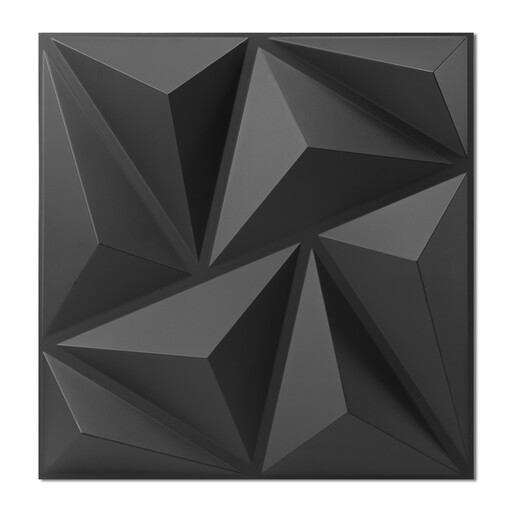
Why this product suits the profile: The 20 PVC tiles each measure 30 × 30 cm and cover 1.8 m² according to the product description. This makes them suitable for a gaming wall, a small living area or a decorative backdrop on a limited budget.
The stated total coverage makes it easier to plan the required quantity. As these are PVC decorative tiles, buyers should not expect their acoustic performance to match that of a dedicated acoustic panel.
PVC described as waterproof, self-adhesive installation and easy cleaning.
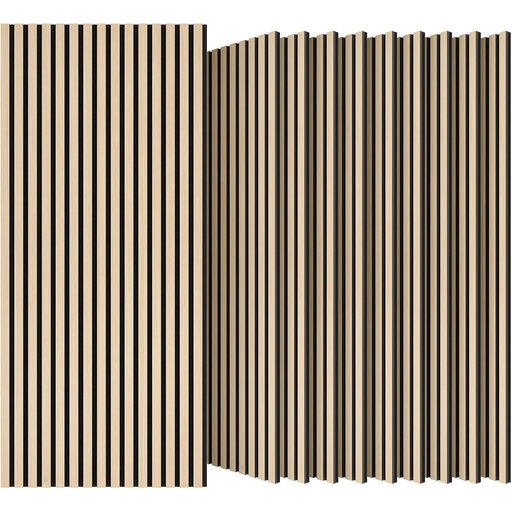
Why this product suits the profile: According to the description, the 20 panels, each measuring 60 × 30 cm, provide 3.6 m² of coverage. An MDF core, oak veneer and acoustic felt combine extensive coverage with a wood-slat look.
The set coverage is clearly stated and the felt layer on the rear is specifically mentioned. Nevertheless, blanket decibel figures should not be assumed when planning the room accurately.
3.6 m² coverage, oak veneer, MDF core and installation with adhesive or screws.
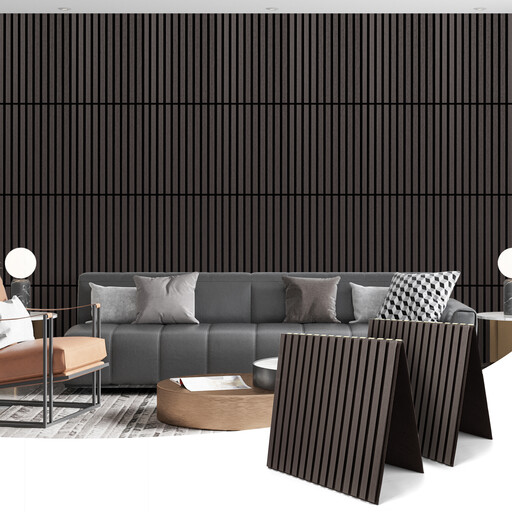
Why this product suits the profile: The two foldable panels, each measuring 120 × 60 cm, are designed for podcast rooms, home offices, studio set-ups and gaming rooms where a larger acoustic surface is required without complicated installation.
The foldable design makes handling easier. Before buying, however, check that the wall area, fixing method and intended position are suitable for the 120 × 60 cm element.
Acoustic panel with wood veneer, a foldable design and specified use for podcasts, studios and gaming.

Why this product suits the profile: The self-adhesive PVC wall covering is suitable for smooth surfaces, furniture, cupboard fronts and decorative feature walls when the priority is a wood effect without a panel construction.
The product description specifies smooth, clean and dry surfaces and excludes rough or damp substrates. This makes the key adhesion requirement clear.
One roll measures 60 × 508 cm, can be wiped clean and is designed to create a continuous wood effect with minimal seams.
We have put together a complete, regularly updated list of products that fully meet these strict selection criteria and the safety regulations applicable in the EU.
Yes, if the aim is to reduce reflections and reverberation in the room. For video calls, treating a wall behind or beside the desk can be beneficial. However, the panels cannot replace structural sound insulation against neighbours or road noise.
This depends on the room size, furniture, flooring and the effect you want to achieve. First calculate the area to be treated. Then take the set coverage into account, allowing for cutting and any possible edge areas. A full wall is not necessary in every room.
Their durability depends on the substrate, adhesive, temperature, humidity and mechanical stress. On smooth, dry and sound surfaces, they can adhere permanently. For damp rooms or textured walls, the relevant manufacturer’s information is decisive.