Lunch planners who love good food
You want the recipe and texture to work well with your chosen filling. Seeded rolls or a soft speciality bun could fit the bill, depending on what you’re putting in your lunch.


Choose rolls for your work-from-home lunch based on the length of your break, your planned filling and any ingredient requirements – not just because they’re labelled “premium”. Part-baked rolls need a suitable oven and time to preheat; buying fresh rolls from the bakery counter saves you baking them, but loose bakery items don’t necessarily come with a full ingredients list. If you need to avoid allergens, check the information for the specific product before you buy.
You want the recipe and texture to work well with your chosen filling. Seeded rolls or a soft speciality bun could fit the bill, depending on what you’re putting in your lunch.
Your choice depends on whether you have time to preheat the oven and bake the rolls, or would rather eat one you’ve bought fresh without any extra preparation.
You may need to check for ingredients such as wheat or sesame. For packaged rolls, consult the current ingredients and allergen information; for loose rolls from a bakery counter, ask for the allergen information at the point of sale.
First, decide whether you can bake the rolls during your break. Then compare the recipe, nutritional information and details of the ingredients and allergens for the specific roll.
| What to consider | What to check when buying | Who it matters to |
|---|---|---|
| Flavour and texture | Match the recipe and shape to your planned filling: seeded rolls and soft burger buns suit different tastes. | If I’m choosing my lunch filling carefully, I want the texture and recipe to work well with it. Around 40% of consumers prioritise flavour and texture. |
| Time during your break | Check whether you need an oven and read the baking instructions. REWE says its gourmet rolls take 6–8 minutes to bake, while its wholemeal rolls take around 8–12 minutes. Allow extra time for preheating. | I don’t want to spend ages baking during a short work break. For around 30% of consumers, preparation time is the priority. |
| Wholegrain and nutrition | Compare the wholegrain content and fibre per 100 g rather than assuming you know what’s inside from the variety name alone. | I’m specifically looking for a wholegrain recipe for my lunch and want to be able to check the nutritional information. Around 20% of consumers put this information first. |
| Ingredients and allergens | For packaged products, read the current ingredients and allergen information; for loose products, check the allergen information at the point of sale. | If I need to avoid certain ingredients, I need reliable information about each roll before I buy. For around 10% of consumers, checking this information is the main concern. |
A full ingredients list isn’t required for loose bakery products, but information about allergens that must be declared still has to be available, as Lebensmittelklarheit explains. So a product name is no substitute for checking the packaging or asking at the point of sale.
A label like this doesn’t tell you whether the ingredients, allergens and texture suit your filling and requirements. For example, the gourmet rolls described by REWE include sesame.
Compare the information for the specific variety, and ask about allergens if you’re buying loose rolls.
The baking instructions assume you’re using a preheated oven. So, for a short break, you’ll need to allow for more than just the baking time on the pack.
Check whether you need an oven and read the preparation instructions. If baking doesn’t fit your routine, you could buy fresh rolls instead and skip this step.
Preheating and baking take extra time and energy.
Rolls can lose their freshness if they’re stored for too long. Verbraucherzentrale Berlin suggests freezing them as a way to keep them for later.
Buy fresh rolls to eat soon, or freeze any portions left over and defrost them as needed.
The range includes part-baked options such as gourmet rolls and wholemeal rolls with sunflower seeds and linseeds.
The speciality options described include Herzstücke Weltmeisterbrötchen, made with several types of nuts and seeds.
Lidl describes its “Unser Brot” range as freshly baked goods, while its Deluxe Brioche Burger Buns are a speciality option for a lunch with suitable fillings.
The range includes a variety of roll types, including Kaiser rolls, multigrain rolls and country-style rye rolls.
A local independent bakery option in the Bergwinkel region, not to be confused with businesses with similar names.
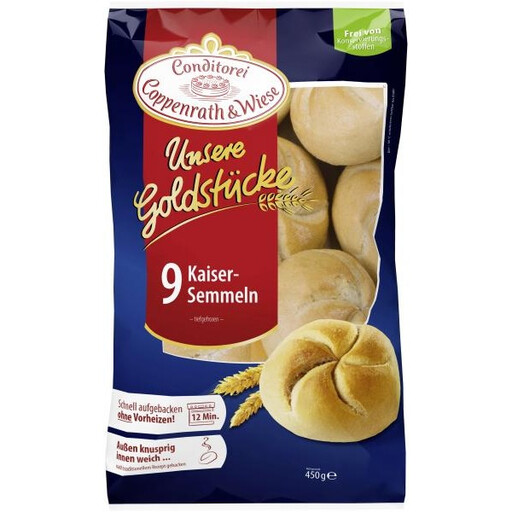
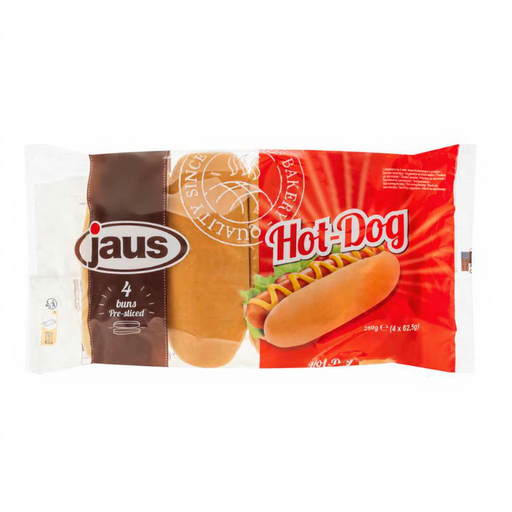
These products suit two specific lunch ideas: Kaiser rolls to bake from frozen in individual portions, and hot dog buns for sandwiches with suitable fillings. Before choosing, pay particular attention to how much time you have to prepare your lunch.
 No image available
For a planned lunch when you have time to use the oven: according to the product information, you can take the frozen Kaiser rolls out individually. Bake them from frozen for 12–15 minutes, then leave them to cool briefly. The allergen information lists wheat and barley containing gluten.
 No image available
For a hot dog or sausage sandwich at lunchtime. Check the current packaging to find out whether and how the buns need to be prepared before eating. When checking for allergens, note the wheat and barley, as well as any stated possible traces of soya, lupin, mustard and sesame.
Yes. Information about allergens that must be declared has to be provided for loose bakery products too, as Lebensmittelklarheit explains. If you need to avoid an allergen, check the information for the specific roll at the point of sale.
Not necessarily: Lebensmittelklarheit explains that a full ingredients list isn’t required for loose products. If you need to compare the full recipe, a packaged variety with an ingredients list may make this easier; allergen information for loose products is still required.
It depends on the product. REWE says its gourmet rolls take around 6–8 minutes in a preheated oven, while its wholemeal rolls take around 8–12 minutes. Allow extra time for preheating and, if needed, cooling, and follow the instructions on the current packaging.
You can freeze rolls for a later meal and defrost them in individual portions. If you’re storing them without freezing, Verbraucherzentrale Berlin recommends keeping them at room temperature in a dry place away from light.