For a quick snack before your workout
If you’re short on time, a ready-to-eat pretzel is more convenient than dough that needs baking. If you want to compare nutritional values, check the carbohydrates per 100 g and the portion you’ll actually eat.


If you want an easy snack before your workout, a plain, ready-to-eat pretzel is a good starting point. Frozen pretzels need time to prepare, while butter pretzels can vary considerably in fat content. So your choice depends on how much time you have and the ingredients, allergen and nutritional information for the specific product.
If you’re short on time, a ready-to-eat pretzel is more convenient than dough that needs baking. If you want to compare nutritional values, check the carbohydrates per 100 g and the portion you’ll actually eat.
If you can allow time for thawing and baking, you can bake a pretzel yourself. With products that include a separate sachet of pretzel salt, you can control how much you sprinkle on.
Check the information on the specific packet or at the bakery counter, particularly the ingredients, declared allergens, possible traces, fat and salt. A plain-looking pretzel won’t reliably tell you what it contains.
First, choose between a ready-to-eat pretzel and one that needs baking. Then compare the product information for the options that fit your schedule.
| What to consider | What to check | Who it matters to |
|---|---|---|
| Carbohydrates and a simple recipe | Compare the carbohydrates per 100 g with the portion you’ll actually eat, and check whether butter or a filling is included. | I want a straightforward pretzel before my workout and to be able to assess the portion size. Around 46% of consumers prioritise this. |
| Freshness and preparation time | Check whether the pretzel is ready to eat or needs thawing and baking. For frozen products, follow the instructions on the packet. | If I’m preparing my snack at home, I can allow time for baking; if my workout is spontaneous, I need something ready to eat. For around 27% of consumers, this time consideration comes first. |
| Salt, fat and allergens | Read the nutritional information per 100 g and check the ingredients and allergen information, as well as details of any salt sachet included with pretzels for baking. | I want to know what’s in this specific pretzel before choosing between a plain, salted or buttered version. Around 27% of consumers prioritise this. |
A more elaborate topping says little about whether a pretzel suits the snack you have planned. Ditsch lists 3.6 g of fat per 100 g for its plain pretzel, compared with 15.2 g of fat per 100 g for its XL butter pretzel. These figures relate to two specific products, not all pretzels of this type.
Make your choice based on what matters to you, such as the recipe, portion size, preparation or clear product information.
For REWE Beste Wahl’s frozen pretzels, the nutritional information refers to the unbaked pretzel dough, without any extra salt added. Take the size of the portion you eat and the salt you sprinkle on into account when comparing products.
Check the serving basis and the stated preparation stage before comparing figures for different products.
Product information varies: Ditsch lists wheat and milk for its XL butter pretzel, while EDEKA lists wheat and soya for a GUT&GÜNSTIG pretzel. Another EDEKA packet mentions possible traces of additional allergens.
If you have allergies, check the current information on the individual packet or ask for allergen information for loose products.
Frozen dough isn’t ready to eat straight away. For REWE Beste Wahl pretzels, REWE recommends thawing for around 10 minutes, followed by 15–16 minutes in the oven.
If you’re heading to a workout at short notice, a ready-to-eat product is the easier choice. If you’re baking one yourself, follow the instructions for the product you’ve bought and allow time for it to cool.
Ditsch sells both plain pretzels for baking and butter pretzels. When choosing one before a workout, it’s the specific product that matters.
These frozen pretzels are an option if you can fit baking them in before your workout.
EDEKA sells pretzels for baking with salt included separately. When comparing products, check which packet and portion size you’re looking at.
Lidl describes “Unser Brot” as its in-store bakery range. If you’re after a pretzel on the go, check which specific products are available in store.
ALDI SÜD lists a pretzel under “MEINE BACKWELT”, making the range one place to look if you’re planning an in-store purchase.
This selection includes pretzels for baking and ready-to-eat, packaged salted pretzels. Crunchy salted pretzels are a different kind of snack from a soft pretzel, so compare the portion size, preparation and product information with what you have in mind.
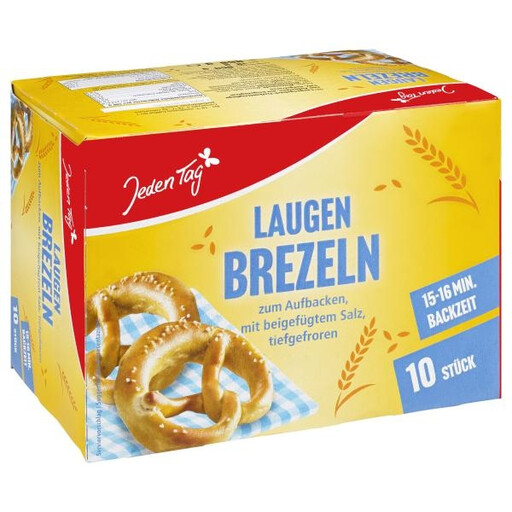 Image unavailable
These pretzels for baking are worth considering if you can prepare your snack before your workout.
The pack contains 10 pretzels, each weighing 86.8 g. Allow for the stated baking time of 15–16 minutes and bake the pretzels thoroughly before eating. Check the current packet for ingredients and allergens.
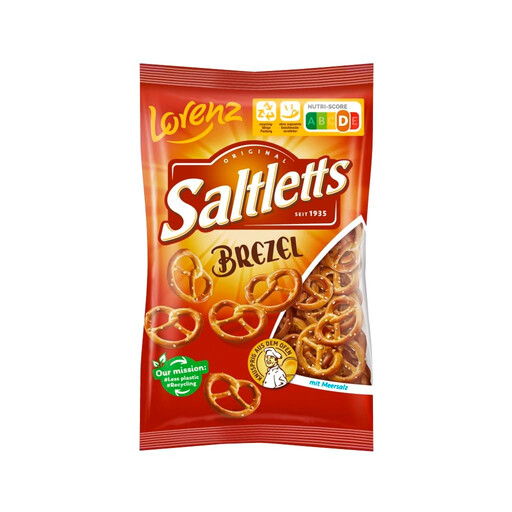 Image unavailable
These ready-to-eat salted pretzels are a handy snack with no thawing or baking required, but their taste and shape make them different from a fresh soft pretzel.
Pack size: 200 g. When comparing salt and other nutritional values, consider the amount you actually eat and check the latest ingredients and allergen information.
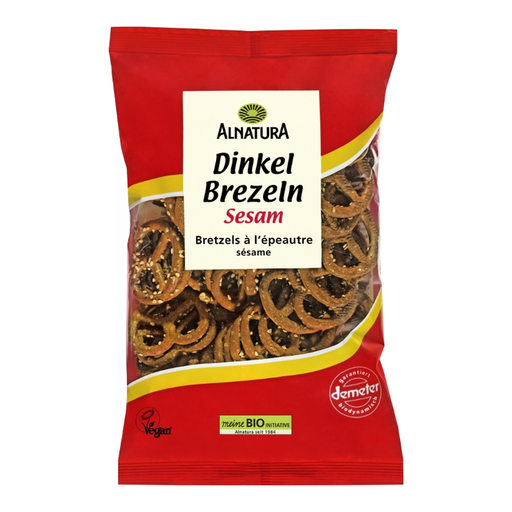 Image unavailable
These ready-to-eat spelt pretzels are an option if you’re looking for a crunchy snack that needs no preparation and want to take sesame into account when choosing.
Pack size: 125 g. The product name mentions spelt and sesame; check the current packaging for the full ingredients and allergen information, as well as the nutritional values.
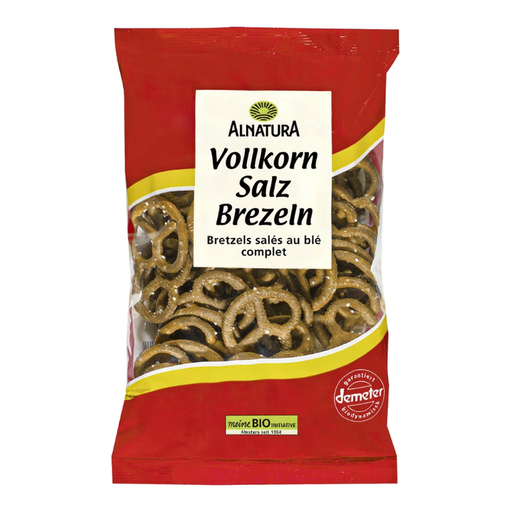 Image unavailable
These ready-to-eat wholemeal salted pretzels are worth considering if you’d prefer a packaged, crunchy snack to pretzels that need baking.
Pack size: 125 g. Compare salt and other nutritional values based on your portion, and check the current packaging for ingredients and allergens.
A pretzel can be a carbohydrate-containing snack. The German Nutrition Society describes carbohydrates as important for supplying energy during sport; the right amount and timing depend, among other things, on the duration and intensity of your activity. This doesn’t mean there’s a one-size-fits-all recommendation for a particular portion of pretzel.
For the specific Ditsch products documented here, the main difference is the fat content: the plain pretzel contains 3.6 g of fat per 100 g, while the XL butter pretzel contains 15.2 g per 100 g. If you’re looking for a simple option, compare the portion size and product information as well as the topping.
The frozen pretzels described from REWE Beste Wahl and GUT&GÜNSTIG come with pretzel salt in a separate sachet, so you can leave out this extra salt. The pretzel dough itself still contains salt, so check the nutritional information and what it refers to.
For packaged pretzels, the information on the current packet is what matters. For loose products from a bakery counter, ask for the latest allergen information. The Verbraucherzentrale explains how ingredients and allergens are labelled. Don’t rely on the product name or appearance alone.
The time required depends on the product. REWE recommends around 10 minutes to thaw its Beste Wahl frozen pretzels, followed by 15–16 minutes in the oven. For its documented 160 g pretzel, Ditsch recommends baking for around 12–15 minutes at 180 °C after thawing. Follow the instructions on the packet you’ve bought.