
Lieferung heute & morgen

Qualitätsgarantie

Willkommens-Angebote freischalten: KOSTENLOSE Lieferung | Bis zu 80 % RABATT | Kostenlose 30-Tage-JoyPlus-Testphase
App herunterladen
Whether you’re repairing a bicycle, fitting a tap or working on a project in your workshop, WORKPRO hand tools, pliers and clamps cover a range of jobs. The right choice depends on more than the brand name: design, jaw opening, clamping force, material and ease of use all matter.
Many unsuitable purchases happen when a tool is chosen based only on how it looks or on a high load rating. The tips below will help you compare water pump pliers, pipe wrenches, oil filter pliers, screw clamp sets and one-handed clamps.
A large maximum opening doesn’t automatically make pliers suitable for every application. The jaw shape and tooth profile need to match the workpiece. Water pump pliers with serrated jaws can be useful for round pipes, but they’re not ideal for delicate, painted surfaces.
With oil filter pliers, you also need to consider the diameter range. A tool that adjusts from 60 to 102 mm covers certain filter sizes, but it won’t replace a properly matched solution for every vehicle.
High clamping force can be useful for gluing or holding workpieces in place. But if it’s applied without control, it can damage wooden surfaces, plastic parts or thin metal sections. Protective caps, suitable jaw depth and even positioning are just as important as the stated figure.
With clamps, it’s also important to distinguish between clamping force, clamping capacity and throat depth. These describe different properties and aren’t interchangeable.
Quick-release clamps and one-handed clamps save time when you need to reposition things frequently. For sustained high loads or precise assembly work, a screw clamp with controlled threaded adjustment may be more suitable. A one-handed clamp is handy when you need one hand to hold the workpiece and the other to operate the clamp.
Chrome vanadium steel is a commonly used material for pliers. Heat treatment, tooth profile and joint construction are also important. On adjustable pliers, the adjustment should be smooth, free of play and easy to reach.
Clamps often combine a steel bar with a plastic or nylon body. Depending on the model, WORKPRO clamps are described as having heat-treated steel bars, reinforced nylon bodies and TPU pads. Soft pads can help protect contact surfaces from scratches, but they don’t replace an interleaving layer for delicate finishes.
Before buying, compare the largest workpiece you expect to clamp with the stated jaw opening. For woodworking clamps, throat depth and guide rail length also matter. A clamp may have sufficient clamping capacity, but its jaw might not reach far enough into the workpiece.
For pipework and plumbing jobs, jaw shape and the maximum pipe diameter are particularly important. For vehicle maintenance, handle length also matters, as it affects access to hard-to-reach areas.
On many pliers, a push-button adjustment makes it quick to change the setting. Separate release triggers make clamps easier to tighten and release. Make sure the jaws sit squarely against the workpiece and that the clamp isn’t loaded at an angle.
Don’t treat the stated load limit as a target. For example, the WORKPRO F-Clamp Set lists different capacities of 23 kg and 68 kg for the two clamp types. The screw clamp set has a stated maximum clamping force of 272 kg. These figures apply only when the clamps are positioned correctly, and must not be exceeded.
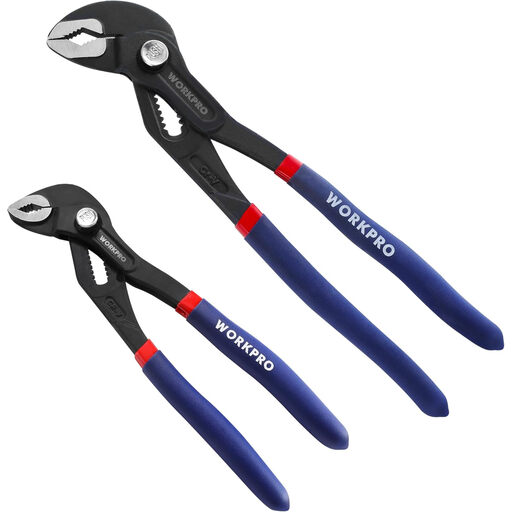
Why this product suits your needs: Two sizes cover smaller assembly jobs as well as larger pipework and repairs. According to the product details, the maximum opening is 33 mm and 43 mm respectively.
Having two pliers reduces the chance of needing a separate tool for every jaw opening. The push-button adjustment makes it easy to change the setting.
Two lengths, Cr-V steel, serrated jaws and non-slip shaped plastic handles.
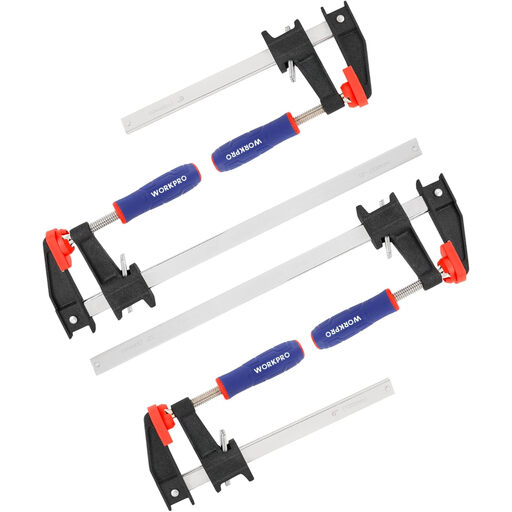
Why this product suits your needs: The set combines two clamping capacities with a throat depth of 80 mm. It’s suited to precise clamping for woodworking and assembly jobs.
Protective caps and double-sided grooves help you clamp workpieces securely and with control. Even so, don’t exceed the stated clamping force of 272 kg.
Four clamps in two sizes, quick adjustment, steel construction and plastic protective caps.
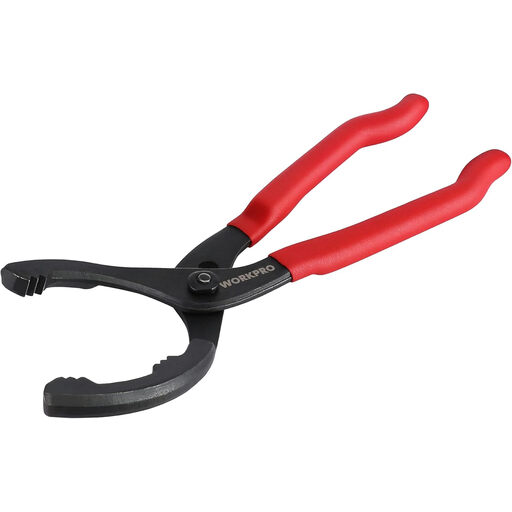
Why this product suits your needs: These oil filter pliers are designed for vehicle maintenance, small engines and certain installation jobs. The 305-mm handle helps you reach into tight spaces.
The adjustment range of 60 to 102 mm lets you check that the filter size is suitable before use. Don’t apply excessive force to heavily corroded parts.
Three adjustment positions, serrated jaws, carbon steel and a stated jaw hardness of HRC 45.
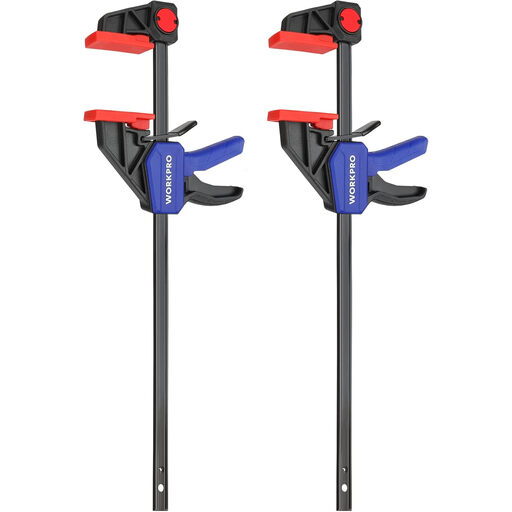
Why this product suits your needs: This clamp can be used for both clamping and spreading. With a clamping capacity of 305 mm, a spreading capacity of 440 mm and a throat depth of 60 mm, it’s suited to a variety of woodworking and DIY projects.
The conversion feature means you don’t need a separate spreading clamp for every spreading job. Soft pads reduce direct contact with the surface.
One-handed operation, quick-release button, converts into a spreading clamp and has a stated clamping force of 68 kg.
We’ve put together a complete, regularly updated list of products that meet these strict selection criteria and fully comply with the safety regulations in force in the EU.
For round pipes and fittings, water pump pliers with serrated jaws are a good option. The key considerations are the pipe diameter, jaw opening and available space. The WORKPRO model with a length of 305 mm has a stated maximum opening of 50 mm.
One-handed clamps are useful for quick clamping, assembly and many DIY jobs. For longer glue-ups or higher pressure, a screw clamp set with controlled threaded adjustment may be a better choice. The clamping force you need depends on the workpiece, gluing method and contact area.
There’s no reliable way to give a fixed lifespan. It depends on the load, corrosion, storage and whether the tools are used correctly. Cleaning, dry storage and avoiding overloading can help reduce wear. Damaged handles, bent guide rails or stiff joints are all reasons to replace a tool.