
Lieferung heute & morgen

Qualitätsgarantie

Willkommens-Angebote freischalten: KOSTENLOSE Lieferung | Bis zu 80 % RABATT | Kostenlose 30-Tage-JoyPlus-Testphase
App herunterladen
A WORKPRO pliers and clamps set can cover a wide range of jobs in the workshop, garage and home. However, product images and general claims don’t always help you choose the right tools. The key is to check the details, including clamping capacity, materials, operation and intended use.
Whether you’re looking for a screw clamp set, one-handed clamps, water pump pliers or hose clamp pliers, checking the specifications before you buy can help you avoid the wrong purchase and unnecessary replacements.
A high stated clamping force doesn’t automatically mean a clamp is suitable for every workpiece. Too much pressure can leave marks on delicate wood, while an insufficient clamping width can limit its use with large panels. That’s why it’s important to consider clamping force, clamping width and throat depth together.
One-handed clamps can make positioning easier. However, you should check whether they have a quick-release button, a separate clamping trigger or a locking mechanism. A non-slip handle is also useful for longer jobs. A quick-release clamp with soft protective pads can make a clamp easier to use and help protect the work surface, but it doesn’t replace correctly adjusted clamping force.
Water pump pliers are designed for gripping and turning workpieces of different shapes. They aren’t automatically suitable as an adjustable pipe wrench for every pipe size. Flexible hose clamp pliers, on the other hand, make it easier to work on hard-to-reach hose clips, but shouldn’t be confused with ordinary clamps for woodworking.
For woodworking clamps, the maximum clamping width should suit the size of your workpiece. A set with 120 and 150 mm clamps is suitable for smaller battens, frames and assembly jobs. For larger panels or furniture parts, a clamping width of 300 mm or more is a good choice. If the clamps can also be used as spreaders, check the maximum spreading width too.
For pliers, consider the jaw opening and tooth profile. A model with a maximum opening of 50 mm is suited to different jobs from a smaller pair with a 33 or 43 mm opening. For plumbing work, it’s important to choose pliers that fit the pipe and fitting diameters.
For frequent use, tools made from chrome vanadium steel or heat-treated steel are designed to withstand loads and resist corrosion. However, this alone doesn’t tell you everything about how practical a tool is to use. You should also check:
Protective caps are particularly important on woodworking clamps and screw clamp sets when you’re working with painted, veneered or soft surfaces.
Before clamping, make sure the clamp is straight and secure against the workpiece. Never exceed the stated maximum clamping force. Keep your fingers clear of moving parts. Safety goggles are a good idea for metalwork and car repairs.
When using hose clamp pliers, pay close attention to their intended applications. Plastic pliers for flexible hoses aren’t automatically suitable for hard, reinforced or high-pressure hoses. The manufacturer’s information on jaw opening and hose type should guide your choice.
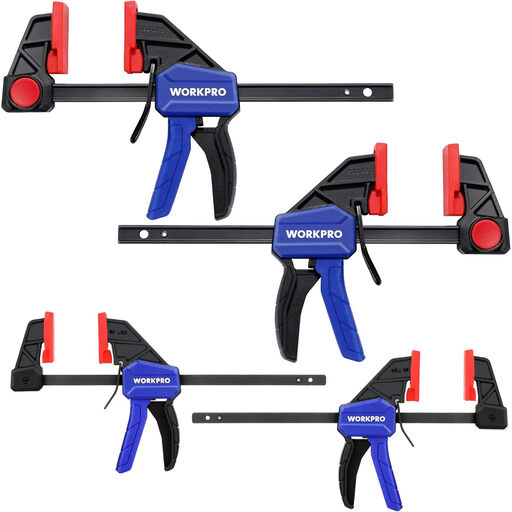
Why this product suits this user type: The set combines two 120 mm clamps and two 150 mm clamps for smaller woodworking, craft and DIY jobs. One-handed operation makes quick assembly tasks easier.
Having two sizes makes the clamps’ limits clear. The mini clamps have a stated maximum clamping force of 23 kg, while the larger clamps offer 68 kg.
Reinforced nylon body, heat-treated steel bar, TPU protective pads and a reversible jaw for different clamping directions.
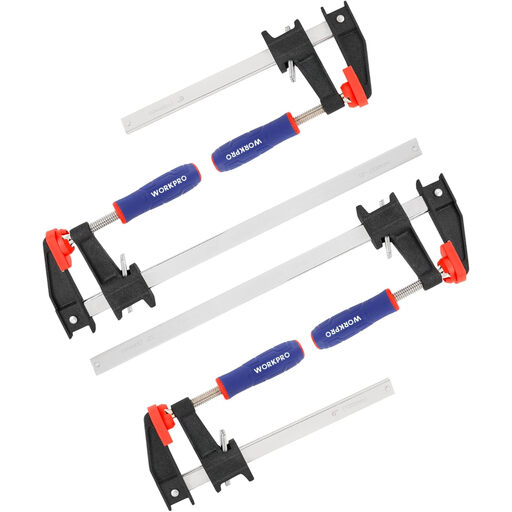
Why this product suits this user type: With two sizes included, this set is designed for users who work with different workpiece dimensions when making furniture, glueing and aligning components.
The product specifications state an 80 mm throat depth, a clamping force of 272 kg and protective caps. This makes it easy to check the size and surface protection before use.
Nickel-plated alloy steel, quick adjustment and 150 mm and 300 mm sizes.
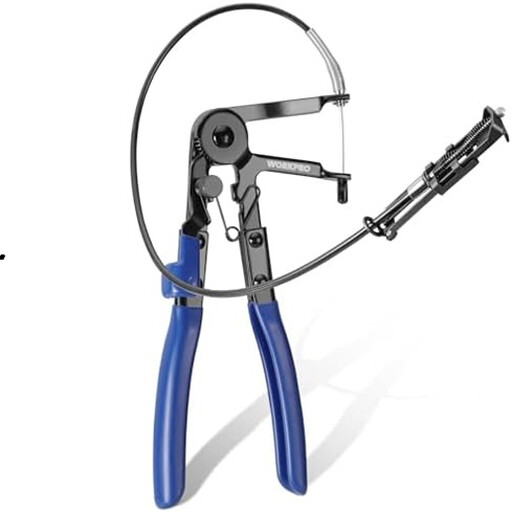
Why this product suits this user type: These flexible hose clamp pliers are designed for car maintenance and hard-to-reach hoses, such as fuel, oil or radiator hoses.
The 67 cm cable and stated opening range of 10 to 50 mm show which installation situations this tool is designed for.
Heat-treated carbon steel, ratchet lock and a PVC-coated grip for one-handed operation.
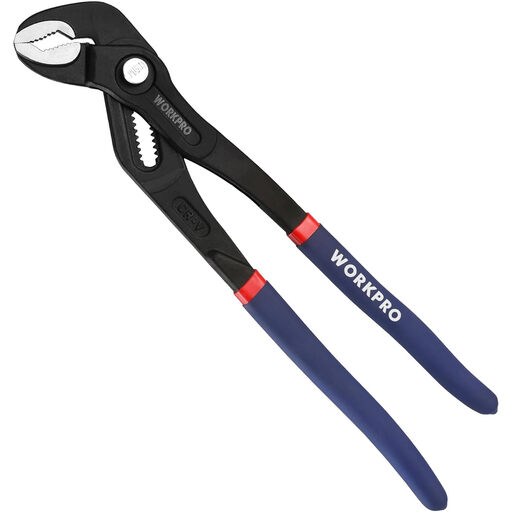
Why this product suits this user type: This longer model is for users who need a wider jaw opening when working on pipe joints, fittings and mechanical repairs.
The maximum opening of 50 mm is clearly stated, so you can check in advance whether the pipe or fitting will fit within the working range.
Heat-treated chrome vanadium steel, push-button adjustment and serrated jaws for round, flat, square and hexagonal shapes.
We’ve put together a complete, regularly updated list of products that meet these strict selection criteria and the safety regulations in force in the EU.
F-clamps with a clamping width of 120 or 150 mm are suitable for smaller frames, battens and craft projects. For larger furniture parts, a screw clamp set with a 300 mm clamping width is a better choice. Protective pads and even pressure distribution help reduce visible marks.
They help you remove and fit spring clips and hose clips in hard-to-reach places, particularly when carrying out car repairs. Before use, check the opening range, hose type and manufacturer’s instructions. They aren’t automatically suitable for hard or high-pressure hoses.
Their lifespan depends on the load, storage conditions, exposure to moisture and correct use. Heat-treated steel and well-maintained joints can help extend their working life. Overloaded mechanisms, rust or damaged protective pads are signs that the tool should be inspected or replaced.