
Lieferung heute & morgen

Qualitätsgarantie

Willkommens-Angebote freischalten: KOSTENLOSE Lieferung | Bis zu 80 % RABATT | Kostenlose 30-Tage-JoyPlus-Testphase
App herunterladen
A WORKPRO screw clamp set can replace several individual clamps when gluing, assembling and securing workpieces. However, clamps vary considerably in design, clamping force and ease of use. A high figure in the product description alone tells you little about whether a clamp is suitable for a thin strip, a large tabletop or a delicate surface.
Before buying, DIYers should look beyond the price and stated clamping force. Clamping capacity, throat depth, material, workpiece protection and ease of use are all important too.
High clamping force can be useful when gluing sturdy components. But too much pressure can leave marks or deform delicate wood and thin workpieces. The stated 272 kg clamping force should therefore always be considered alongside the protective pads, jaw design and intended use.
For light craft projects, model-making or small repairs, one-handed clamps with lower clamping force are often enough. For frames, furniture parts and more demanding woodworking, sturdier steel screw clamps may be a better choice.
Clamping capacity describes how far the jaws can open. Throat depth tells you how far the jaws reach over the workpiece. So a clamp with a 300 mm capacity may still be unsuitable for a deep workpiece if its throat depth is too short.
Before you buy, it’s worth checking:
A quick-release clamp with a trigger can make positioning easier. Check whether the jaw can be moved in a controlled way and whether the handle feels secure during longer jobs. A woodworking clamp should also have non-slip handles and soft pads.
On cheaper models, a basic plastic construction may flex under heavy loads. Reinforced nylon bodies or hardened steel rails may be a better choice, depending on how you’ll use the clamp. Product descriptions should also distinguish clearly between maximum clamping force and the permitted continuous load.
Compact clamps with a capacity of around 120 to 150 mm are suitable for smaller projects. For shelving, frames and larger glue-ups, 300 mm or more is often more practical. If you need to push workpieces apart, look for a reversible design or a clamp specifically described as a spreader clamp.
F-clamps distribute pressure along a guide rail, making them suitable for a wide range of woodworking and assembly jobs. Ratchet clamps and one-handed clamps can be adjusted quickly, while traditional screw clamps usually let you apply pressure more gradually using a spindle.
The clamping force should suit the strength of the workpiece. Soft TPU or plastic protective pads can help protect delicate surfaces, but they’re no substitute for an extra layer between the clamp and particularly delicate veneer, painted surfaces or soft wood.
If a product is sold as a set of four clamps, check whether all the clamps are the same size and strength or whether the set includes different sizes. A mixed set can be more versatile, while matching sizes can make planning easier for repeat jobs.
Hardened or heat-treated steel rails are designed to hold their shape. A coated surface can help protect against corrosion, but it’s no substitute for dry storage. Reinforced nylon makes lighter clamps easier to handle. When choosing, consider the material, the load and how often you’ll use the clamps together.
After use, remove any wood glue, metal shavings and dust. Moving parts will stay in working order if the clamps are stored clean and dry. Do not exceed the stated maximum load.
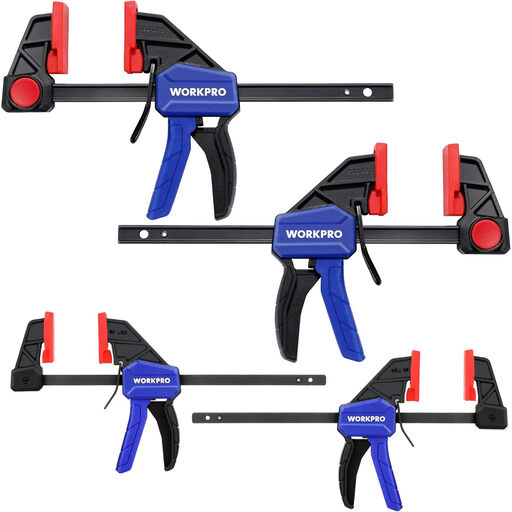
Why this product suits this type of user: Two compact sizes cover small woodworking jobs, craft projects and repairs. One-handed operation makes it easy to position the clamps quickly, without extra tools.
The product details list the clamping forces separately: 23 kg for the 120 mm clamps and 68 kg for the 150 mm clamps. This makes it easier to match the pressure to the workpiece.
Four clamps in two sizes, quick-release function, reversible jaw and TPU pads to help reduce pressure marks.
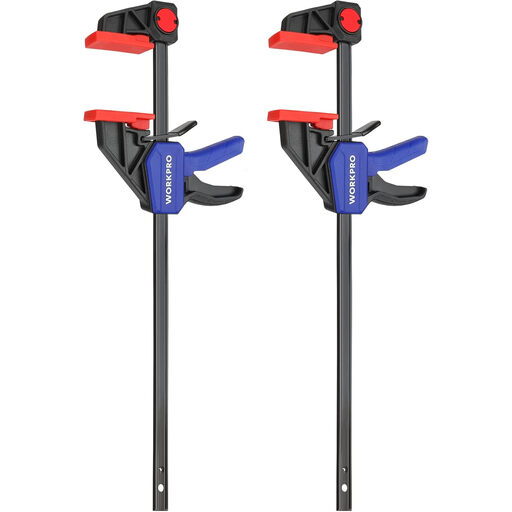
Why this product suits this type of user: This clamp is designed for people who need extra reach and a spreading function for woodworking, model-making or assembly jobs.
The product details clearly distinguish between a 305 mm clamping capacity and a 440 mm spreading capacity. This helps you avoid choosing a quick-grip clamp based on just one measurement.
Hardened steel rail, 60 mm throat depth, quick-release button and soft pads, with no scratching effect on the workpiece surface stated.
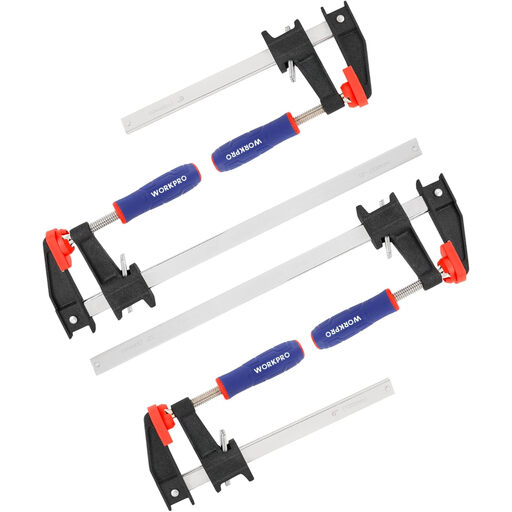
Why this product suits this type of user: Two sizes and a maximum clamping force of 272 kg, according to the product details, make this set suitable for larger woodworking joints, assembly jobs and regular use in the workshop or garage.
The 150 mm and 300 mm clamps are listed separately. Protective caps, double-sided grooves and a push-button for quick adjustment help you use them with control.
Nickel-plated alloy steel, 80 mm throat depth and a four-piece set with two sizes.
We’ve put together a complete, regularly updated list of products that meet these strict selection criteria and fully comply with the safety regulations in force in the EU.
Before clamping, place the workpiece on a flat surface. The jaws should sit flush against it and, where possible, be at right angles to the surface. When gluing, apply just enough pressure to hold the pieces securely together. Tightening the clamp further won’t automatically make the joint stronger.
Important safety tips:
A capacity of 120 to 150 mm may be enough for small frames, craft projects and model-making. For furniture parts, shelving or larger glue-ups, 300 mm or more is a better choice. The throat depth should also suit the depth of the workpiece.
One-handed clamps are suitable for many light to medium-duty gluing and assembly jobs. Look for sufficient clamping force, a sturdy guide rail and suitable protective pads. For large or heavily loaded joints, you may need several clamps or a sturdier screw clamp.
Their lifespan depends on how heavily they’re used, how they’re stored and how well they’re maintained. Staying within the permitted clamping force, keeping moving parts clean and storing clamps in a dry place can help reduce wear. Rust, bent rails or damaged protective caps are signs that you should check the clamp before using it again.