
Lieferung heute & morgen

Qualitätsgarantie

Willkommens-Angebote freischalten: KOSTENLOSE Lieferung | Bis zu 80 % RABATT | Kostenlose 30-Tage-JoyPlus-Testphase
App herunterladen
If you’re looking for WORKPRO tools for your workshop, garage or DIY projects, you’ll find plenty of options that look similar but are designed for quite different jobs. A one-handed clamp for light assembly work isn’t necessarily suitable for gluing large panels of wood. Likewise, water pump pliers won’t replace hose clamp pliers when you need to release a spring clip in a hard-to-reach spot.
Before you buy, it’s worth checking for three common pitfalls:
When choosing clamps for woodworking, first check how wide the jaws open. The clamping capacity is the maximum distance between the clamping faces. The throat depth tells you how far the jaws reach into the workpiece.
For assembly work on small items, 120 or 150 mm may be enough. For furniture parts, frames and wider boards, 305 mm or more is more practical. A combination clamp with a spreading function can also push components apart. The WORKPRO 305 mm model has a stated clamping capacity of 305 mm, a spreading width of 440 mm and a throat depth of 60 mm.
The stated clamping force shouldn’t be taken to mean that a clamp is suitable for every material. Too much pressure can damage delicate surfaces or distort glued components. Soft protective pads help reduce the risk of pressure marks, but particularly delicate surfaces may still need an extra layer of protection.
One-handed clamps are handy when you need one hand to hold the workpiece and the other to operate the clamp. A quick-release button makes positioning easier. Screw clamps, on the other hand, can be tightened more gradually and are often a good choice for longer clamping jobs. The key is not to exceed the force stated by the manufacturer.
If you’ll be using your tools regularly, make sure their materials are suited to the job:
When choosing a DIY tool set, storage matters too. A range of sizes and designs is only useful if everything can be stored neatly and found quickly.
The products below cater for a range of needs. Technical details are based on the information provided for each product.
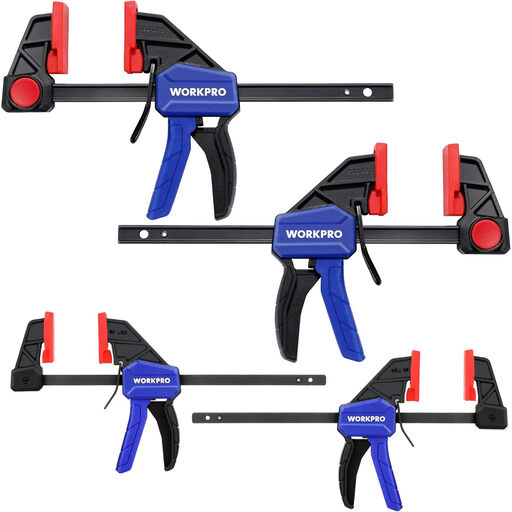
Why it suits this user: Four lightweight one-handed clamps in two sizes cover small DIY, craft and assembly jobs, so you don’t need to buy several sizes individually.
The two clamp sizes are clearly stated as 120 and 150 mm. This makes it easier to choose the right capacity for small workpieces, rather than using an unnecessarily large clamp.
One-handed operation, quick release, reversible jaws and soft TPU pads; stated clamping forces: 23 kg and 68 kg.
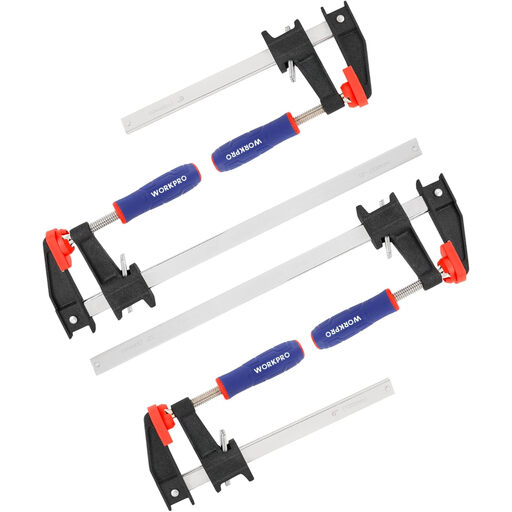
Why it suits this user: Two sizes and a screw mechanism make this set a good choice if you work with different-sized pieces when gluing, aligning and assembling.
The specifications state the clamping capacity, throat depth and clamping force. The protective caps supplied help prevent direct contact between the clamp jaws and the workpiece.
Four-piece set with 150 and 300 mm clamps, 80 mm throat depth and a stated clamping force of 272 kg.
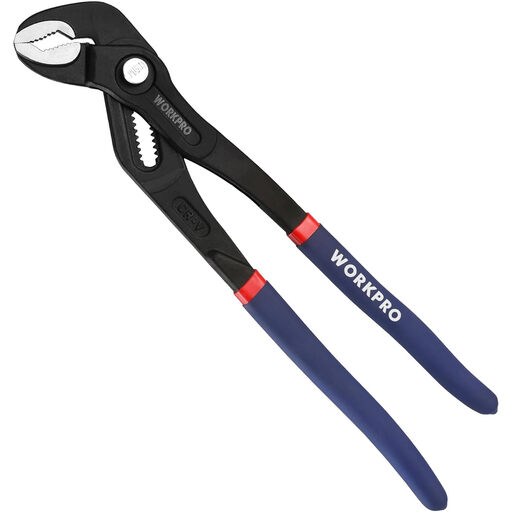
Why it suits this user: These 305 mm pliers are designed for plumbing, repairs and mechanical jobs involving workpieces of different shapes.
The maximum opening of 50 mm and push-button adjustment are clearly specified. This makes it easier to adjust the pliers to suit a pipe, nut or fitting.
Cr-V steel, serrated gripping surfaces, 305 mm length and plastic handles; suitable for round, flat, square and hexagonal shapes.
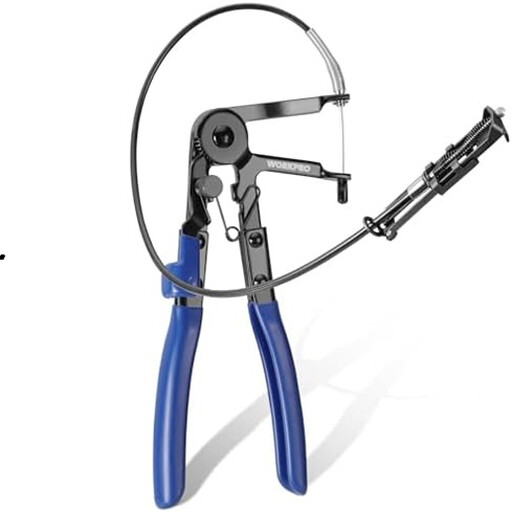
Why it suits this user: The flexible cable design makes these pliers especially useful for vehicle maintenance and spring clips in hard-to-reach places.
The 67 cm reach is designed for hard-to-access areas. The 10–50 mm clamping range and locking mechanism clearly define the intended use.
Flexible cable, locking mechanism, PVC-coated handle and heat-treated carbon steel for working on fuel, oil and coolant hoses.
For working on retaining rings, a circlip pliers set with straight and angled tips is a good choice. The ValueMax set includes four options for internal and external rings, plus a storage pouch. The stated tip thickness is 1.6 mm; the maximum jaw opening is 33 or 36 mm, depending on the version.
Before buying, also check that the pliers are suitable for the ring size and that you can access the component. For work on vehicles, hose clamp pliers with a flexible reach are often more suitable than ordinary combination pliers. Whatever the model, wear safety glasses, make sure you have secure footing and ensure the component is not under tension.
We’ve put together a complete, regularly updated list of products that meet these strict selection criteria and fully comply with the safety regulations in force in the EU.
It depends on the size of the workpiece and the clamping force you need. One-handed clamps measuring 120 or 150 mm may be enough for small strips of wood and craft projects. For wider panels, 305 mm clamps or a screw clamp set with a 300 mm option may be more suitable. Remember to consider the protective pads and throat depth too.
One-handed clamps can be positioned and tightened with one hand. Spreader clamps work in the opposite direction, pushing workpieces apart. On reversible models, the fixed jaw is moved to the other end of the bar. Before use, check that the mechanism is correctly locked into place.
After use, remove dust, glue residue and moisture from metal surfaces. Store clamps and pliers in a dry place. Check moving parts and maintain them lightly as directed by the manufacturer. Never exceed the stated clamping force, and replace tools with damaged jaws, handles or bars.