For a modest collection of handouts, a USB stick is usually a good place to start, provided its connection and file system work with the studio computers. If you regularly copy large folders, consider an external SSD. For extensive archives where copy time matters less, an HDD may be suitable. If files are confidential or contain personal data, you’ll also need to consider access controls and keeping a separate backup, whatever type of storage you choose.
Which option is right for you?
Teams using different computers
If you transfer handouts between studio computers with different USB ports or operating systems, check the connection and make sure the files will open on the destination device. Kingston describes certain sticks as having USB-A and USB-C connections, while Apple explains what to consider when choosing a file system for a Mac.
Teams handling confidential documents
If your files may contain sensitive drafts or information about participants, decide who should be able to access the drive and its files, and how to store a separate copy securely. The Federal Commissioner for Data Protection and Freedom of Information highlights encryption as an important measure for storage devices used to carry data.
Teams with lots of large files
If you regularly update large folders of materials, weigh up the storage space and write speed you need against how easy the drive is to carry. Kingston lists manufacturer maximum speeds for individual SSD models; these don’t indicate the actual speed you’ll get on every studio computer.
What should you look for when buying?
USB stick
A good fit if: You mainly transfer handouts between devices and the capacity is right for your needs.
The trade-off: Having the right connector doesn’t guarantee that the file system will be readable or that files will write quickly.
External SSD
A good fit if: You regularly copy larger folders and want a portable drive with a high stated transfer speed.
The trade-off: Manufacturer maximum speeds aren’t a measure of sustained performance on your studio computer. For small folders, the extra performance may be unnecessary.
External HDD
A good fit if: You need to store or back up a large archive as well as your handouts, and copy time is less important.
The trade-off: A larger drive may be less convenient for quickly sharing small folders. An HDD also isn’t a substitute for a separate backup.
| What matters |
What to check when buying |
Who is this important to? |
| Connection and readability |
Check the USB ports, supported file system and a test file on every device you plan to use. |
If I need to open handouts on different studio PCs, the connection and file format must be compatible. Around 40% of consumers put readability on the destination device first. |
| Confidentiality and access |
Consider how sensitive the files are, who is authorised to access them, how the drive is unlocked and how to store a separate backup. |
If documents may contain confidential drafts or information about participants, I want to control access in a shared space. Around 30% of consumers make confidentiality their top concern. |
| Copy time |
Check the write speed of the exact model and variant, as well as the computer’s USB interface. |
If I repeatedly update large folders before a workshop, I want to keep write times down. Around 20% of consumers prioritise copy time. |
| Storage space and backups |
Plan for the size of your folders, how much they’re likely to grow and a separately stored copy. |
If I need to keep a large archive of materials as well as the handouts, I need enough space and an additional backup. Around 10% of consumers prioritise archive storage. |
Common buying and usage mistakes
-
Assuming a USB-C connector means the drive is compatible with every device
The connector and file system are two separate requirements. Apple explains that a Mac can read NTFS drives but can’t edit them; exFAT is listed as a Windows-compatible format.
Check the port and file system on every device you plan to use, then open a test file before the workshop. Back up any existing files before formatting a drive.
Depending on the devices, you may need an additional adapter. Copying files again or reformatting the drive takes time.
-
Assuming a high read speed means fast writing
Read and write speeds are different measurements. COMPUTER BILD rated the write speed of the Transcend JetFlash 890 128 GB it tested as slow. That result applies to the model tested, not to other variants across the range.
Check the write speed of the exact model and capacity, especially if you regularly update large folders.
Repeatedly writing large folders can mean extra waiting time.
-
Using the drive you carry around as your only archive
If a drive fails, is lost or files are accidentally deleted, your only copy may become inaccessible. The Federal Office for Information Security explains that backups can help you restore important data.
Keep the original templates separately and check that you can actually restore the backup.
-
Relying on access controls alone to keep your files safe
A protected drive doesn’t automatically prevent every risk associated with shared computers. The Federal Commissioner for Data Protection and Freedom of Information also warns about the risk of malware spreading via USB media.
Only connect trusted media to approved computers, and set appropriate access and security rules for handling sensitive files in the studio.
Brands to consider
Kingston
The product ranges mentioned include USB sticks for transferring files and external SSDs for copying larger amounts of data.
- Kingston describes the DataTraveler microDuo 3C as having USB-A and USB-C connections. The manufacturer says the XS1000 comes with a cable and an adapter for these connection types.
- The stated transfer speeds are maximums for individual models and don’t apply to every Kingston product.
Verbatim
The products described range from dual-USB sticks to a drive protected by a passcode.
- According to Verbatim, the 64 GB stick #49967 combines USB-A and USB-C. The Keypad Secure #49429 is designed for situations where controlled access matters.
- According to the manufacturer, the Keypad Secure #49429 requires reformatting after 20 incorrect passcode attempts. The included Nero backup software is compatible with Windows only.
Transcend
According to the manufacturer, the JetFlash 890 range is designed for switching between USB-A and USB-C devices.
- The manufacturer describes the JetFlash 890 range as having both connection types.
- COMPUTER BILD rated the write speed of the 128 GB model it tested as slow. This test result doesn’t apply to other Transcend models.
Samsung
The 1 TB portable SSD T7 Resurrected is an option for transferring larger files.
- For this model, Samsung lists USB 3.2 Gen 2 and sequential maximum speeds of 1.050 MB/s for reading and 1.000 MB/s for writing.
- According to Samsung, a USB-C-to-USB-C cable is included. If your computer only has USB-A ports, you’ll need to work out the connection separately.
Seagate
The Expansion Portable is an HDD range for larger archives where copy time matters less.
- The Seagate data sheet describes USB-powered operation and drag-and-drop file transfers.
- An HDD isn’t the obvious choice if you need to share small folders of handouts quickly.
Joybuy products
The selection includes USB sticks for switching between devices and protected file access, as well as portable HDDs and SSDs for larger collections of materials.
 No image available
WD Elements 2TB Portable External Hard Drive
For larger collections of materials, if you’re looking for a portable HDD.
2 TB, USB-C, USB 3.2 Gen 1, 2.5-inch and exFAT.
View at Joybuy
 No image available
MOVESPEED USB Flash Drive 128GB, YSUSP05-128GSR
For moving between devices, if you’re looking for a USB stick with two connection types.
128 GB, USB 3.2 Gen 1 and Type-C; stated read speeds of up to 570 MB/s.
View at Joybuy
 No image available
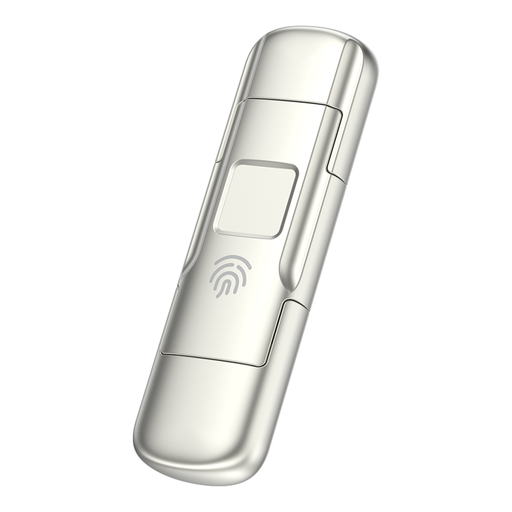
MOVESPEED USB Flash Drive 256GB, YSUYC-256GSN
For files that need to be protected from unauthorised access while in transit.
256 GB, USB 3.2 Gen 1, Type-C and fingerprint encryption; stated speeds of up to 550 MB/s for reading and 500 MB/s for writing.
According to the product information, the encrypted area can’t be recovered if both the password and fingerprint access fail.
View at Joybuy
 No image available
Samsung Portable Solid State Drive T7 2TB, Titanium Grey
For larger folders of materials, if you’re looking for a portable external SSD.
2 TB and USB Type-C 3.2 Gen 2.
View at Joybuy
 No image available
Lexar D40E 128GB Dual USB 3.2 Gen 1 Type-C Jump Drive, LJDD40E128G-BNSNG
For handouts and other documents, if a compact USB stick with dual connectivity suits the devices you’ll be using.
128 GB, USB 3.2 Gen 1 and Type-C.
View at Joybuy
Frequently asked questions
How can you check that copied handouts will work on another studio computer?
Check the USB connection and supported file system on the destination device, then open a sample file after copying. Apple describes exFAT as Windows-compatible. Back up your files before formatting a drive, as this deletes any files already on it.
Is exFAT a good option if you use both Mac and Windows?
Apple lists exFAT as a Windows-compatible format. Even so, check the devices you’ll actually be using and back up any existing files before formatting. Having the right connector alone isn’t enough.
Should your portable drive be the only copy of your workshop templates?
No, if you need to be able to recover the templates after loss, damage or accidental deletion. Keep a separate copy and check that you can open or restore it.
What should you consider when using a passcode-protected USB stick?
Decide who is allowed to unlock the stick and how the code will be managed. For the Verbatim Keypad Secure #49429, the manufacturer specifies a security update and says reformatting is required after 20 incorrect code entries. Follow this guidance for that specific model.
Is an encrypted USB stick legally required for every workshop handout in Germany?
Official guidance doesn’t set a blanket requirement for a particular drive model. If personal data is being processed, those responsible must put in place appropriate technical and organisational measures that are proportionate to the risk. The Federal Commissioner for Data Protection and Freedom of Information highlights encryption as an important measure, particularly for storage devices used to carry data. What’s appropriate in each case depends on the files and how they’re processed.


