Copy materials between devices
You want to open handouts on several devices without using the cloud. The Federal Office for Information Security recommends checking that you can read the copied files afterwards, too.


For a manageable set of handouts that you copy between devices with compatible ports, a USB flash drive is a natural place to start. If you regularly copy larger files, an external SSD may be a better fit; for a substantial local collection, consider an HDD. Check the ports and storage capacity, and make sure confidential documents are protected against unauthorised access. Then open a test file directly from the copy.
You want to open handouts on several devices without using the cloud. The Federal Office for Information Security recommends checking that you can read the copied files afterwards, too.
If your files contain sensitive information, access protection and the ability to unlock the drive on the devices you plan to use are important. The Federal Commissioner for Data Protection and Freedom of Information highlights encryption during the transport of portable storage devices as an important way to protect confidentiality.
You collect handouts from several events or want to keep additional local copies. The Federal Office for Information Security points out that storage media have different lifespans, which are difficult to predict accurately.
A good choice if: you mainly copy individual document folders between devices with compatible ports and want a compact drive to take with you.
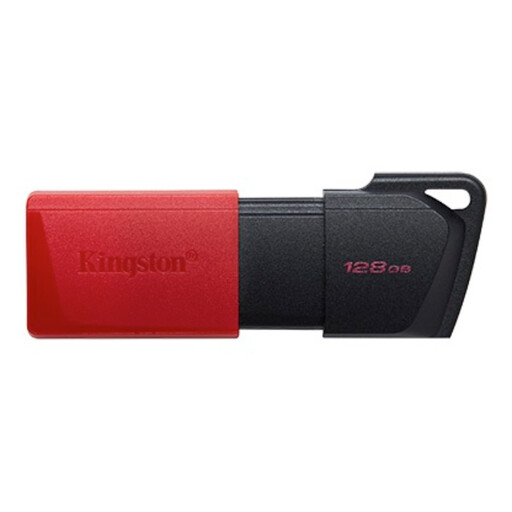
Keep in mind: A USB-A model such as the Kingston DataTraveler Exodia M needs a USB-A port on the device you’re copying to, or a connection solution that you’ve checked will work.
A good choice if: you regularly update larger workshop folders and both devices have the ports you need.
Keep in mind: Intenso quotes a maximum transfer rate of up to 1000 MB/s for the TX500. This is a manufacturer’s specification, not a measurement of your own file transfers. Check the file system and access protection, too.
A good choice if: you want to keep a larger local collection or additional backup copies.
Keep in mind: Toshiba says the Canvio Basics works with Windows without any additional installation; check compatibility separately for other devices. An archive stored on just one drive is not a substitute for a separate backup.
| Priority | What to check before buying | Who should pay particular attention? |
|---|---|---|
| Ports and readability | Check the ports on every device you plan to use, and open a test file on the destination device after copying. | If I need to open handouts on different devices without the cloud, I want to know the port and files will work on the destination device. Around 34% of consumers put ports and readability first. |
| Confidentiality while in transit | Check the specific encryption and unlocking method, and make sure it works on the devices you plan to use. | If I take confidential documents with me, I want to limit access if the drive is lost. Around 25% of consumers prioritise confidentiality while in transit. |
| Archiving and separate copies | Work out the size of your folders and how many future versions you plan to keep. Store any backups you need separately and check that the files can be opened. | For several workshops, I need room for a growing collection and don’t want to rely on a single storage device. Around 25% of consumers put archiving and backups first. |
| Time spent on frequent copies | Compare speed specifications only in the context of the devices and ports you actually use. | If I regularly update large folders, I want to plan file transfers around my schedule. Around 16% of consumers prioritise the time needed for repeated copies. |
A USB-A flash drive won’t necessarily connect to every device at your workshop.
Make a note of the ports on all the devices involved, then test a file on the destination device.
The Federal Office for Information Security points out that the lifespan of storage media is difficult to predict accurately.
Keep important documents in a separate location as well, and check that you can open files from the copy.
Intenso’s quoted maximum transfer rate of up to 1000 MB/s for the TX500 is not a measurement based on your devices and files.
Only factor in speed if large folders or frequent updates matter to your workflow, and check the ports you’ll be using.
When comparing options, consider Kingston USB flash drives for copying documents and its separate IronKey range if you need a higher level of access protection.
The external TX500 SSD is an option for larger local copies that you make more frequently.
The portable Canvio Basics is an HDD option for larger local collections of workshop materials.
The products below include USB flash drives for devices with USB-A and USB-C, including one model with fingerprint encryption, as well as an external HDD for larger local collections.
 No image available
For handouts shared between devices with a USB-A port. The product title lists 128 GB and USB 3.2 Gen 1; devices without USB-A need a connection solution that you’ve checked will work.
 No image available
For a larger local collection of documents: the product title lists 2 TB, USB-C, USB 3.2 Gen 1 and exFAT. According to the product description, a USB-A adapter may be needed to connect it to devices with USB-A ports.
 No image available
For switching between devices with USB-A and USB-C. The product title lists 128 GB, USB 3.2 Gen 1 and Type-C.
 No image available
For documents that need access protection when you take them with you: the product title lists fingerprint encryption, USB-A and USB-C, and 256 GB. According to the product description, encrypted data cannot be recovered if both the administrator password and fingerprint recognition fail.
 No image available
For transferring documents between devices with different ports: the product title lists 128 GB, as well as USB-A and USB-C.
Open a test file directly from the storage device on one of the destination devices you plan to use. The Federal Office for Information Security points out that you also need to be able to read or restore the data later.
You don’t need the cloud as an intermediary to copy handouts locally. Toshiba specifically says the Canvio Basics works with Windows without any additional software installation; even so, check your files on the specific destination device.
The Federal Office for Information Security recommends securely deleting personal data before selling, disposing of, repairing or lending a device, unless the data is already securely encrypted or otherwise protected against access. Back up any files you need first, and check that the copy can be read.