If your workwear can be washed at home according to its care label and your employer’s rules, and you have somewhere to hang it up, a washing machine could be suitable. Compare its spin-drying efficiency class and drum capacity, and consider how much space you have for airing clothes. If you have very little room to hang washing and the fabrics can be tumble-dried, a washer-dryer may be a good fit. Check its washing and drying capacities, as well as the energy consumption of the combined cycle. The German Environment Agency recommends choosing a washing machine rather than a washer-dryer wherever possible, as washer-dryers use considerably more energy. For protective clothing or clothing contaminated with hazardous substances, workplace rules may prohibit washing it at home.
Who should consider this choice?
Workwear with limited drying space
If you’re allowed to wash workwear at home, you’ll need to decide whether spinning and hanging it up will be enough, or whether you need a washer-dryer. If you dry clothes indoors, you’ll also need to consider ventilation and moisture levels, as explained by the consumer advice centre.
Households with regularly soiled workwear
If clothes that you’re allowed to wash at home get dirty regularly, it’s important to check the care label and choose suitable programmes. The German Social Accident Insurance (DGUV) and the Federal Institute for Occupational Safety and Health distinguish between ordinary workwear and protective or contaminated clothing, which is subject to workplace rules.
Homes with limited space for an appliance
The appliance dimensions, connections and space needed to open the door or lid must all suit the installation area. The dimensions of the Bosch WUU28T71 are a good example of why you should check the manufacturer’s specifications for the exact model.
What should you look for when buying?
Washing machine followed by air-drying
A good fit if: you can hang up clothes that are safe to wash at home, and you can manage the moisture in your home.
The trade-off: An airer and drying time take up space. The German Environment Agency recommends this option over a washer-dryer wherever possible, as washer-dryers use considerably more energy.
Washer-dryer
A good fit if: you have very little room to hang washing and the care label allows tumble-drying.
The trade-off: Drying capacity may be lower than washing capacity. For example, Bosch lists a 9 kg washing capacity and a 6 kg wash-and-dry capacity for the WNC244070.
Top-loading washing machine without an integrated dryer
A good fit if: the width of the space or access to it is a key concern, and you have a separate place to dry your washing.
The trade-off: A top-loader won’t solve the problem of finding space to dry clothes. The AEG LTR6N40270 has a 7 kg capacity and a maximum spin speed of 1,200 rpm.
| Priority |
What to check when buying |
Who should pay particular attention? |
| Drying |
Compare the spin-drying efficiency class on the EU label. For washer-dryers, check the washing and drying capacities separately. |
If I have very little room to hang washing, I want to know whether spinning and airing will be enough or whether I need a washer-dryer. Around 33% of consumers are likely to prioritise drying. |
| Wash programmes |
Follow the care label and workplace rules. Compare the programme table with the fabric and how soiled it is. |
If my workwear gets dirty regularly and I’m allowed to wash it at home, I need a programme that suits the fabric. Around 27% of consumers are likely to prioritise choosing the right treatment for their washing. |
| Installation dimensions and load capacity |
Check the appliance, connection and opening dimensions at the installation site. Make sure the rated capacity suits your usual load. |
If space is tight, the appliance needs to fit, and I still need to be able to dry wet washing. Around 20% of consumers are likely to prioritise suitable appliance and connection dimensions. |
| Energy consumption and repairability |
Compare energy and water consumption on the same programme basis. For washer-dryers, also check the full wash-and-dry cycle. |
If I use my machine frequently, I want to compare energy consumption and repair terms for the exact model. Around 20% of consumers are likely to prioritise running costs and repairability. |
Common buying mistakes
-
Choosing a washer-dryer based only on its washing capacity
The load capacity for washing may differ from the capacity for washing and then drying. Bosch, for example, lists a 9 kg washing capacity and a 6 kg capacity for washing and drying in one cycle for the WNC244070.
Compare both capacities with your usual load, and be prepared to split the washing if needed.
-
Assuming all workwear is protective clothing
Workplace rules may require protective clothing or clothing contaminated with hazardous substances to be cleaned by an employer. TRGS 500, published by the Federal Institute for Occupational Safety and Health, covers taking workwear contaminated with hazardous substances home for cleaning. The DGUV also specifies that used protective clothing and workwear must not be placed in waste collection.
Before choosing an appliance, check whether you’re allowed to wash the specific clothing at home. A hygiene or steam programme does not replace authorisation from your employer.
-
Judging a machine by its maximum spin speed or energy rating alone
The maximum spin speed alone doesn’t tell you how much moisture will remain in every load. The energy figures on the EU label are based on specified programmes, not necessarily every wash cycle.
Compare the spin-drying efficiency class and energy consumption figures on the same programme basis. Also check that the programme is suitable for the care label.
-
Measuring only the space for the appliance
A top-loader can wash clothes, but it can’t dry them. If you hang washing indoors, you’ll also need to consider the moisture it releases. The consumer advice centre recommends airing rooms regularly and keeping them adequately heated.
As well as checking the appliance and connection dimensions, consider how you’ll carry wet washing and where you’ll dry it.
Brands to consider
Bosch
German product information lists both under-counter washing machines and washer-dryers, offering different options for this decision.
- Bosch lists an 8 kg capacity, a maximum spin speed of 1,400 rpm and dimensions of 845 × 598 × 590 mm for the front-loading WUU28T71.
- For the WNC244070 washer-dryer, Bosch lists a 9 kg washing capacity and a 6 kg wash-and-dry capacity. These specifications apply to this model only, not every appliance in the range.
Beko
The WLM81434NPSA is a front-loading washing machine with programmes you can check when choosing a machine for particular stains and fabrics.
- Beko lists an 8 kg capacity and a maximum spin speed of 1,400 rpm for this model, and advertises StainExpert for 24 types of stain.
- The stain claim comes from the manufacturer and is not independent proof that the machine can tackle every type of workwear stain. The care label and workplace rules still apply.
LG
For the F4WX708YC, LG documents a washing machine with features for smaller loads.
- LG lists an 8 kg capacity and a maximum spin speed of 1,400 rpm for this model.
- According to LG, AI detection is only activated for loads under 3 kg, and not when the steam option is selected. This does not mean that the feature is suitable for all workwear.
AEG
The German product pages list both top-loaders and built-in front-loaders. The design may be an important consideration if installation space is limited.
- AEG lists a 7 kg capacity and a maximum spin speed of 1,200 rpm for the LTR6N40270 top-loader. The LR7BI6480 built-in front-loader has an 8 kg capacity and a maximum spin speed of 1,400 rpm.
- Neither of these models has an integrated dryer. These specifications should not be taken as applying to the whole brand.
Miele
The German product page describes the WWE380 WPS PWash&Steam&8kg as an 8 kg front-loader.
- Miele lists a maximum spin speed of 1,400 rpm for this model, along with SteamCare and QuickPowerWash.
- This is a washing machine without an integrated dryer. Check the terms and scope of any service options for your specific order.
Washing machines at Joybuy
This selection includes washing machines. You’ll need to plan separately for drying your workwear.
 No image available
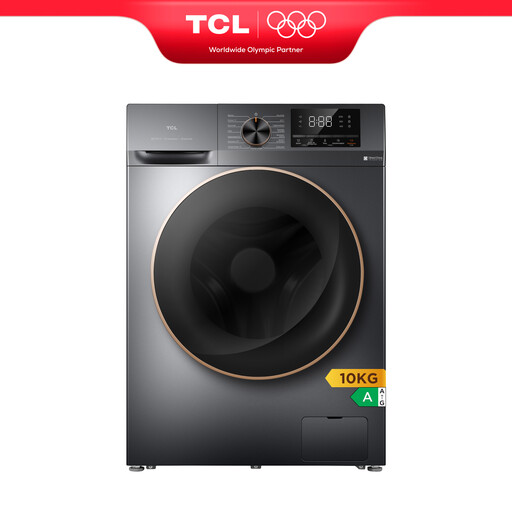
TCL FP2210SA0AMDE washing machine, 10 kg
The stated drum capacity may suit larger loads that are safe to wash at home.
Capacity: 10 kg.
Quick programme: 15 minutes.
Features steam washing, a child lock and an A energy rating according to the product name.
View at Joybuy
 No image available
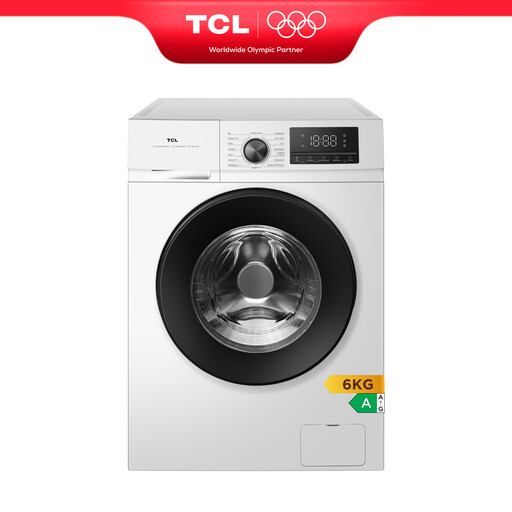
TCL FF0106WA2AMDE washing machine, 6 kg
The smaller stated drum capacity can be compared with the amount of washing you usually do.
Capacity: 6 kg.
Quick programme: 15 minutes.
Features a BLDC motor, steam washing, a child lock and a honeycomb drum according to the product name.
View at Joybuy
 No image available
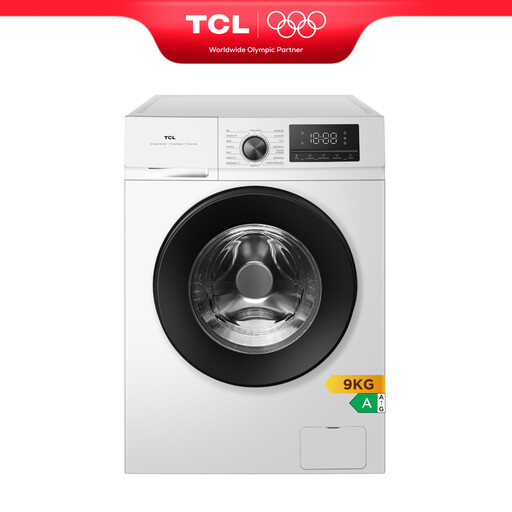
TCL FF0109WA2AMDE washing machine, 9 kg
The stated drum capacity may suit larger loads that are safe to wash at home.
Capacity: 9 kg.
Quick programme: 15 minutes.
Features a BLDC motor, steam washing, a child lock and a honeycomb drum according to the product name.
View at Joybuy
 No image available
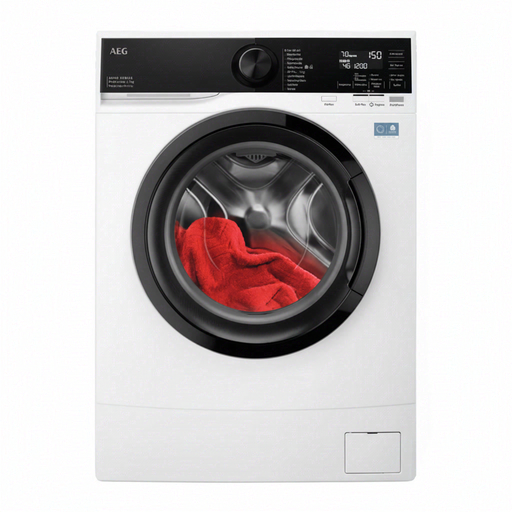
AEG LSR6FA75470 Series 6000 Slim, 7 kg
The stated appliance depth may help you check whether it will fit in a narrow space.
Capacity: 7 kg; appliance depth: 487 mm.
Maximum spin speed: 1,400 rpm; spin-drying efficiency class B.
According to the product description, it features a wool programme and Woolmark certification.
View at Joybuy
 No image available
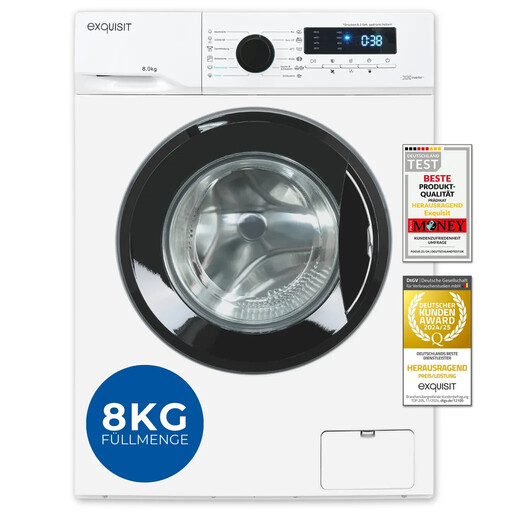
Exquisit WA58014-020A, 8 kg, white
Compare the stated drum capacity with the usual load of workwear you’re allowed to wash at home.
Capacity: 8 kg.
Maximum spin speed: 1,400 rpm; 13 programmes.
Features a delay start, a child lock and an A energy rating according to the product name.
View at Joybuy
Frequently asked questions
Can I wash my workwear at home?
Not simply because it fits in a domestic washing machine. Check the care label and your workplace rules. TRGS 500, published by the Federal Institute for Occupational Safety and Health, covers workwear contaminated with hazardous substances that should not be taken home for cleaning. The DGUV explicitly states that used protective clothing and workwear must not be placed in waste collection. This does not apply across the board to all ordinary workwear.
How can I tell whether my washing will be easier to dry after spinning?
Check the spin-drying efficiency class for the specific model on its EU energy label. The stated maximum spin speed alone doesn’t guarantee a particular level of residual moisture for every load.
Do washer-dryers have the same washing and drying capacity?
Not necessarily. Check both figures for the specific model. For example, Bosch lists a 9 kg washing capacity and a 6 kg capacity for washing and drying in one cycle for the WNC244070.
What should I bear in mind when drying clothes indoors?
Make room for an airer and consider the moisture in the room. The consumer advice centre recommends airing your home regularly and keeping it adequately heated to reduce the risk of mould.
Does an A energy rating mean every programme is energy-efficient?
No. A washing machine’s energy rating is based on the specified Eco programme. Other programmes may use different amounts of energy. Check the manufacturer’s information if it’s available.


