Workwear in a compact space
If you wash workwear at home that is approved for home laundering, first work out whether your space is more limited in width or depth.


First, measure whether width or depth is more limited in your laundry area: a top-loader may suit a narrow space, while a slimline front-loader could be a better fit if depth is limited. In either case, check the space needed to open the machine, the connections and the dimensions of the specific model. The drum capacity and programmes should suit your laundry loads and garment care labels. For protective clothing or workwear that may be contaminated, you also need to check whether it can be cleaned at home: the Personal Protective Equipment Use Regulations and the Biological Agents Ordinance set out requirements for cleaning and maintaining protective equipment.
If you wash workwear at home that is approved for home laundering, first work out whether your space is more limited in width or depth.
The programmes and treatment you choose should suit the type of soiling and the garment care label. A programme advertised for stain removal is no substitute for checking these first.
If you often wash several compatible items together, compare drum capacity, energy and water use, and spin noise – provided your laundry area can accommodate a larger machine.
A good fit if: width is the main constraint and there is enough clearance above the machine to open it.
The trade-off: According to the manufacturer, the Bauknecht WMT 612 B6 measures 40 × 60 × 90 cm and has a 6 kg capacity; its stated spin noise level is 79 dB.
A good fit if: there is enough width for a front-loader but depth is limited, and the door can open fully.
The trade-off: Haier lists the HW70-BP14637T as measuring 595 × 468 × 850 mm, with a 7 kg capacity; hoses and the door may require extra space.
A good fit if: your laundry area has enough room and you regularly have larger loads of items that can be washed together.
The trade-off: Bosch says the WAN28127 has an 8 kg capacity and measures 845 × 598 × 590 mm; Bosch lists “AquaStop: No” for this model.
| Buying priority | What to check | Who is it most relevant to? |
|---|---|---|
| Fit in your laundry area | Compare the width, depth and height of the space with the model’s dimensions, allowing for hoses, protrusions and the door or lid opening. | If space in my laundry area is limited, I need to know whether the machine, connections and opening will really fit. Around 33% of consumers might put fit at the top of their list. |
| Stains and fabric care | Check the care label, whether home laundering is permitted and the load limits for each programme. Beko specifies a maximum load of 2 kg for the BM3WFU4741N’s 14-minute programme. | When workwear is stained, I want to choose a suitable programme without ignoring the care instructions. Around 27% of consumers might prioritise fabric care and stain removal. |
| Capacity for regular loads | Think about the laundry loads you usually wash together. As well as the stated capacity, check the limits for individual programmes. | If I regularly have several suitable items to wash together, I want a drum that can handle those loads. Around 20% of consumers might put load size first. |
| Energy use and spin noise | Compare kWh per 100 eco cycles and litres per eco cycle using the same EU label basis; consider spin noise and the other programmes you need separately. | If the machine runs often or is close to living areas, I pay particular attention to energy use and spin noise. Around 20% of consumers might weigh up these running characteristics first. |
Protective clothing and certain contaminated textiles are subject to different responsibilities from ordinary household laundry. When it comes to waste collection, the DGUV specifically warns against taking used protective clothing and workwear home to wash yourself.
Before choosing a machine, check which items can actually be cleaned at home and follow your workplace’s safety and hygiene requirements.
Inappropriate cleaning could compromise protective properties or spread contamination.
A top-loader needs clearance above it, while a front-loader needs room in front for the door. Hoses and protruding parts may also increase the depth required.
Check the complete installation space against the specifications for the specific model.
If the dimensions are unsuitable, you could end up with the wrong machine or extra work during installation.
The Beko BM3WFU4741N has a stated capacity of 7 kg, but the manufacturer limits its 14-minute programme to 2 kg.
Check the load limit for every programme you plan to use.
A lower load limit for a programme may mean you need to wash more often.
The WMT 612 B6 top-loader is an example of a machine for a space with limited width.
The HW70-BP14637T front-loader is an example of a machine for a space with limited depth.
According to Beko, the BM3WFU4741N front-loader combines a 7 kg stated capacity with a machine depth of 49.6 cm.
The LTR6N40260 top-loader is another option for laundry areas with limited width.
The WAN28127 front-loader is an example of a larger drum for when your available space and laundry loads call for one.
This Joybuy selection includes washing machines for household laundry. For each model, check that its dimensions, door opening, connections and programmes suit your laundry area and the care instructions on your clothes.
 No image available
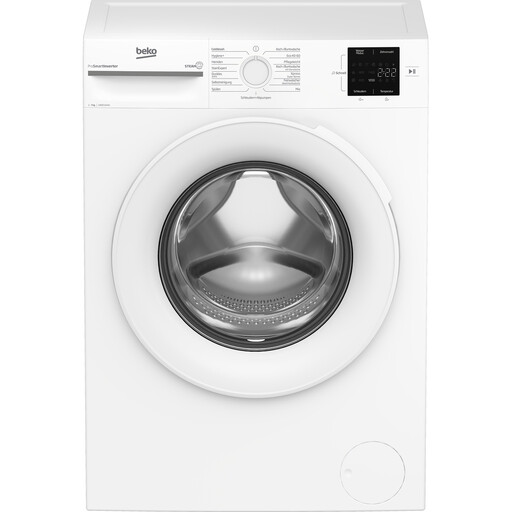
The stated machine depth can be useful when comparing models for a tight space; also check the connections and door opening.
The product details list a 7 kg capacity, 1400 rpm, 15 programmes and a depth of 496 mm. SteamCure, a ProSmart Inverter Motor and energy class A are also listed.
 No image available
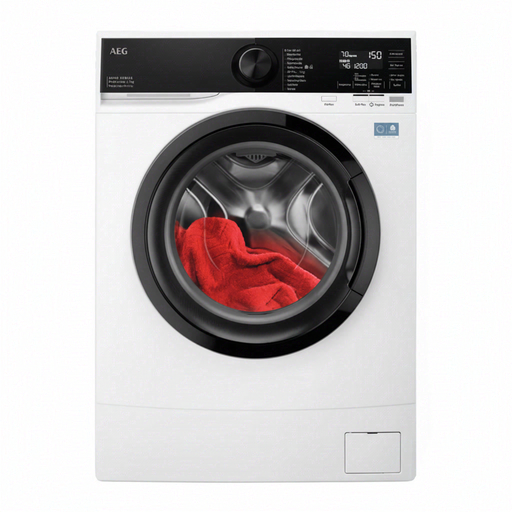
The stated depth makes this model worth considering when space is limited behind the machine; measure the complete installation area first.
The product details list a 7 kg capacity, 1400 rpm, a depth of 487 mm and energy class A. The description states that the 20-minute programme is suitable for loads of up to 3 kg.
 No image available
The “Slim Fit” name can help you shortlist models, but it is no substitute for checking the actual machine dimensions against your available space.
The product details list a 9 kg capacity and 1200 rpm, along with programmes such as Cotton, Mixed and Sportswear.
 No image available
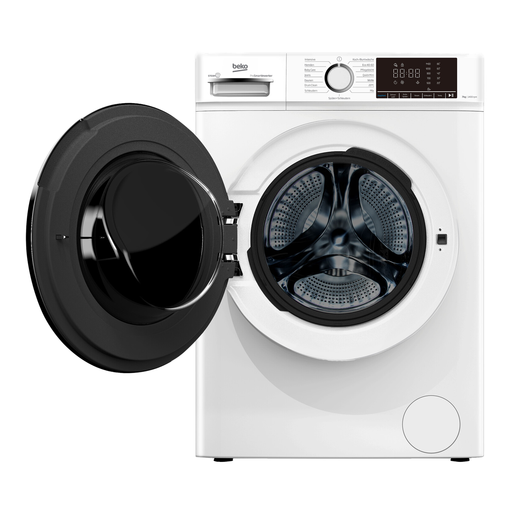
Capacity is a useful guide for regular loads; choose a drum size that suits the amount of laundry you actually wash together.
The product details list a 7 kg capacity, 1400 rpm and 15 programmes. Prewash, Extra Rinse, SteamCure and Watersafe are also listed.
 No image available
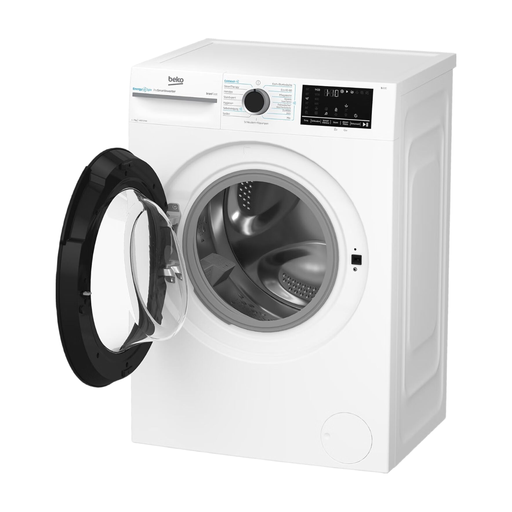
The stated depth can be useful when comparing models for a tight space; also measure for hoses, connections and the clearance needed to open the door.
The product details list a depth of 49.6 cm, a 7 kg capacity, 1400 rpm and 15 programmes. Beko specifies a maximum load of 2 kg for the 14-minute programme.
No. The fact that a textile is washable does not mean that home laundering is permitted or suitable in every situation. The Personal Protective Equipment Use Regulations and section 9 of the Biological Agents Ordinance set out requirements for cleaning and maintaining protective equipment. When it comes to waste collection, the DGUV specifically warns against taking used protective clothing and workwear home to wash yourself. If the clothing offers protection or may be contaminated, check your workplace’s requirements.
Measure the width, depth and height of the space, and check the clearance needed to open the door or lid, as well as for hoses, pipes and other protrusions. Compare everything with the specifications for the specific model; standard machine dimensions are not guaranteed installation dimensions.
No. The German Environment Agency distinguishes between time-saving quick programmes and longer, energy-saving programmes. Also check the permitted load: Beko specifies a maximum of 2 kg for the BM3WFU4741N’s 14-minute programme.
Compare the EU energy label figures for the same programme: electricity per 100 wash cycles and water per cycle, both for eco 40–60. These figures do not directly show the consumption of other programmes. The consumer advice centre also recommends adjusting detergent doses to the load size, how soiled the laundry is and the water hardness.
Check the water protection features of the specific model: the consumer advice centre recommends an integrated water protection system, while Bosch lists “AquaStop: No” for the WAN28127. For an old machine, the German Environment Agency lists your local collection point or handing it over to the retailer when buying a new one as disposal options. Check in advance which collection or installation services are actually available.