If your manuscript and notes are your main focus, first check that they fit side by side and remain readable on an adjustable 27-inch QHD monitor at your preferred font size and scaling. An ultrawide model can offer more horizontal space for additional reference windows, but it also takes up more desk space. If you’re using a laptop, make sure its video output matches the monitor’s connection. And if you want to charge it through the monitor, check that the power delivery is sufficient for your specific device.
Who benefits from which screen size?
Writers working with two text views
If you want to keep your draft and notes open at the same time, the main thing to check is whether both windows are readable at your usual font size. Dell and EIZO document 27-inch QHD models, while Microsoft explains how to snap open windows into place.
Writers working with lots of reference material
If you want to keep transcripts or a timeline in view alongside your manuscript and notes, a wider display may be worth considering, provided your desk has enough room. LG documents a 34-inch ultrawide model as an example of this design, but says it is no longer available.
Writers using a laptop
If you switch between working on the go and at your desk, make sure your laptop’s video output is compatible with the monitor’s connection. If you want to charge your laptop through the monitor, check the power delivery of the specific model too. Dell and EIZO quote different figures for their respective models.
What should you look for?
Start with a typical manuscript page and your notes side by side. Then consider whether you need extra reference windows and check that the connections are compatible with your laptop.
| Purchase priority |
What to check before buying |
Who cares about this? |
| Keep manuscript and notes readable side by side |
Try both windows at your preferred font size and scaling; consider the resolution and window width together. |
If I want to read my draft and notes at the same time, neither window should become too narrow. Around 40% of consumers put two clearly readable text views first. |
| Adjust the screen position |
Check the adjustment options on the specific model and make sure you can position it comfortably on your desk. |
For longer writing sessions, I want to position the screen to suit my workspace and the way the light falls. Around 30% of consumers prioritise an adjustable screen position. |
| Connect a laptop |
Check the laptop’s video output, USB-C video mode, cable and charging needs against the monitor’s specifications. |
If I connect a laptop regularly, I want to know that video and, where needed, power delivery are genuinely compatible. Around 20% of consumers put laptop connectivity first. |
| Open additional reference windows |
Measure the available space and consider which windows you want to keep readable at the same time. |
For my manuscript, notes and additional references, I want to be able to use more windows side by side without overlooking how much desk space they’ll need. Around 10% of consumers prioritise extra space for reference material. |
The percentages refer to consumers choosing a monitor for this writing task, with each person assigned their main purchase priority. They are not survey figures.
Avoid these selection mistakes
-
Assuming “USB-C” means full laptop docking
USB-C on its own doesn’t tell you whether the laptop can output the video signal you need or whether the charging power is sufficient.
Check the video mode and wattage for the complete monitor and laptop models.
Depending on the combination, you may need an additional connection or a separate power supply.
-
Choosing by screen size alone
Resolution, scaling and your editor’s layout all affect whether your manuscript and notes remain easy to read.
Try a typical split-screen view using your preferred font size. If you’re considering an ultrawide model, make sure you also allow for the space it needs.
-
Assuming an older ultrawide example is still available
On its German product page, LG marks the 34WQ75X-B as no longer available.
Use its dimensions and resolution only as an example of this type of monitor. For a specific product on sale, check the full model number and specification.
Relevant brands at a glance
Dell
The P2725DE is a documented example of a 27-inch QHD monitor with a USB-C hub. Dell quotes 90 W power delivery for this model.
- Dell lists QHD resolution, adjustment options and USB-C power delivery for the P2725DE.
- The U2724DE is a separate Thunderbolt 4 model; its features don’t apply to the P2725DE. The specifications are from Dell.
LG
The 34WQ75X-B illustrates a 34-inch monitor with a 21:9 aspect ratio and more room for windows side by side.
- LG lists a resolution of 3440 × 1440 pixels and a width of 816,7 mm without the stand.
- LG marks this specific model as no longer available, so it serves as an example of this type of monitor rather than a currently available purchase option.
EIZO
The FlexScan EV2795 is a documented example of a 27-inch QHD office monitor with USB-C docking.
- EIZO lists a Paper mode, LAN and up to 70 W through the USB-C upstream port.
- Whether the power delivery is sufficient depends on the needs of your specific laptop. These features are listed by EIZO and are not an independent assessment of writing performance.
Philips
The Business Monitor 27B2U4601/00 is another documented example of a 27-inch QHD monitor with USB-C.
- Philips lists a resolution of 2560 × 1440 pixels and an IPS panel.
- For this exact variant, check that its connections and adjustment options suit your desk and laptop.
Monitors for manuscripts and notes
These Joybuy monitors offer a range of screen formats and resolutions for displaying text windows side by side. Before choosing, check that the dimensions, font size and connections suit your workspace.
 No image available
CRUA 49-inch DQHD ultrawide monitor
For your manuscript, notes and other windows, if you’re planning for an especially wide display.
49 inches; 32:9; 5120 × 1440 pixels; 165 Hz; 1500R; height-adjustable stand; HDMI 2.1 and DisplayPort 1.4.
Joybuy
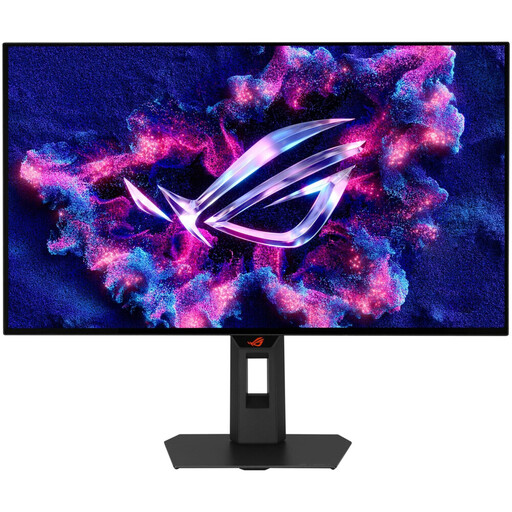 No image available
ASUS ROG Strix WOLED XG27AQWMG, 27-inch WQHD monitor
For two text views on a 27-inch screen, if WQHD and an adjustable stand suit your setup.
2560 × 1440 pixels; 16:9; 280 Hz; HDMI 2.1, DisplayPort 1.4 DSC and USB hub.
Joybuy
 No image available
INNOCN E34A1R, 34-inch ultrawide monitor
For your manuscript, notes and other reference material, if you have room for the wider display on your desk.
3440 × 1440 pixels; 21:9; 1500R; height-adjustable stand; PIP and PBP modes, according to the product description.
Joybuy
 No image available
INNOCN 40C1U, 40-inch ultrawide monitor
For viewing several documents at once, if you have room for a larger display.
40 inches; 5120 × 2160 pixels; 21:9; 100 Hz; USB-C with 65 W Power Delivery; PIP and PBP modes.
Joybuy
 No image available
KTC M27P6, 27-inch 4K monitor
For working with text on a 27-inch screen, if you want 4K resolution and the listed connectivity features.
3840 × 2160 pixels; 4K at 160 Hz or FHD at 320 Hz; Type-C with 65 W; KVM; height-adjustable stand with tilt and swivel.
Joybuy
Frequently asked questions
Do I need a special monitor feature to use two text windows?
No. In Windows 10 and 11, you can arrange application windows side by side using the snap feature, as Microsoft explains. Whether both texts remain easy to read depends on your editor, font size and scaling.
Can any USB-C monitor display and charge my laptop?
No. The connection and power delivery need to be compatible with your laptop. Dell lists 90 W for the P2725DE; EIZO lists up to 70 W and DisplayPort Alt Mode through the EV2795’s USB-C upstream port. Compare these specifications with your specific laptop and the cable you’re using.
How should I set up my monitor for longer writing sessions?
Use the adjustment options on your specific model to set the screen position and lighting to suit your workspace. The BAuA rule ASR A6 sets out requirements for display screen workstations within the scope of German workplace law; it is not a blanket requirement for writing at home.
What are the rules in Germany if I buy online and the product develops a fault later?
Consumers who buy online generally have a 14-day right to cancel; you must notify the other party to the contract that you wish to cancel. Your statutory rights against the seller are separate from any voluntary guarantee. According to the consumer advice centres, repair rules have also applied to monitors since 31 July 2026: if you choose a repair rather than a replacement for a fault that occurs within the first two years, the warranty period extends from two to three years, provided the stated conditions are met.


