Detail photographers
If you want to get a closer shot of distant parts of bridges or railway structures from an accessible position, optical telephoto reach is a key factor to consider.


For photographing railway structures in Wuppertal, a long optical telephoto range is useful if you want to fill the frame with distant girders or connections from an accessible position. You’ll also need a suitable wide-angle setting to capture entire structures. Panasonic lists a 24–720 mm range for the DC-TZ99, while Canon gives a 24–960 mm 35mm-equivalent range for the PowerShot SX740 HS Lite Edition. If you often photograph subjects in shade, a model with a larger sensor and a shorter zoom range may be a better fit. However, technical specifications can’t guarantee a particular level of sharpness at your chosen location.
If you want to get a closer shot of distant parts of bridges or railway structures from an accessible position, optical telephoto reach is a key factor to consider.
If you want to switch between a full view and individual components while exploring, choose a zoom range that covers both types of shot.
If you also photograph structures in shade, consider the sensor specification alongside the available zoom range rather than looking only at the longest telephoto focal length.
A good fit if: You want to photograph distant details and entire structures from accessible, safe locations. Panasonic lists a 24–720 mm range for the DC-TZ99; Canon gives a 24–960 mm 35mm-equivalent range for the PowerShot SX740 HS Lite Edition.
The trade-off: A longer telephoto focal length doesn’t prove that a camera will produce sharper images. Also consider the light at your location and the specific model variant.
A good fit if: You often photograph in changing light and don’t need extreme telephoto reach. Sony lists a 24–200 mm range and an electronic viewfinder for the RX100 VII; Panasonic gives a 24–360 mm range for the DC-TZ300.
The trade-off: From the same distance, faraway components will occupy less of the frame at the shorter telephoto settings. The sensor type alone can’t guarantee a particular result in every lighting condition.
A good fit if: You’re happy with a larger camera and value maximum optical reach more than a pocket-sized design. Nikon lists a 24–3000 mm 35mm-equivalent range for the COOLPIX P1100.
The trade-off: Photography Blog describes the P1100 as too large for a pocket, so allow more space in your luggage.
| Priority | What to check when buying | Who it matters most to |
|---|---|---|
| Optical telephoto reach | Compare the optical telephoto end of the range as a 35mm equivalent, and distinguish optical zoom from digital zoom. Also check stabilisation and the aperture at the telephoto end for the specific model. | If I can’t get any closer to a distant girder from my accessible position, I want it to fill as much of the frame as possible. Around 36% of consumers put optical telephoto reach first. |
| Full views and details | Compare the shortest and longest focal lengths on the same 35mm-equivalent basis. Check whether the wide-angle setting can capture the entire structure from your usual position. | When I’m exploring, I want to photograph the whole structure first and then individual connections, without changing lenses. Around 29% of consumers prioritise this flexible framing. |
| Details in changing light | Consider the sensor type, maximum aperture at the focal length you need and stabilisation together. Manufacturer specifications aren’t a measurement of image quality at your planned location. | If I also photograph subjects in shade or changing light, I want to weigh the light available against the telephoto reach I need. Around 21% of consumers make changing light their main priority. |
| Light to carry | Compare the dimensions and weight of the complete model, including the battery. Decide whether pocket-sized portability or exceptional reach matters more. | When I’m exploring a city, I want to take my camera with me easily and avoid having to pack bulky gear for every subject. Around 14% of consumers put compact size first. |
Canon lists optical zoom, ZoomPlus and digital zoom separately for the PowerShot SX740 HS Lite Edition. Nikon also distinguishes between optical zoom and the digitally extended Dynamic Fine Zoom on the COOLPIX P1100.
For distant components, start by comparing the optical telephoto end of the range as a 35mm equivalent, and check which zoom mode each specification refers to.
The models listed also differ in their wide-angle starting point, sensor type and design. A telephoto specification alone doesn’t tell you whether an entire structure will fit in the frame or how the camera will perform on subjects in shade.
Compare your typical shooting distance and the light at your location with both ends of the zoom range and the specifications for the particular model.
Photography Blog describes the Nikon COOLPIX P1100 as too large for a pocket.
Choose this design only if you’re happy to carry more luggage for the extreme reach it offers.
You may need to allow extra space in your luggage.
The consumer advice centre Verbraucherzentrale distinguishes statutory rights against the seller from a voluntary guarantee with its own terms and conditions.
Check the seller, guarantee terms and what’s included with the specific offer separately.
The DC-TZ99 and DC-TZ300 have different strengths when it comes to zoom and sensor type.
The PowerShot SX740 HS Lite Edition is a compact option with an impressive stated optical range.
The RX100 VII combines a 1.0-type sensor with an electronic viewfinder and a shorter zoom range.
The COOLPIX P1100 is a bridge camera offering exceptional optical reach, if you’re happy with a larger design.
The following cameras available from Joybuy are digital models with zoom specifications that may be useful for photography on the go. If distant components are your main subject, check carefully whether the stated zoom function is optical and what 35mm-equivalent focal length the specific model offers.
 No image available
Described as compact and suitable for travel; the title specifies 12x optical zoom.
Wi-Fi, 64 MP and 4K are also listed. For distant parts of structures, check the 35mm-equivalent focal length of the specific model.
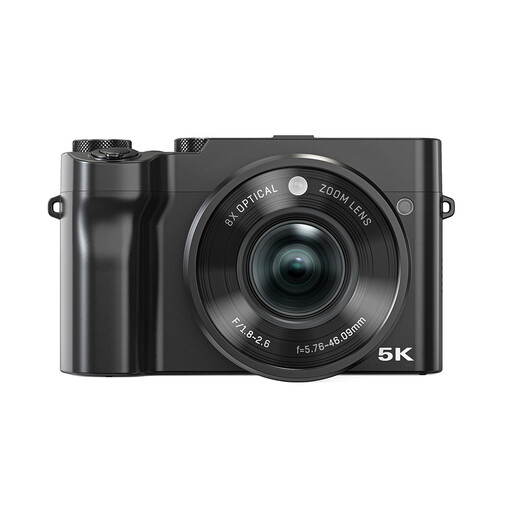 No image available
The title specifies 8x optical zoom for photographing distant subjects.
5K, 64 MP and Dual Lens are also listed in the title. Check the 35mm-equivalent focal length if framing distant components is important.
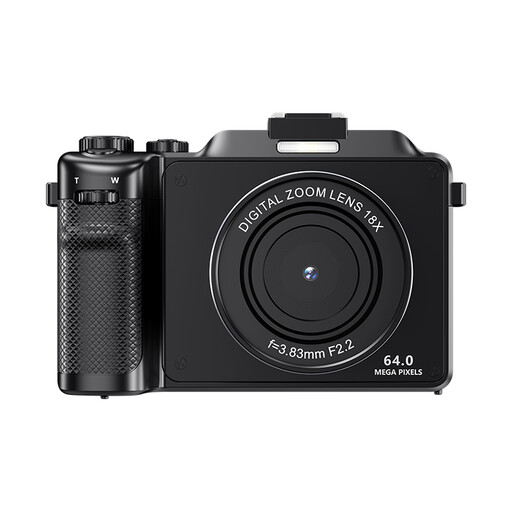 No image available
Described as a portable camera with autofocus; the product title specifies 18x zoom.
64 MP, 4K and a built-in flash are also listed. Before comparing, check whether the zoom specification for the specific model refers to optical zoom.
 No image available
Described as a portable point-and-shoot camera; the zoom specification explicitly refers to digital zoom, not optical telephoto reach.
The title lists 80 MP and 4K. Don’t treat digital zoom as a substitute for an optical telephoto focal length.
Compare the optical telephoto end of the range as a 35mm equivalent, and make sure you’re comparing the same shooting mode. Canon lists optical zoom, ZoomPlus and digital zoom separately for the PowerShot SX740 HS Lite Edition; these specifications aren’t interchangeable.
Check both ends of the zoom range: a suitable wide-angle setting helps you capture the whole structure, while the optical telephoto end determines how distant components are framed. Panasonic lists a 24–720 mm 35mm-equivalent range for the DC-TZ99 and 24–360 mm for the DC-TZ300.
No. Wanting to take a photograph doesn’t give you the right to enter. Wuppertaler Stadtwerke’s site rules restrict access to suspension railway installations to their intended purpose and require visitors not to compromise safety or order. Section 62 of the Railway Construction and Operating Regulations applies to the railway installations specified there and is not being applied here as a blanket rule for the suspension railway.
According to Deutsche Bahn’s published guidance, you don’t need prior permission for personal photography in areas freely accessible to the public, as long as you follow the stated conditions. These include staying out of track and danger zones, as well as restrictions on tripods in the specified areas. This guidance isn’t blanket permission to take photographs at WSW installations.
Under certain conditions, Section 59 of the Copyright Act permits photographs of works permanently situated on public paths, roads or squares. For buildings, this provision applies to their exterior view. It doesn’t override access rights or remove the need to check the rights of people shown in the image or the rules set by site operators.