What should you look for?
First decide what matters most to you: architecture against the light, a wide field of view, moving trains or carrying less gear.
| What you need |
What to check before buying |
Who should pay particular attention? |
| Bright sky, dark structure |
Exposure controls, RAW shooting and the option to take several shots without moving the camera. |
If preserving detail in both bright and dark areas matters more to me than speed, I pay particular attention to exposure; around 40% of consumers put this backlighting requirement first. |
| Fitting the whole structure in the frame |
The lens’s angle of view, mount compatibility and what is actually included in the kit. |
If I can’t move further back at the location, I need a wide enough field of view; around 23% of consumers prioritise this space requirement. |
| Capturing a passing train |
Continuous autofocus and the conditions attached to the stated burst rate. |
If I want to capture the train at a particular moment, photographing moving subjects is my priority; around 23% of consumers put this first. |
| Travelling with less gear |
Weight and dimensions, and the limitations of a fixed lens. |
For a city walk with as little to carry as possible, I’m more willing to accept a fixed angle of view; around 14% of consumers prioritise carrying less gear. |
Compact cameras at Joybuy
The Joybuy products below are described as mini, pocket or portable digital cameras. When photographing rail structures, check in particular whether the angle of view and the specifications listed for the specific model suit your subject.
 No image available
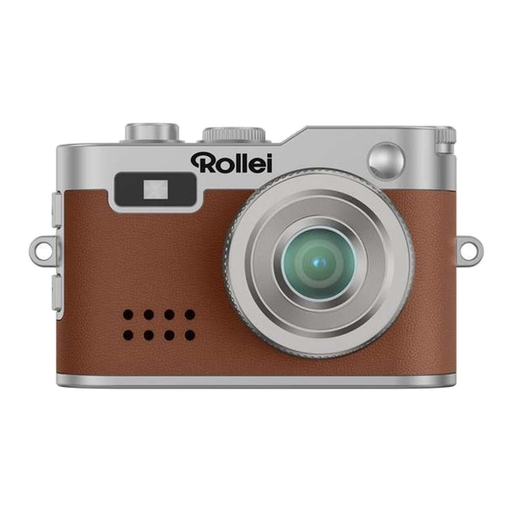
Rollei Mini Digital Camera Brown
Its stated weight of 18 g could be useful if you want to carry as little as possible on a city walk.
The product description lists 2 MP for photos. That’s an important trade-off to consider if you want to capture fine architectural details.
View at Joybuy
 No image available
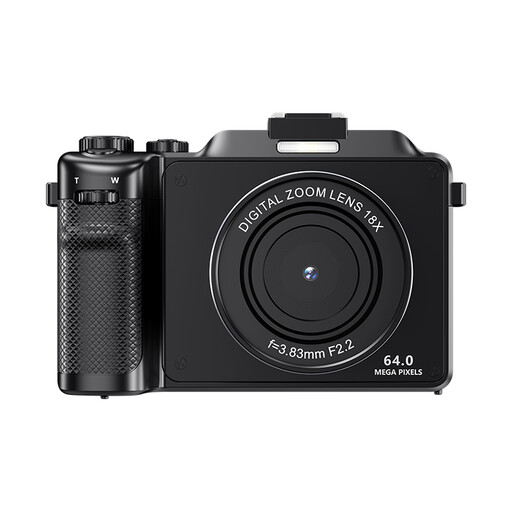
KOMERY X9 Digital Camera, Black
If you’re looking for zoom and autofocus for a city walk, the product title lists these features for the KOMERY X9.
The title lists 64 MP and 18x zoom. These figures alone do not demonstrate how well the camera handles strong backlighting or how often it will capture moving subjects sharply.
View at Joybuy
 No image available
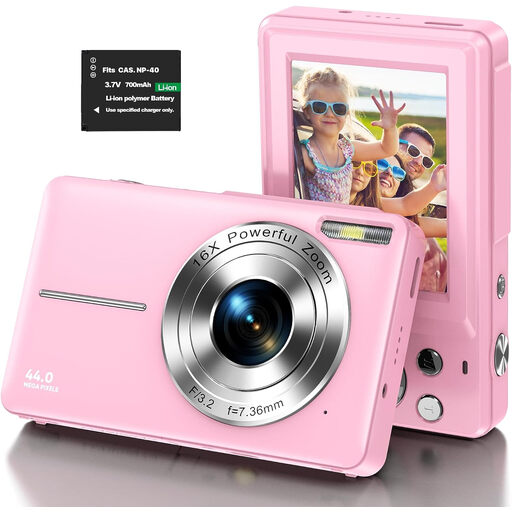
Songdian Pocket Camera 4K 44MP, Pink
The pocket-sized design could suit a city walk if having a small camera matters more to you than an interchangeable-lens system.
The title lists 4K and 44 MP, while the product description lists autofocus and 16x digital zoom. These specifications alone don’t tell you how well the camera handles architecture against the light.
View at Joybuy
 No image available
Rollei Mini Digital Camera Black
Its stated weight of 18 g could be useful if you want to carry as little as possible on a city walk.
For photos, the product description lists an interpolated resolution of 2 MP. Bear this in mind if you want to capture details in rail structures.
View at Joybuy
Frequently asked questions
Can HDR help when photographing a passing suspension railway train?
Exposure bracketing can capture areas with different brightness levels in a static structure. As it involves taking several photos, a moving train may be in a different position in each shot. Nikon Germany describes the technique for capturing multiple exposure levels, not as a solution for moving subjects.
Can I take private photos at a publicly accessible Deutsche Bahn station?
According to Deutsche Bahn’s guidance, you can take private photos in publicly accessible DB areas without prior permission, as long as you follow the conditions set out there. Among other things, Deutsche Bahn’s guidance for amateur photography prohibits tripods and artificial lighting on its premises. These operator rules apply to DB premises and do not automatically tell you which rules apply at WSW locations.
Can I publish exterior views of railway buildings?
Under certain conditions, § 59 UrhG allows works that are permanently situated on public paths, roads or squares to be reproduced; for buildings, this applies only to their exterior. The Federal Ministry of Justice and the Federal Office of Justice do not thereby grant blanket permission for every location or photograph. Operator rules and the rights of people shown in the image must be considered separately.
What if travellers are recognisable in a photo I publish?
Under § 22 KunstUrhG, images of people may generally only be distributed or shown publicly with the consent of the person depicted. § 23 sets out limited exceptions, such as when people are merely incidental to the image, while still protecting legitimate interests. Check that the requirements are met for the specific photo; Deutsche Bahn requires prior consent for close-up shots on its premises.
What should I check when buying a camera kit for longer photo trips?
Check what’s included with the specific version, especially the lens and power supply. Nikon notes that the Z50II kit with the 16–50 mm VR lens does not include a charger. This applies to that kit and not necessarily to other versions.


