Photographers of railway structures
If you want to capture stations and supporting structures from accessible vantage points, as well as individual details, the angle of view should suit your distance and composition.


Start by choosing a camera to suit the framing your accessible vantage point allows: for entire stations, a wide-angle lens matters; for distant supports and decorative details, you’ll need an optical telephoto lens. Then compare the maximum aperture, stabilisation and the weight of the complete kit. A large zoom range alone won’t solve problems with limited space or motion blur.
If you want to capture stations and supporting structures from accessible vantage points, as well as individual details, the angle of view should suit your distance and composition.
Under roofs or in lower light, it’s worth considering the aperture, stabilisation and sensor together rather than focusing only on zoom range.
If you’ll be carrying your camera for a long time, compare the weight of a ready-to-shoot compact camera with the complete interchangeable-lens kit you’d actually take with you.
A good fit if: you want to switch between wide views and distant details without changing lenses. Sony Germany lists a 24–200 mm full-frame equivalent range for the RX100 VII; Panasonic Germany gives the TZ99 a 24–720 mm range for 4:3 photos.
The trade-off: The TZ99’s longer telephoto reach comes with a 1/2.3-inch sensor and a maximum aperture of F6.4 at the telephoto end, according to Panasonic Germany.
A good fit if: you’d like to choose different lenses later to suit other angles of view. Canon Germany lists an approximate 29–72 mm full-frame equivalent range for the R50 kit with the RF-S 18–45 mm lens.
The trade-off: This kit doesn’t reach as far into telephoto as the compact zooms. The R50 relies on optical stabilisation in the lens; according to Canon Germany, the camera body has no sensor-shift stabilisation.
A good fit if: you can choose your position freely and prefer a fixed angle of view. Ricoh Imaging Europe gives the GR IIIx an angle of view equivalent to 40 mm on a full-frame camera, along with sensor-shift stabilisation.
The trade-off: The built-in lens has no optical zoom, so you can’t make distant structures appear larger by adjusting the focal length.
| Priority | What to check when buying | Who it matters most to |
|---|---|---|
| Fitting entire structures in the frame | Compare the full-frame equivalent wide-end focal length of the specific lens: Sony Germany and Panasonic Germany both list 24 mm for the RX100 VII and TZ99; Canon Germany gives approximately 29 mm for the R50 kit with the RF-S 18–45 mm lens. | If you want to fit the whole station and its supporting structure into the frame from an accessible vantage point, a wide-angle lens matters more than extra telephoto reach. Around 29% of consumers put an overall view of the structure first. |
| Capturing distant details | Check the optical telephoto focal length and maximum aperture at the telephoto end: Panasonic Germany lists 720 mm for 4:3 photos and F6.4 at the telephoto end for the TZ99; Sony Germany gives 200 mm and F4.5 for the RX100 VII. | If you want to photograph supports, connections or decorative details from a distance, you’ll need enough optical telephoto reach. Around 29% of consumers put distant details first. |
| Handheld shooting in changing light | Check the stabilisation of the specific camera-and-lens combination, as well as the aperture at your preferred focal length. Canon Germany lists optical stabilisation for the RF-S 18–45 mm; stabilisation can’t replace a shutter speed suited to movement in the scene. | If you want to shoot handheld under roofs, consider camera shake without treating a moving suspended monorail as though it were a stationary structure. Around 24% of consumers put this kind of photography in changing light first. |
| Carrying your kit on a walk | Compare weights on a like-for-like basis, including the battery and memory card, and the lens for system cameras. Panasonic Germany lists the TZ99 at around 322 g with battery and card; Canon Germany gives the R50 body as around 375 g with battery and card, but without a lens. | If you’ll be walking for a long time, you’ll want to carry a camera that’s ready to shoot, rather than comparing body weight alone. Around 18% of consumers put low carrying weight first. |
Photographing an entire station and capturing distant details call for different angles of view. According to Panasonic Germany, the TZ99’s maximum aperture falls from F3.3 at the wide end to F6.4 at the telephoto end.
First decide which compositions you need to capture from your accessible vantage points, then consider the wide-angle range, telephoto reach and aperture together.
The stated stabilisation systems compensate for camera movement; that doesn’t guarantee a moving vehicle will appear sharp.
Choose a shutter speed to suit the moving subject, and also assess stabilisation for stationary structures.
Canon’s stated weight for the R50 doesn’t include the lens. Canon lists the original SX740 HS and the SX740 HS Lite Edition as different variants, so check the exact model suffix, what’s included and the battery designation.
Compare complete kits and check the model variant, what’s included and which battery is compatible before buying.
You may also need a suitable lens, depending on the angle of view you want; any spare battery must be compatible with the specific variant.
The RX100 VII is a compact zoom option if you want to switch between wide views and details without changing lenses.
Within these model ranges, the LUMIX TZ99 is an option if a long telephoto reach matters to you.
The EOS R50 with the RF-S 18–45 mm lens is an interchangeable-lens combination; the PowerShot SX740 HS Lite Edition is a separate compact zoom variant.
The GR IIIx is a compact camera with a fixed focal length, for carefully chosen compositions.
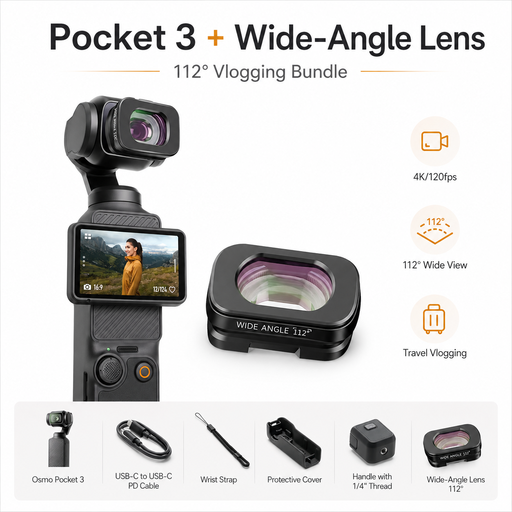
The following Joybuy offers range from handheld gimbal cameras to a mirrorless camera with a zoom lens and compact zoom cameras. For each model, check whether the stated angle of view suits the compositions you want.
 No image available
This offer is described as a handheld gimbal camera with a wide-angle lens; check whether the stated angle of view suits the photos you want to take.
Listed in the product name: 1-inch CMOS sensor, 4K/120fps and 3-axis gimbal.
 No image available
This offer combines a mirrorless camera with a zoom lens; compare the angle of view of the specific lens with the vantage points available to you.
Listed in the product name: APS-C camera and 16–50 mm power zoom lens.
 No image available
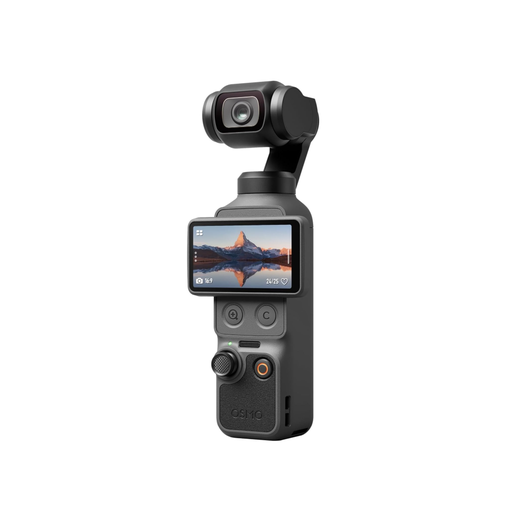
Described as a handheld gimbal camera; check whether the zoom and angle of view stated in the product name are sufficient for the compositions you want.
Listed in the product name: 1-inch CMOS sensor, 2x lossless zoom, 3-axis stabilisation and 107 GB of internal storage.
 No image available
The product name specifies optical zoom; check whether the actual angle of view suits the distance to the structural details you want to photograph.
Listed in the product name: 12x optical zoom and 4K.
 No image available
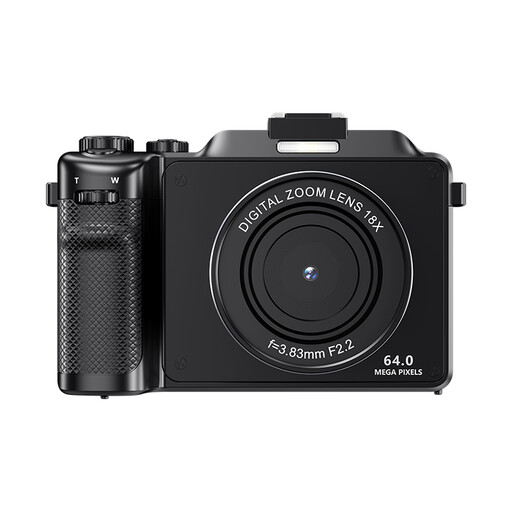
If you want to capture a range of compositions, check the actual angle of view and the stabilisation specifications for this specific camera.
Listed in the product name: 4K, 64 MP, autofocus, flash and 18x zoom.
WSW’s house rules don’t provide blanket permission to take photos on WSW premises. They restrict access to the intended use of the facilities and require visitors not to compromise safety or inconvenience other passengers. Check directly with WSW about the conditions for any planned photography inside a WSW facility.
According to Deutsche Bahn’s published rules, you don’t need permission to take private, non-commercial photos in areas that are generally open to the public. Different requirements apply to commercial productions and areas that aren’t freely accessible; these Deutsche Bahn rules don’t automatically apply to WSW premises.
Not necessarily. Under certain conditions, § 59 UrhG permits photos of works permanently located on public paths, roads or squares; for buildings, this applies only to the exterior. In general, § 22 KunstUrhG requires the consent of anyone identifiable in an image before it is distributed or publicly displayed. The Federal Ministry of Justice and the Federal Office of Justice publish the legislation; exceptions and individual cases need to be considered separately.
Check the angle of view and stabilisation of the lens actually included, as well as whether a battery and memory card are supplied. The Canon EOS R50 has no sensor-shift stabilisation in the body; according to Canon Germany, the RF-S 18–45 mm lens has optical stabilisation. Canon also lists a different battery designation for the SX740 HS Lite Edition than for the original SX740 HS offer.
Only if the angle of view of the kit you buy doesn’t cover your subjects. Canon Germany gives an approximate 29–72 mm full-frame equivalent range for the RF-S 18–45 mm lens on the EOS R50. Whether you need another lens depends on your accessible vantage points and the compositions you want.