Choose your camera based on the framing your location allows. For an entire structure, you’ll need a suitable wide-angle view; for distant supports or trains, optical telephoto reach matters. When photographing stationary subjects in the shade, a wider aperture and image stabilisation can help. For a moving suspension railway train, the right shutter speed and, where available, subject tracking are key. A prime lens is worth considering if its fixed angle of view suits your locations and you’re happy to go without optical zoom.
Which camera is right for you?
Architecture photographers
If you want to capture entire stations, bridges or sections of the suspension railway structure from an accessible spot, start by checking the usable wide-angle view. A long telephoto range won’t help if you can’t fit the whole structure into the frame.
Detail photographers
If you can’t get closer to distant supports, joints or trains to fill the frame, optical telephoto reach is an important factor to consider. Compare the focal length at the telephoto end rather than relying on the ‘zoom camera’ label alone.
Handheld photographers in changing light
When photographing stationary structures in the shade, a wider aperture and image stabilisation can make a difference. If the train is moving, shutter speed and the camera’s ability to track the subject also matter.
What should you look for when choosing?
First decide whether your typical shot will show an entire structure, a distant detail or a moving train. Then consider the lens’s light-gathering ability and the camera’s controls for handheld photography.
| What you want to photograph |
What to check before buying |
Who is this important for? |
| Entire structure |
Wide-angle at the short end; angle of view suited to the locations available |
If I want to show an entire station or section of bridge from an accessible spot, a wide angle of view is my starting point. Around 31% of consumers prioritise a full view in this photography scenario. |
| Distant details |
Optical telephoto focal length; lens aperture at the telephoto end you’ll actually use |
If I can’t get closer to supports, joints or trains, I want to fill more of the frame with them from where I’m standing. Around 25% of consumers prioritise distant details. |
| Stationary subjects in low light |
Lens aperture at your preferred angle of view; image stabilisation for stills |
For stationary structures in the shade, I want to be able to shoot handheld while accounting for camera shake. Around 25% of consumers prioritise photographing stationary subjects in low light. |
| Moving suspension railway train |
Adjustable shutter speed; continuous or tracking autofocus |
If I want to photograph a passing train, I need settings that let me capture its movement as intended and track the subject. Around 19% of consumers prioritise moving vehicles. |
The focal lengths are 35 mm equivalent figures from the manufacturers’ respective specifications: Sony lists 24–200 mm for the RX100 VII, Panasonic lists 24–360 mm for the TZ300, and Canon lists 24–100 mm for the PowerShot G7 X Mark III. These figures help you compare angles of view, but they don’t guarantee a particular result from any given location.
Avoiding common buying mistakes
-
Assuming a general review score means a camera is suited to distant railway details
A prime lens may work well for suitable wide views, but it doesn’t offer optical zoom. Fujifilm says the X100VI has a fixed 35 mm perspective; a general review won’t tell you whether that angle of view suits your location.
Before buying, think about the shots you need to be able to take from the locations you can access. If you often want to photograph distant details, compare cameras with optical zoom.
-
Confusing image stabilisation with freezing a moving train
Image stabilisation compensates for camera movement. It won’t stop the vehicle moving during the exposure.
For moving subjects, check the adjustable shutter speed and autofocus tracking. For stationary structures in low light, image stabilisation for stills and lens aperture are also important.
-
Assuming one operator’s rules apply to another
Deutsche Bahn sets out the rules for its own facilities; these don’t automatically apply to Wuppertaler Stadtwerke’s suspension railway facilities. WSW’s house rules require visitors not to compromise safety or order on its premises.
Check who operates the specific location where you plan to take photographs. Keep access routes clear and, if needed, contact Wuppertaler Stadtwerke directly about planned photography on WSW premises.
Key camera brands at a glance
Sony
The RX100 VII combines a zoom for changing compositions with a viewfinder and autofocus tracking.
- Sony Germany lists a 24–200 mm 35 mm equivalent zoom, optical image stabilisation for stills and Tracking AF.
- According to Sony, the maximum aperture changes from F2.8 at the wide-angle end to F4.5 at the telephoto end. These figures don’t indicate how often you’ll get a successful shot of a particular subject.
Panasonic
The LUMIX TZ300 offers a longer zoom for distant details, while the TZ99 is a separate model with a different zoom range.
- Panasonic lists a 24–360 mm 35 mm equivalent zoom, a 1.0-inch-type sensor and image stabilisation for the TZ300.
- The Panasonic TZ99 is a different camera from the TZ300; Panasonic lists a 24–720 mm 35 mm equivalent zoom for the TZ99. One general independent comparison rated the TZ300’s image quality below its recommended options, but not specifically for photographing Wuppertal’s railway structures.
Canon
The PowerShot G7 X Mark III combines a shorter zoom with a listed aperture of F1.8–2.8.
- Canon Germany lists a 24–100 mm 35 mm equivalent zoom and lens-shift stabilisation.
- Its optical telephoto range is shorter than that of the Sony and Panasonic models listed here. The aperture figure alone doesn’t tell you how the camera will perform with a particular subject.
Ricoh
The GR IV is a compact APS-C camera with a fixed wide-angle perspective.
- Ricoh Imaging Europe lists a focal length equivalent to around 28 mm in 35 mm format and sensor stabilisation.
- The prime lens doesn’t offer optical zoom, so you can’t optically bring distant details closer.
Fujifilm
The X100VI is a prime-lens camera with a viewfinder, designed for considered composition.
- Fujifilm lists a fixed 35 mm perspective, built-in image stabilisation and RAW support.
- The camera has no optical zoom; digital teleconverters aren’t a substitute. Its fixed perspective needs to suit the locations you can reach.
Compact cameras at Joybuy
The Joybuy picks below are pocket gimbal cameras. They aren’t direct alternatives to the zoom and prime-lens compact cameras discussed here, so make sure the angle of view and stills features suit your subject.
 No image available
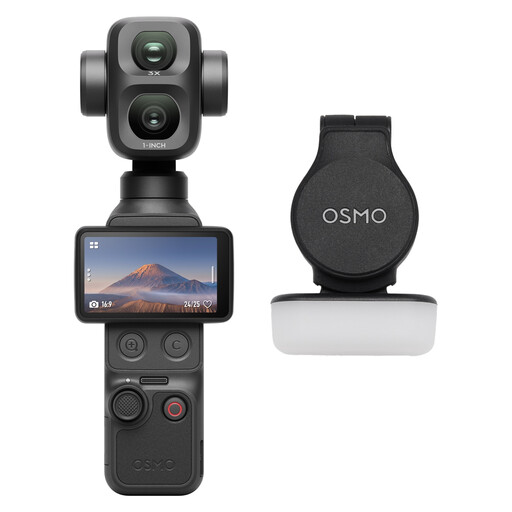
DJI Osmo Pocket 4P Standard Combo, Black
The listed 20 mm wide-angle view may be useful for wide shots of structures. If you want to photograph distant details, check before buying that the perspective and optical focal length range are suitable.
The product specifications list 20 mm, F2.0 and a 1-inch CMOS sensor. 4K/240 fps is specified for slow-motion recording only.
View at Joybuy
 No image available
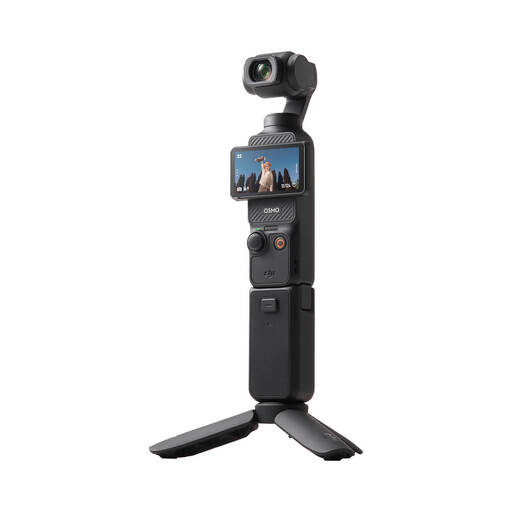
DJI Osmo Pocket 3 Creator Kit, 4K/120fps, gimbal camera with 1-inch sensor
The Creator Kit is described as a compact gimbal camera. Its listed video and gimbal features don’t tell you whether the angle of view and stills features suit your architectural photography, so check these before buying.
The product title lists 4K/120fps and a 1-inch sensor. The product description lists mechanical 3-axis stabilisation for video, ActiveTrack 6.0 and a rotatable touchscreen.
View at Joybuy
Frequently asked questions
Is image stabilisation enough to get a sharp photo of a moving suspension railway train?
No. Image stabilisation helps counter camera shake; how the train’s movement appears in the image also depends on shutter speed. Nikon Germany points out that the right exposure time depends on the subject’s speed and distance.
Can I take personal photographs at a Deutsche Bahn station that’s open to the public?
Deutsche Bahn allows personal photography and filming in publicly accessible areas of its facilities, as long as you follow its rules. Escape and rescue routes must remain clear, and you must not enter the tracks or other hazardous areas. DB also prohibits tripods and artificial lighting for this type of photography. This permission doesn’t apply to Wuppertaler Stadtwerke facilities.
Can I photograph railway structures from public roads and publish the images?
Under certain conditions, § 59 UrhG allows you to photograph and reproduce works that are permanently located on public roads, streets or squares; for buildings, this applies to their exterior. This provision doesn’t give you permission to enter an operator’s premises. For identifiable people, you must also take particular account of §§ 22 and 23 KunstUrhG.
What should I check before a longer photography trip?
Check that the battery is charged and that the memory card and accessories are suitable for your specific camera model and what you plan to do. Follow the specifications for the exact camera and variant you own.
What are my rights in Germany if my camera develops a fault after purchase?
Your statutory rights regarding faulty goods and a voluntary guarantee are separate. If there’s a fault, the retailer is your first point of contact for your statutory rights; check any additional guarantee terms separately. The Verbraucherzentrale explains the difference between the two.


