
Lieferung heute & morgen

Qualitätsgarantie

Willkommens-Angebote freischalten: KOSTENLOSE Lieferung | Bis zu 80 % RABATT | Kostenlose 30-Tage-JoyPlus-Testphase
App herunterladen
A high-quality food slicer is more than just a kitchen appliance—it's a promise of freshness, precision, and efficiency. Whether for wafer-thin ham, uniform bread slices, or perfectly cut vegetables, the right machine saves time and elevates the quality of your meals. However, the market is flooded with models whose marketing promises often fall short. Many buyers only realise after a few weeks that their new device is impractical, unstable, or difficult to clean.
As your Joybuy Product Recommendation Officer, I'm here to help you navigate these pitfalls. We will focus on the objective features that distinguish a great slicer from an unsuitable one, ensuring your investment pays off in the long run.
Before we dive into the technical details, let's highlight the three most common problems that lead to frustration with many commercially available food slicers.
To avoid a bad purchase, you should examine three crucial technical features. These define the performance, durability, and practical usability of your future kitchen assistant.
With an electric food slicer, the combination of motor and housing is crucial. A full-metal construction offers maximum stability and ensures quiet, low-vibration operation. This is the basis for precise and safe cuts. Look for terms like "cantilever design," which not only provides stability but also allows you to easily place a plate or tray underneath.
In terms of motorisation, modern eco-motors are often more energy-efficient and quieter than older models, while powerful direct current motors (DC motors), as found in professional equipment, guarantee constant power even with demanding foods. Electronic speed control is an additional feature for discerning users.
The heart of any slicer is its blade. Almost all quality blades are made of rust-proof stainless steel. The crucial difference lies in the grind:
Some models offer the ability to swap blades, which enormously increases versatility.
A good food slicer must be safe and easy to handle. A removable carriage is essential for thorough and quick cleaning. Safety features like a momentary and continuous switch prevent the machine from running unintentionally. A thickness adjustment that is precise and stepless, ranging from under 1 mm to over 20 mm, gives you full control. Models with the Made in Germany label often stand for well-thought-out design, high-quality materials, and long-term availability of spare parts.
Instead of making a blanket recommendation, we have selected products that suit specific needs and kitchen habits.
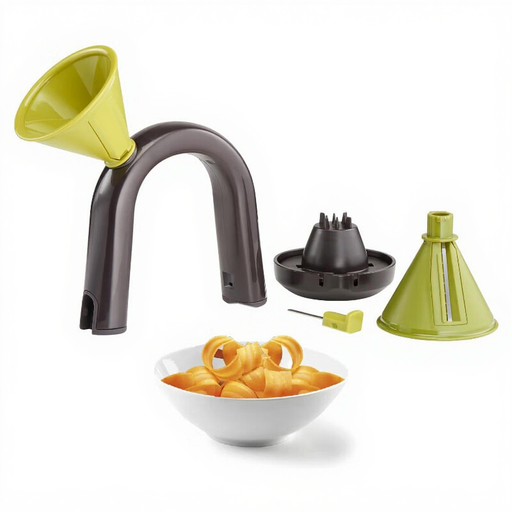
Why it's a match: Ideal for health-conscious cooks who want to quickly and easily prepare vegetable noodles, salads, or garnishes. This manual spiral slicer is a specialist for creative and light dishes.
The simple, manual design eliminates the need for complex cleaning (avoids pitfall 2). Since there is no motor, there are no issues with insufficient power (avoids pitfall 3).
Compact, easy to store, and effortlessly creates spirals and ribbons from various vegetables with its interchangeable blades.
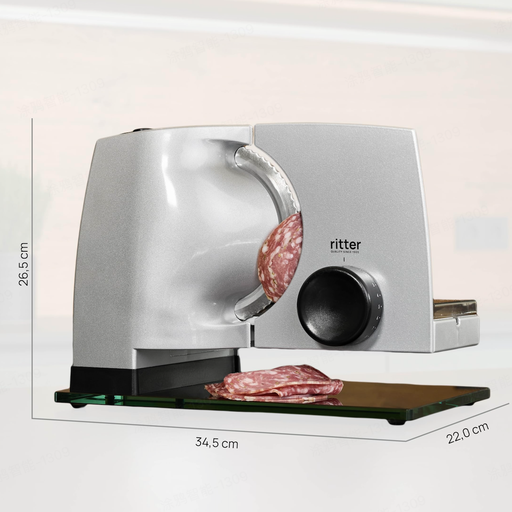
Why it's a match: A reliable bread slicer and all-rounder for families who regularly slice bread, cold cuts, and cheese. The Made in Germany quality promises durability and well-designed functionality.
The cantilevered metal construction ensures high stability (avoids pitfall 1). The carriage is removable for easy cleaning (avoids pitfall 2), and the eco-motor is powerful enough for everyday use (avoids pitfall 3).
Durable construction, elegant design with a shatterproof glass base plate, and easy handling thanks to the safety momentary and continuous switch.
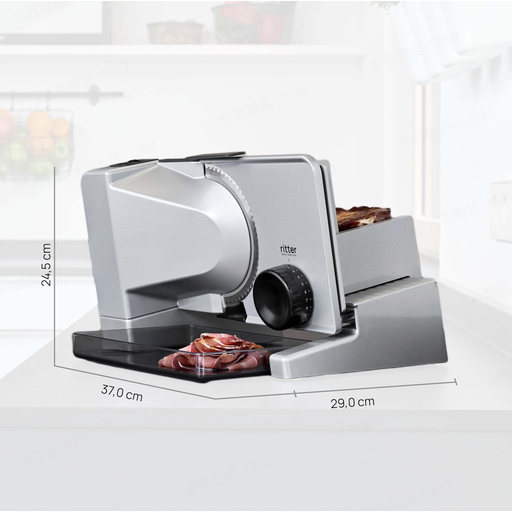
Why it's a match: For home chefs and culinary enthusiasts who expect professional results. Ideal for slicing large quantities, very firm foods, or achieving wafer-thin slices for special occasions.
The tilted all-metal design provides maximum stability (avoids pitfall 1). The powerful DC motor with speed control masters any challenge (avoids pitfall 3), and the removable carriage simplifies cleaning (avoids pitfall 2).
Professional performance thanks to electronic speed control, two included blades (serrated and smooth), and an extremely robust, durable construction.
We have compiled a complete, up-to-date list of products that fully meet these strict selection criteria and German safety regulations.
1. Which blade is suitable for which type of food? A simple rule of thumb: A serrated blade is ideal for products with a hard exterior and soft interior (e.g., bread, tomatoes), as well as for most fruits and vegetables. A smooth blade (often called a ham or carpaccio slicer) is perfect for precise, wafer-thin cuts of firm, uniform foods like cured meats, ham, or block cheese.
2. How important is the "Made in Germany" label on a food slicer? The "Made in Germany" designation of origin is often an indicator of high-end engineering, material quality, and durability. Manufacturers like ritter prioritise robust full-metal construction, precision-machined components, and the long-term availability of spare parts. This can lead to a longer device lifespan and better overall performance.
3. How do I clean an electric food slicer safely and thoroughly? Always unplug the slicer from the mains before any cleaning. Most modern devices allow for easy disassembly of the main parts. The carriage and often the blade cover plate can be removed and cleaned separately under running water with a little washing-up liquid. The blade itself, if removable, should be handled with extreme caution. The machine's housing should only be wiped with a damp cloth. Never immerse the main unit in water.