Which type of oven suits you?

Baking several plaits

If you’re preparing several plaits for the same baking session, you’ll need trays and shelves that can accommodate them. Some built-in models are specified for fan baking on multiple shelves, but this doesn’t prove that yeast plaits will bake evenly. (According to Bosch and Siemens.)

Baking a single plait

If you usually bake one plait, you can choose the heating setting and tray size to suit the recipe, rather than paying for programmes you rarely use. Dr. Oetker’s yeast plait recipe gives instructions for both conventional heat and fan baking.

Baking without space for a built-in oven

If you’re looking for a freestanding appliance, you could bake smaller plaits or bake several batches in succession. Check the usable tray area before you buy; Severin lists a capacity of around 20 litres for the TO 2068.

What to look for when baking yeast plaits together

Built-in oven for multiple trays

A good fit if: you regularly prepare several trays and have a suitable kitchen unit. Bosch and Siemens specify fan baking on up to three shelves for certain models.

Things to consider: The dimensions and accessories need to be right; the manufacturer’s claim doesn’t prove that yeast plaits will brown evenly on every shelf.

Built-in oven for baking one plait

A good fit if: you mainly bake one tray at a time and want to choose the heating setting that suits your recipe.

Things to consider: Even if you use it simply, a built-in oven still needs a suitable kitchen unit; cleaning options and accessories vary by model.

Compact countertop oven

A good fit if: you don’t want to use a built-in space and are planning to bake smaller plaits or several batches. Severin says the TO 2068 has separately selectable fan and conventional heating.

Things to consider: The smaller oven cavity is less suited to baking several large plaits; the capacity in litres won’t tell you whether a plait will fit on the tray.

Buying priority What to check before buying Who it matters to
Baking several plaits at once Compare the usable tray dimensions, the trays supplied and the guidance on baking on multiple shelves. If we’re preparing several plaits for a shared baking session, we need enough suitable space and, where necessary, shelves that are up to the job. Around 33% of consumers put this first.
Heating setting for one plait Check whether fan and conventional heating can be selected separately, and follow the recipe instructions. If we usually bake one plait, we want to choose the heating setting to suit the recipe rather than pay for programmes we rarely use. Around 27% of consumers prioritise this flexibility.
Space and tray area For built-in ovens, compare the dimensions of the kitchen unit; for countertop ovens, check the space they take up and the actual tray dimensions. If there isn’t a suitable space for a built-in oven, a freestanding appliance matters to us; the plait still needs to fit on the tray with enough room around it. Around 20% of consumers prioritise the space available.
Energy consumption For ovens with the relevant label, compare the kWh per standard cycle for conventional and fan heating. If we bake regularly, we want to compare energy use on a like-for-like basis. Around 13% of consumers prioritise running costs.
Cleaning Check the cleaning method, removable parts and accessories included with the specific model. If cleaning up after baking is a particular concern, the cleaning method should suit the way we use the oven. Around 7% of consumers put this first.

Oven-buying pitfalls

  • Confusing oven capacity with tray area

    The oven’s capacity won’t tell you whether a shaped plait will fit on the tray with enough space around it.

    Compare the planned length of your plait and the space it needs with the usable dimensions of a suitable tray.

    Depending on the appliance, you may need to buy an extra suitable tray or bake another batch.

  • Assuming a yeast plait must be baked using the fan setting

    Dr. Oetker’s basic yeast plait recipe also gives instructions for conventional heat; the temperature and baking time depend on the recipe.

    Check whether you can select both heating settings on the oven, then follow the recipe you’re using.

  • Overlooking cleaning and installation

    Pyrolytic cleaning uses energy during the cleaning cycle. For built-in appliances, the kitchen unit and connection must also suit the specific model.

    Choose a cleaning method to suit how you use the oven, and check the dimensions, connection and installation requirements separately.

    Pyrolytic cleaning can use additional energy; depending on the model and supplier, you may need to arrange installation separately.

Relevant brands at a glance

Bosch

Bosch specifies 3D Hotair on up to three shelves for the HBA571BB4 built-in oven.

  • This model is specified with a 71-litre capacity, pyrolytic and hydrolytic cleaning, a wire shelf and a universal pan.
  • This doesn’t confirm that extra trays are included or show how a yeast plait will bake; these details apply to this model.

Siemens

Siemens specifies 3D hotAir on up to three shelves for the HB234ABB3 built-in oven.

  • This model is specified with a 71-litre capacity, a coated back panel, hydrolytic cleaning, a wire shelf and a universal pan.
  • The cleaning method described isn’t pyrolytic. The multiple-shelf claim comes from the manufacturer; it isn’t based on a yeast plait baking test.

Severin

The TO 2068 countertop oven is a freestanding option for households without space for a built-in appliance.

  • Severin lists a capacity of around 20 litres for this model, with fan and conventional heating that can be switched on separately.
  • Check the usable tray area against the size of the plait you’re planning; the oven capacity alone isn’t enough to tell you if it will fit.

Miele

The H 2465 B ACTIVE built-in oven is described as having Fan plus and conventional heat.

  • Miele lists PerfectClean and other operating modes for this model.
  • These extra features don’t prove that the oven will bake a particular yeast plait better; what matters is which features you’ll actually use.

Joybuy products for your baking session

This selection includes built-in ovens and one freestanding cooker with an oven. For each model, check the heating settings, usable tray area and the space available.

Bosch HBA571BB4 Series 2 built-in oven

Bosch HBA571BB4 Series 2 built-in oven, 71 l

An option if you’d like to prepare several trays and choose between fan and conventional heating; check the usable tray area for your plait.

71-litre capacity; 3D Hotair on up to three shelves; five shelf positions; one wire shelf and one universal pan.

Pyrolytic and hydrolytic cleaning are listed.

Joybuy

Comfee built-in oven, 60 cm, 70 l

Comfee built-in oven, 60 cm, 70 l

If you’re looking for a built-in model with fan baking on multiple shelves, also check that the tray area is large enough for your plaits.

70-litre capacity; fan circulation and baking on multiple shelves are listed in the product description.

AquaClean steam cleaning and ten functions are also listed.

Joybuy

Bosch HBG578ES3 Series 6 built-in oven, 60 cm

Bosch HBG578ES3 Series 6 built-in oven, 60 cm

An option if you’d like to use fan baking on multiple shelves and conventional heat; make sure the tray dimensions suit the size of plait you’re planning.

71-litre capacity; 3D Hotair on up to three shelves; five shelf positions; one baking tray.

Ten heating methods are listed, including 3D Hotair and conventional heat.

Joybuy

Haier H6 ID23T3HTB built-in oven, 78 l

Haier H6 ID23T3HTB built-in oven, 78 l

If you’re considering a built-in model with a large oven cavity, check the heating settings and usable tray area for your yeast plait.

A 78-litre capacity and nine functions are listed.

Hydrolytic cleaning and one baking tray are listed.

Joybuy
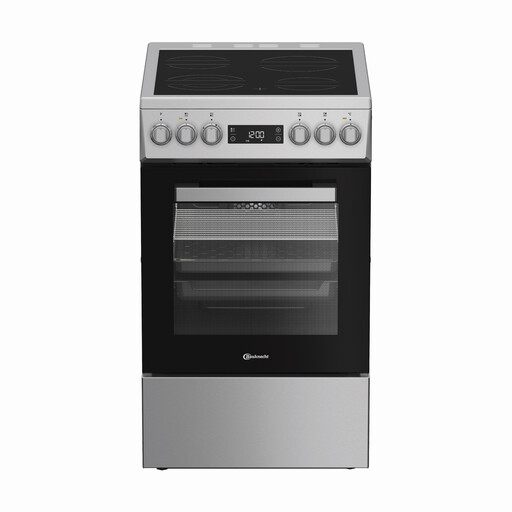
Bauknecht B5V8LMX freestanding cooker with fan oven

Bauknecht B5V8LMX freestanding cooker

An option if you also need a hob as well as an oven; check the available space and tray area for the plait you’re planning.

60-litre oven compartment; eight heating functions including fan heating; four cooking zones.

An enamelled baking tray and a wire shelf are listed; cleaning is hydrolytic.

Joybuy

Frequently asked questions

Does a yeast plait have to be baked using the fan setting?

No. For its basic yeast plait recipe, Dr. Oetker recommends baking in a preheated oven at around 180 °C using conventional heat or around 160 °C using the fan setting, for about 25 minutes. Follow the instructions for any other recipe you use.

Can I bake several yeast plaits in the oven at once?

Manufacturers specify fan baking on up to three shelves for certain built-in models. Still, check the dimensions of the plaits and trays, as well as the baking instructions; the manufacturer’s claim doesn’t guarantee even browning on every shelf.

What should I check before installing or setting up an oven?

For a built-in oven, check the dimensions of the kitchen unit and the connection requirements in the model documentation. For a countertop oven, check its external dimensions, power cable and set-up instructions. Bosch and Siemens provide specific kitchen unit and connection requirements for their respective models.

How do I compare energy consumption?

For ovens with the relevant label, the EU energy label shows energy use in kWh per standard cycle, separately for conventional and fan heating. Your actual costs also depend on electricity prices and how you use the oven; the standard cycle isn’t a measure of the energy used to bake your yeast plait.

What are the rules in Germany on energy labels, claims for faulty goods and old appliances?

Energy labelling is mandatory for household ovens covered by EU rules; the European Commission says that small ovens are excluded. Under § 438 BGB, claims for defects generally become time-barred two years after delivery, subject to statutory exceptions. Electrical appliances must be collected separately at the end of their life; local authority collection points generally accept them free of charge.