Bread bakers measuring small amounts of yeast
If you measure out small quantities of yeast for a recipe, check the scale’s increments and stated minimum weighing range.


For small quantities of yeast, a precision scale with fine increments is the better choice. For a mixing bowl and a whole batch of dough, capacity, weighing surface and tare function matter more. A scale with 1 g increments won’t show fractions of a gram directly. According to the manufacturer, the Beurer KS 36 weighs in 0.1 g increments, but its capacity is limited to 2 kg and its weighing surface measures 11.5 × 8.0 cm. You may therefore need a second scale for larger containers.
If you measure out small quantities of yeast for a recipe, check the scale’s increments and stated minimum weighing range.
If you want to weigh yeast and other ingredients using the same device, you’ll need to balance precise measuring against capacity and space for your mixing bowl.
If you’re taking the scale to a holiday cottage, storage space, power requirements and ease of use in an unfamiliar kitchen also matter.
First, decide whether you’ll mainly be weighing small amounts of yeast or a whole batch of dough. Then check the capacity, weighing surface and travel-friendly features to make sure they suit how you’ll use the scale.
| What matters to you | What to check | Who it matters most to |
|---|---|---|
| Small amounts of yeast | Compare the increments and stated minimum weighing range with the quantity in your recipe. | If I’m measuring out small portions of yeast for a recipe, I want to be able to read off the amount I need. Around 36% of consumers put this first. |
| Mixing bowl and dough | Check the maximum capacity, weighing surface and tare function for your bowl and ingredients. | If I’m weighing bread dough directly in a bowl, the container needs to sit securely and stay within the maximum capacity, contents included. Around 29% of consumers prioritise this. |
| Portability and storage | Compare the scale’s dimensions with the space available in your kitchen. | If I’m taking the scale to a holiday cottage, I want it to be easy to store without having to compromise on a suitable surface for my container when baking. Around 21% of consumers focus on portability and storage. |
| Ready to use | Check the battery type and what’s included before you travel. | If I want to get started straight away in an unfamiliar kitchen, I need to know whether the scale requires a battery and whether one is included. Around 14% of consumers consider this preparation essential. |
The increments tell you how the readings are displayed, but they don’t independently prove how the scale will perform with the small quantity of yeast you’re measuring.
Check the manufacturer’s stated minimum weighing range, and don’t treat the increments as an independent test of accuracy.
Beurer lists the KS 36 with a maximum capacity of 2 kg and a weighing surface measuring 11.5 × 8.0 cm. The kitchen scales described by Soehnle and WMF each have a maximum capacity of 5 kg, but weigh in 1 g increments. So, with these models, a higher capacity doesn’t also mean a more precise display.
Estimate the weight of your bowl and the whole batch, then check that the container will sit securely on the weighing surface. Decide whether you need one device for both tasks.
According to the manufacturer, the Soehnle Page Compact 300 comes with a CR2430 battery. This doesn’t tell you how long the battery will last.
Make a note of the battery type and check its condition before travelling to your holiday cottage.
The KS 36 is a compact precision kitchen scale for smaller quantities of ingredients.
The Page Compact 300 combines a slim design with a tare function and a manufacturer-stated maximum capacity of 5 kg.
The black digital kitchen scale reviewed here has a larger weighing surface, making it suitable for adding ingredients directly to a container.
This selection includes digital kitchen scales for bread ingredients and larger containers, as well as a portable coffee scale. Check that the coffee scale is suitable for weighing yeast before you buy.
 No image available
This could suit weighing bread ingredients in a container if the 5 kg maximum capacity stated in the title and the tare function are right for your batch. Also check that your container will sit securely on the scale.
The product title lists an LCD display, Bluetooth connectivity and a tare function.
 No image available
This could work for larger quantities of ingredients in a bowl if the specifications in the title suit your batch. Check whether 1 g increments are fine enough for the amount of yeast you need to weigh.
The product title lists a stainless steel surface, a tare function, 1 g increments and a maximum capacity of 5,000 g.
 No image available
The product title describes a portable scale for coffee and pour-over brewing. It doesn’t specify whether the scale is suitable for small amounts of yeast, so check that the weighing surface and features suit your recipe and container before choosing it.
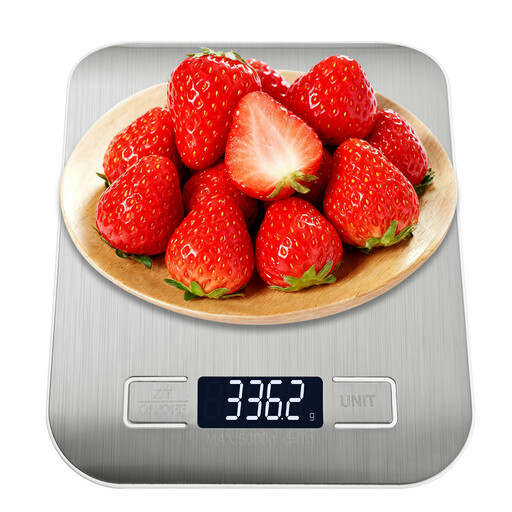 No image available
This could suit bread ingredients and larger quantities if the 5 kg capacity stated in the title is enough for your bowl and batch. The stated minimum weighing quantity is 3 g, so it won’t cover smaller amounts of yeast.
The product title lists 1 g increments and a stainless steel surface.
 No image available
This could suit larger bowls and batches of dough if the 10 kg maximum capacity stated in the title is right for your needs. The stated minimum weighing quantity is 3 g, which limits its suitability for smaller amounts of yeast.
The product title lists 1 g increments, a glass surface and app connectivity.
It depends on whether you can measure the quantity required by your recipe in 1 g increments. A sachet of dried yeast sold by Rapunzel contains 9 g. If your recipe calls for a fraction of a gram, you’ll need finer increments to display that amount directly. The amount of yeast in your recipe is what matters, not the pack size in general.
Compare the increments and stated minimum weighing range with the quantity you want to weigh. Beurer lists 0.1 g increments for the KS 36; this manufacturer’s specification isn’t an independent accuracy test for a specific quantity of yeast.
It can, provided the increments suit the amount of yeast and the maximum capacity and weighing surface suit your bowl and dough. Beurer lists the KS 36 with a maximum capacity of 2 kg and a surface measuring 11.5 × 8.0 cm. The Soehnle and WMF models described here each have a 5 kg capacity but use 1 g increments. Also check that your container sits securely on the scale.
Place a suitable bowl on the scale and use the tare function before adding more ingredients. Make sure the bowl and everything in it stay within the maximum capacity, and that the container sits securely on the weighing surface.
Check the battery type and what’s included with the specific model. According to Leifheit, the Soehnle Page Compact 300 comes with a CR2430 battery; this doesn’t tell you how long the battery will last. Check its condition before you set off, and find out whether you’ll need a spare battery of the right type.