
Lieferung heute & morgen

Qualitätsgarantie

Willkommens-Angebote freischalten: KOSTENLOSE Lieferung | Bis zu 80 % RABATT | Kostenlose 30-Tage-JoyPlus-Testphase
App herunterladen
Yellow highlighters are part of the basic equipment on many desks, in school bags and in meeting rooms. Even so, products differ considerably in terms of ink type, tip shape, line width and suitable surfaces. If you focus only on a bright colour or a low price per item, you may end up buying a marker that dries out quickly, bleeds through the paper or cannot be removed from the intended surface.
This buying guide explains which features really matter when choosing a yellow highlighter and which options suit different usage profiles.
A fluorescent highlighter can be very eye-catching on ordinary paper. However, inkjet printouts may smudge when highlighted. For important documents, you should therefore specifically look for inkjet-safe or quick-drying ink.
For transparencies, plastic, glass or metal, you will generally need a specialist marker rather than a classic highlighter. A yellow permanent marker adheres permanently to these surfaces, while a yellow non-permanent marker may be designed for writable transparencies and presentations.
A chisel-tip highlighter often allows you to create several line widths. This is useful when you want to alternate between underlining and highlighting entire lines of text. However, a broad tip can be awkward for small print, marginal notes or diagrams.
A round-tip marker or one with a fine synthetic tip can be guided more precisely. The key factor is therefore not the shape alone, but the combination of tip width and intended use.
A large ink reservoir can extend the usable life of a marker, but it does not automatically prevent it from drying out. The cap, storage conditions and, where applicable, a dry-safe function are also important. A refillable highlighter can reduce the cost of buying replacements over time if used regularly. However, suitable refill stations must be available.
For books, worksheets and notes, water-based highlighter ink is often sufficient. However, it cannot simply be removed from paper. For presentation transparencies, erasable, water-soluble ink is more suitable. For products of this type, the description should explicitly state that the ink can be wiped off with a damp cloth.
A yellow permanent marker, on the other hand, is designed for permanent lettering on smooth and some porous surfaces. Depending on the product, it may be suitable for plastic, glass, metal, wood or transparencies. Waterproof and smudge-resistant properties should only be assessed once the ink has dried. Permanent marks can be difficult or impossible to remove from paper and textiles.
Line width affects readability and working speed:
If you are left-handed, you should also look for quick-drying ink. This reduces the risk of your hand smudging freshly highlighted areas.
A triangular barrel can prevent the pen from rolling off the desk and provides a defined grip position. An integrated grip zone can be comfortable during longer study sessions or correction work. For frequent use, a sturdy polypropylene barrel and a securely closing cap are also practical selection criteria.
Refillable highlighters are particularly interesting for businesses, teachers and frequent users. For permanent and non-permanent Lumocolor variants, the product details specify a suitable STAEDTLER refill station in each case. Before buying, check that the station is intended for the specific ink type.
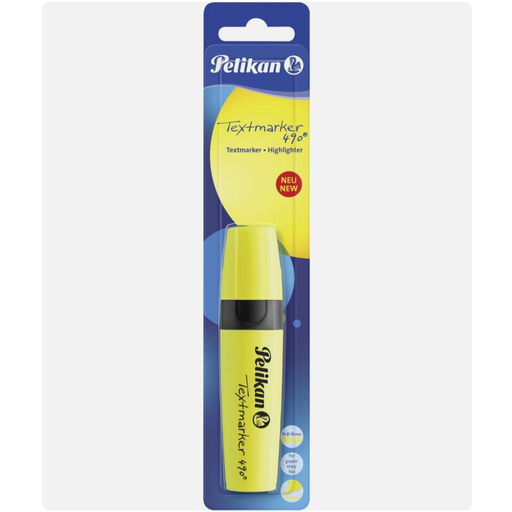
Why this product suits the profile: The chisel tip covers three specified line widths of 1, 2 and 5 mm, making it suitable for basic highlighting tasks at school and in the office.
The stated line widths make the possible uses clear, rather than simply promoting “extra-bright” ink in general terms.
Water-based ink, an integrated grip zone and flexible use of the chisel tip.
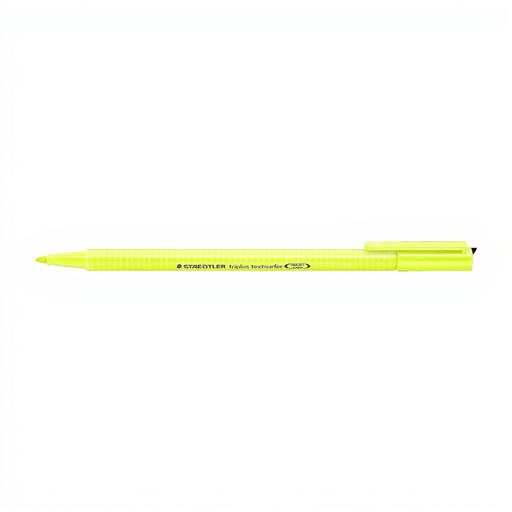
Why this product suits the profile: According to the product details, the soft round tip creates variable lines of around 1 to 4 mm. The triangular barrel supports a controlled grip during longer periods of work.
The explicitly stated inkjet safety addresses the risk of smudged inkjet printouts. The water-based ink is intended for paper, fax paper and carbonless copy paper.
Variable line width, a triangular barrel and, according to the product description, quick-drying, light-resistant ink.
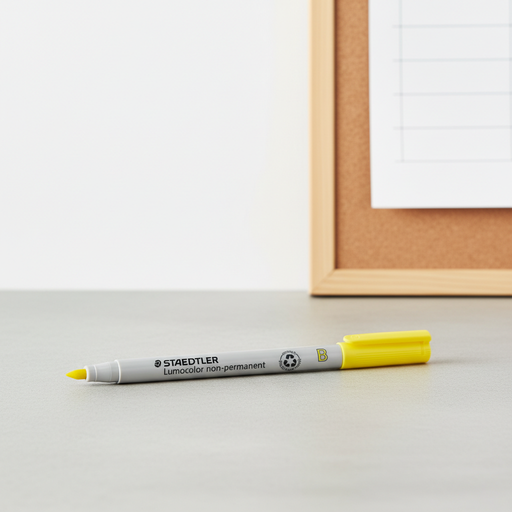
Why this product suits the profile: The broad chisel tip, measuring around 1.0 and 2.5 mm, is designed for presentation transparencies and changing marks on suitable smooth surfaces.
The ink is described as water-soluble and can be removed from transparencies with a damp cloth. This prevents permanent marking errors during presentations.
Suitable for overhead projection, dries instantly and can be refilled using refill station 487 15.
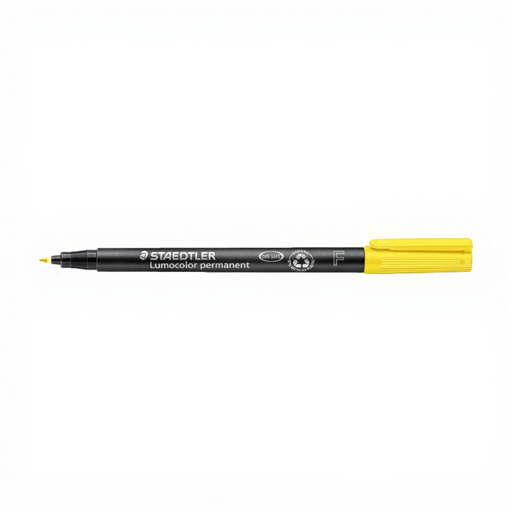
Why this product suits the profile: The fine synthetic tip, measuring around 0.6 mm, is suitable for precise marking on glass, plastic, metal, wood, stone and transparencies.
The permanent ink is clearly different from erasable transparency markers. Before using it on valuable items, test its adhesion on an inconspicuous area.
Permanent, water- and smudge-resistant ink according to the product description, with refillability via station 487 17.
We have put together a complete, regularly updated list of products that fully meet these strict selection criteria and the safety regulations applicable in the EU.
First test a yellow highlighter on an inconspicuous area or a sample document. This is particularly important with thin paper, glossy printouts and transparencies. Close the cap fully after every use. Even dry-safe products should not be left open for extended periods.
When using permanent markers, good ventilation is recommended in accordance with the manufacturer’s instructions. Markers should also be kept out of the reach of young children; caps may contain small parts that can be swallowed. Store the pens away from direct sunlight and major temperature fluctuations to help the ink remain consistent.
Look for inkjet safety to be explicitly stated. According to the product description, the STAEDTLER Triplus Textsurfer Yellow is labelled INKJET SAFE. Even so, it is worth carrying out a quick test on a printout, as the type of paper and printer ink can affect the result.
A classic highlighter is primarily designed for paper. A yellow permanent marker, by contrast, adheres permanently to suitable surfaces such as plastic, glass or metal. The mark often cannot be removed easily from these surfaces. For presentation transparencies that need to be cleaned later, a yellow non-permanent marker is the more suitable choice.
Its usable life depends on line width, frequency of use and ink capacity. A large reservoir can be beneficial if you highlight regularly. Refillable models are particularly suitable for frequent users. The key is to close the cap properly and store the marker according to the manufacturer’s instructions.