
Lieferung heute & morgen

Qualitätsgarantie

Willkommens-Angebote freischalten: KOSTENLOSE Lieferung | Bis zu 80 % RABATT | Kostenlose 30-Tage-JoyPlus-Testphase
App herunterladen
A yellow pen might seem like a simple product at first glance. Yet, the search for the right one can quickly become overwhelming. Many of us have been there: a newly purchased highlighter bleeds through thin paper, a permanent marker smudges on smooth surfaces, or an expensive fineliner dries out after just a few weeks because the cap doesn't seal properly.
These issues often stem from overlooked product details or misleading marketing terms. Before you make a decision, it helps to know the most common pitfalls to avoid making a purchase you'll regret.
To avoid these problems, a closer look at a pen's core features is essential.
Choosing the right yellow pen depends on three central factors: the ink type, the tip, and specific product features that define its intended use.
The type of ink determines which surfaces the pen will adhere to and how durable the marking will be.
waterproof permanent marker is the right choice for durable labelling in workshops, warehouses, or labs. The ink is usually low-odour but cannot be removed from porous materials like paper or fabric.wipeable marker contains water-soluble ink. It is designed for temporary markings on smooth films (e.g., for overhead projectors), whiteboards, or laminated documents. The marks can be easily removed with a damp cloth.yellow highlighter or a washable fibre-tip pen, use water-based ink. This ink is vibrant, won't bleed through standard paper in quality products, and is often washable from most textiles.The shape and width of the tip define the character of the line.
chisel tip is ideal for working with text.yellow fineliner typically has a metal-encased tip with a line width of 0.3 mm to 0.6 mm. This fine tip is suitable for precise writing, drawing, bullet journaling, and creating detailed notes.Some manufacturers, like STAEDTLER, offer pens with special technologies that make a real difference in daily use.
Based on these objective criteria, we have curated a selection of yellow pens suited for specific user profiles and their needs.
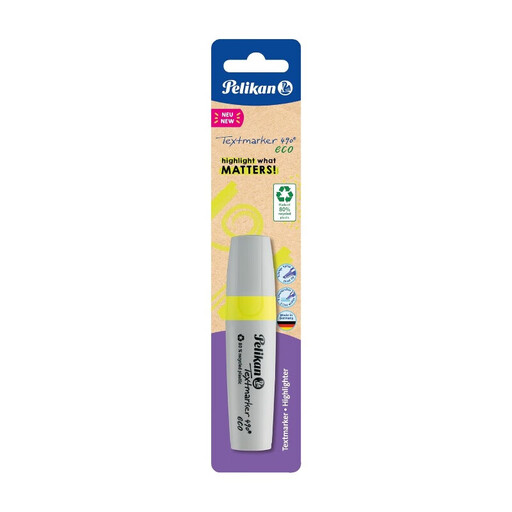
Why This Fits Their Persona: Ideal for long study sessions. The versatile chisel tip is perfect for highlighting entire passages and for fine underlining. The recessed grip ensures comfort, and the water-based ink is suitable for almost all paper types.
The manufacturer specifies a cap-off time of up to 8 hours, preventing the pen from becoming unusable during short breaks.
3-in-1 chisel tip for line widths of 1, 2, and 5 mm. According to the manufacturer, the barrel is made from 80% recycled material.
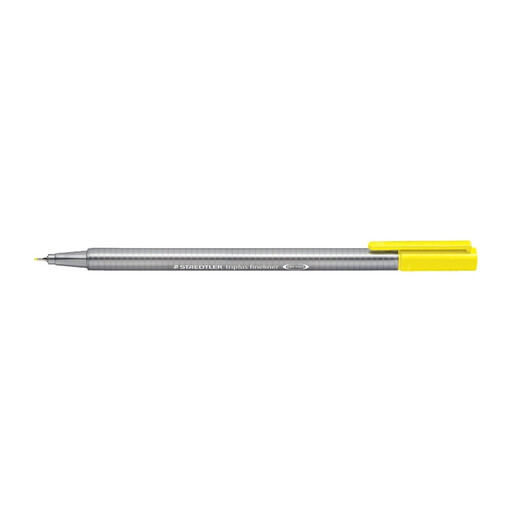
Why This Fits Their Persona: Perfect for bullet journaling, hand lettering, or detailed sketches. The ergonomic triangular barrel allows for a relaxed grip, while the superfine tip guarantees precise lines.
The DRY SAFE technology prevents it from drying out, even if you forget to replace the cap. The water-based ink washes out of most textiles.
Very fine, metal-encased tip with an approx. 0.3 mm line width for maximum precision. The triangular barrel ensures superior writing comfort.
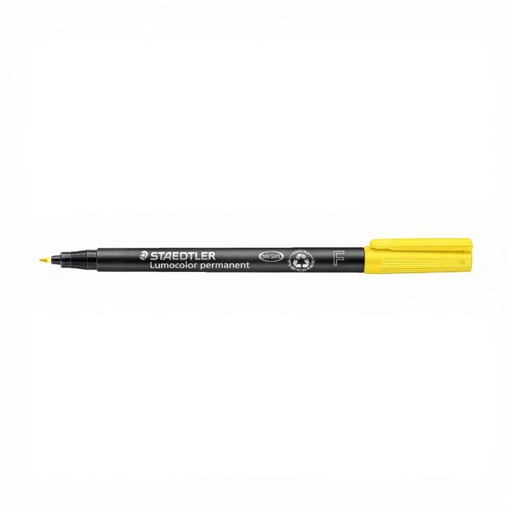
Why This Fits Their Persona: Engineered for permanent marking on demanding surfaces like metal, glass, plastic, or wood. The ink is smudge-proof and waterproof and dries in seconds, making it ideal for left-handers as well.
This pen solves the 'universal' pen trap by being explicitly designed for permanent adhesion on almost any surface. The marking remains legible even under harsh conditions.
Permanent, low-odour ink that adheres to almost all surfaces. The "Airplane-safe" feature prevents leakage on aircraft thanks to automatic pressure equalisation.
We've compiled a complete, up-to-date list of products that fully meet these strict selection criteria.
1. What is the difference between a yellow highlighter and a yellow fineliner? A highlighter typically has a wide chisel tip and transparent, luminous ink (neon yellow) designed to emphasize text without obscuring it. A fineliner has a very thin, often metal-encased tip (approx. 0.3-0.6 mm) and more opaque ink. It is used for writing, drawing, and fine details, not for broad highlighting.
2. How should I store yellow pens correctly to prevent them from drying out? Most fibre-tip pens, including highlighters and fineliners, should be stored horizontally. This ensures that the ink flows evenly to the tip and prevents it from drying out on one side or leaking. Always make sure to close the cap firmly after use until it audibly clicks into place.
3. Can I remove a permanent marker from smooth surfaces? Although the ink is considered permanent, it can often be removed from many smooth, non-porous surfaces (like glass, metal, or some plastics) with solvents such as isopropyl alcohol or ethanol. It is recommended to test this on an inconspicuous area first, as the solvent could damage the surface. The ink cannot be removed from porous materials like paper or fabric.