
Lieferung heute & morgen

Qualitätsgarantie

Willkommens-Angebote freischalten: KOSTENLOSE Lieferung | Bis zu 80 % RABATT | Kostenlose 30-Tage-JoyPlus-Testphase
App herunterladen
The selection of yoga mats on the market can be overwhelming. Different materials, thicknesses, and surface textures make the decision complex. The goal of this guide is to provide you with objective orientation so you can make an informed decision tailored to your individual training needs. We will present objective criteria and a selection of models to make your search for the right yoga mat easier.
To find the right mat, you should consider three key features: material, thickness, and grip. These factors determine the comfort, stability, and safety of your practice.
The material directly impacts the grip, weight, and durability of your mat.
The thickness of a mat, often specified in millimetres (mm), is a trade-off between cushioning for your joints and stability for balance poses.
A non-slip surface is a crucial safety feature. It prevents your hands and feet from slipping during poses and ensures the mat itself remains stable on the floor. Look for textured surfaces that enhance grip. An included carrying strap also increases portability, making the mat easier to transport and store.
Based on the criteria mentioned, we have compiled a selection of mats that cater to different needs.

Why it stands out: This mat features printed vine lines that serve as a visual alignment guide. This can be especially useful for beginners to find the correct placement of hands and feet in various poses.
Pros:
Who it's for: This mat is a great choice for yoga and Pilates beginners who can benefit from the alignment lines. It is also suitable for intermediate practitioners looking for a versatile and lightweight fitness mat for practice at home or in a class.
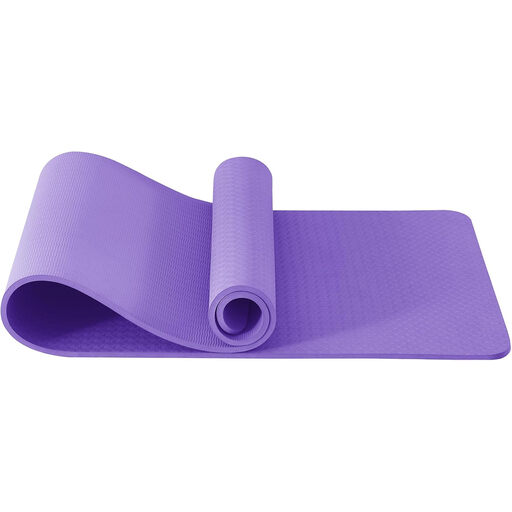
Why it stands out: With a thickness of 10mm, this mat provides extra-thick cushioning. The high-density TPE material is designed for comfort and joint protection.
Pros:
Who it's for: Ideal for users who need maximum padding for their Pilates mat or exercise mat. It is excellent for floor exercises, core training, and gentler yoga styles, especially for individuals with sensitive joints.
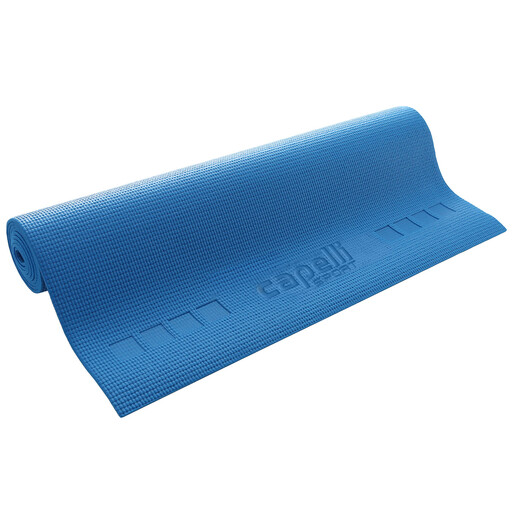
Why it stands out: This mat focuses on durability with its robust PVC material and an embossed surface texture designed to improve grip.
Pros:
Who it's for: This training mat is aimed at users looking for a stable, durable, and low-maintenance mat for a variety of activities, from hot yoga to general fitness training. Its thinner profile appeals to practitioners who prefer a more direct connection to the ground.
Didn't find the right mat for you? Every training routine is unique and may require different features. Discover more models and find the perfect surface for your practice in our comprehensive selection of Pilates and Yoga Training Mats.
Although the terms are often used interchangeably, there are functional differences. A classic yoga mat tends to be thinner (3-6 mm) and designed for grip to provide stability in poses like Downward-Facing Dog. A fitness mat or exercise mat is often thicker (8 mm and up) to offer more cushioning during higher-impact exercises or for floor-only workouts (e.g., sit-ups).
Grip depends less on the material alone and more on the surface texture. Both TPE and PVC can be finished with special textures to create a non-slip surface. TPE is often perceived as naturally grippier, while PVC can be very effective with embossing. The choice depends on personal preference and the intensity of your practice.
Most TPE or PVC yoga mats should not be machine washed. For cleaning, it is recommended to wipe the mat with a damp cloth after use. For heavier soiling, a mild soap solution can be used. Afterwards, let the mat air-dry completely in a cool, well-ventilated area. Avoid direct sunlight, as it can damage the material.