
Lieferung heute & morgen

Qualitätsgarantie

Willkommens-Angebote freischalten: KOSTENLOSE Lieferung | Bis zu 80 % RABATT | Kostenlose 30-Tage-JoyPlus-Testphase
App herunterladen
The selection of yoga mats can be overwhelming. With so many different materials, thicknesses, and textures, choosing the right one can be a challenge. This guide provides a clear, straightforward overview of the key features to consider. This will help you make an informed decision and find a yoga mat that perfectly suits your needs and practice, whether for yoga, Pilates, or general fitness exercises.
To choose the right mat, it's helpful to consider three key aspects: material, thickness, and surface texture. These factors are crucial in determining your mat's comfort, stability, and durability.
The material directly impacts the mat's grip, weight, and maintenance. The most common options are TPE and PVC.
A mat's thickness is measured in millimetres (mm) and affects the balance between cushioning and connection to the floor.
The surface is crucial for safety during your practice. A non-slip texture prevents hands and feet from sliding, even during sweaty sessions. Some mats feature alignment lines, which can be particularly useful for beginners to find correct body posture. A practical accessory is a carrying strap, which makes transporting and storing the rolled-up mat much easier.
Based on the criteria mentioned, we have curated a selection of mats that cater to different needs.
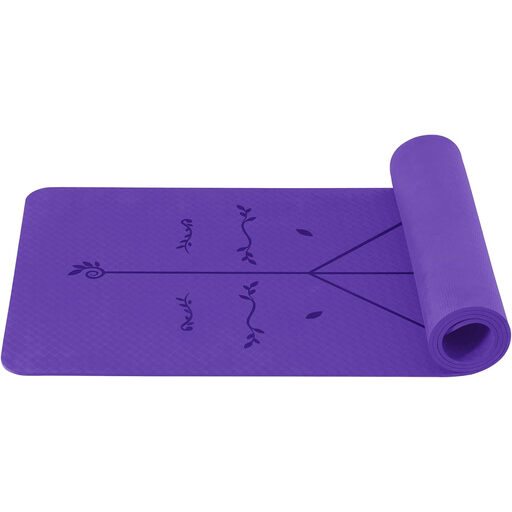
Why it stands out: This mat is distinguished by its printed alignment lines. The pattern is designed to help with the correct positioning of hands and feet and to improve body alignment.
Pros:
Who it's for: Ideal for yoga beginners looking to work on their alignment, as well as practitioners seeking a lightweight and versatile mat for home or studio workouts.
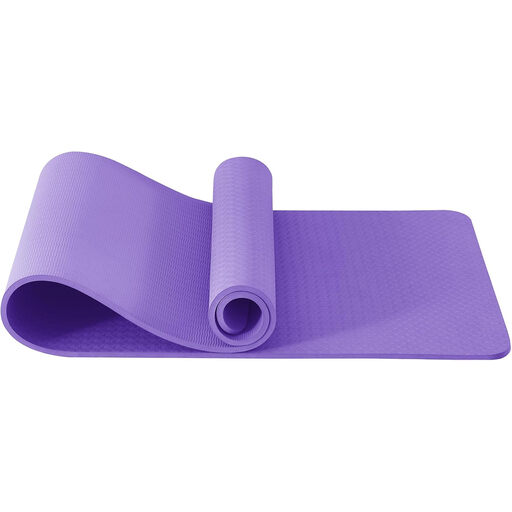
Why it stands out: At 10 mm thick, this mat offers exceptionally high cushioning. The high-density TPE material protects the spine, hips, knees, and elbows during floor exercises.
Pros:
Who it's for: This exercise mat is perfect for individuals with sensitive joints, for Pilates, core training, and anyone who values maximum padding in their Pilates mat.
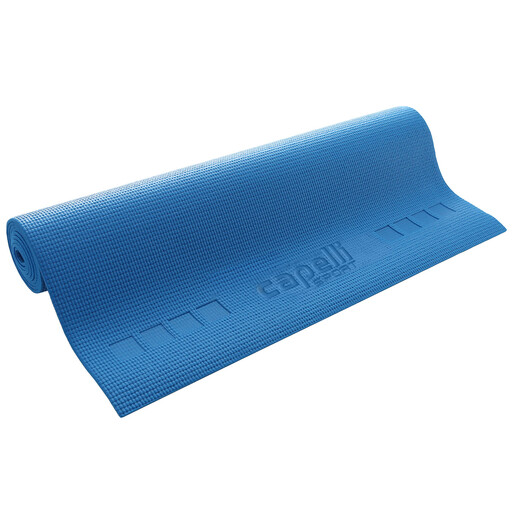
Why it stands out: This mat is made from durable PVC and features an embossed surface texture for a reliable grip. Its construction is designed for longevity and resilience.
Pros:
Who it's for: A great choice for anyone needing a stable and durable exercise mat for dynamic yoga styles, Hot Yoga, or general fitness routines at home or in the gym.
Haven't found the right mat for you yet? There are many other models available to suit different needs and preferences, whether for outdoor use or for specific training requirements.
Discover our full range of outdoor yoga mats to find the perfect model for your practice.
Although the terms are often used interchangeably, there are functional differences. A yoga mat typically focuses on grip (non-slip properties) and a moderate thickness for stability in various poses. A fitness mat or exercise mat is often thicker to provide more cushioning for higher-impact exercises (e.g., crunches, planks).
Most mats can be cleaned with a damp cloth and, if necessary, a mild soap solution. It is advisable to follow the manufacturer's care instructions. Avoid harsh cleaning agents and washing machines, as they can damage the material. Let the mat air-dry completely after cleaning before rolling it up again.
Both TPE and PVC can be very non-slip. The grip depends heavily on the surface texture. TPE often has a naturally grippier feel, while PVC mats use an embossed texture to provide the necessary grip. For sweaty practices like Hot Yoga, there are special mats with highly absorbent surfaces.