
Lieferung heute & morgen

Qualitätsgarantie

Willkommens-Angebote freischalten: KOSTENLOSE Lieferung | Bis zu 80 % RABATT | Kostenlose 30-Tage-JoyPlus-Testphase
App herunterladen
A yoga mat should stay firmly in place during your workout, provide enough cushioning and be easy to carry. In practice, vague product descriptions, unsuitable dimensions or a surface that’s difficult to clean can often lead to the wrong purchase. This applies not only to yoga, but also to Pilates, stretching, gymnastics, HIIT and other floor exercises.
The term non-slip yoga mat often refers to a textured surface. The amount of grip you get also depends on the floor, moisture and the movements you’re doing. An embossed surface may provide good grip when your hands and feet are dry, but behave differently when you’re sweating. Always place your mat on a clean, flat, dry floor.
A thick yoga mat can feel more comfortable for exercises done sitting or lying down. However, a very soft surface can feel less stable during balance exercises. For dynamic yoga and standing poses, 4 to 6 mm is often a practical middle ground. If you mainly exercise on a hard floor or need extra cushioning, you could consider a 12-mm mat.
A long, wide mat gives you more room to move, but also takes up more storage space. Dimensions such as 183 × 61 cm are often easier to manage in a small home or when travelling regularly to the studio. By contrast, an XXL mat measuring 190 × 80 cm or 190 × 100 cm is a good option if you don’t want to bump into the edge of your mat during Pilates, gymnastics or floor exercises.
The material affects the surface, weight, flexibility, cleaning and how the mat wears over time.
Choose a thickness that suits both your exercises and the floor beneath you:
A yoga mat with a carrying strap is handy if you regularly take it between home, the gym and your class. As well as the strap, check the mat’s weight and how much space it takes up when rolled. A strap makes it easier to carry, but doesn’t replace suitable storage. After exercising, let the mat dry completely before rolling it up.
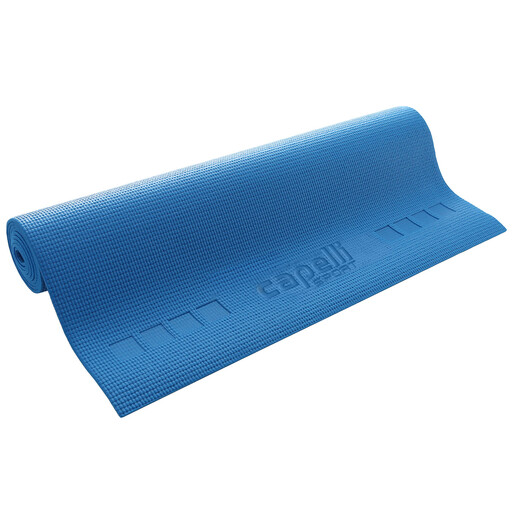
Why it suits this profile: This 4-mm PVC mat measures 68 × 24 inches and is suitable for yoga, Pilates, fitness and floor exercises at home or at the gym.
The PVC material, thickness and dimensions are clearly specified. The surface is embossed, but care is still needed when it’s wet.
4 mm thick, with an easy-to-wipe PVC surface and dimensions suited to common workout spaces.
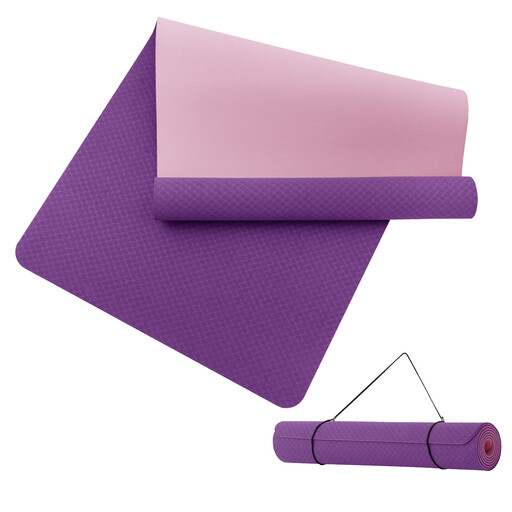
Why it suits this profile: Measuring 190 × 80 cm, this TPE mat offers a wide workout area and a textured surface on both sides for yoga, Pilates and fitness exercises.
The texture on both sides and the clearly stated dimensions reduce the risk of choosing a mat that’s too narrow for movements that need more room.
190 × 80 cm, 6 mm thick, made from TPE and supplied with a carrying strap.
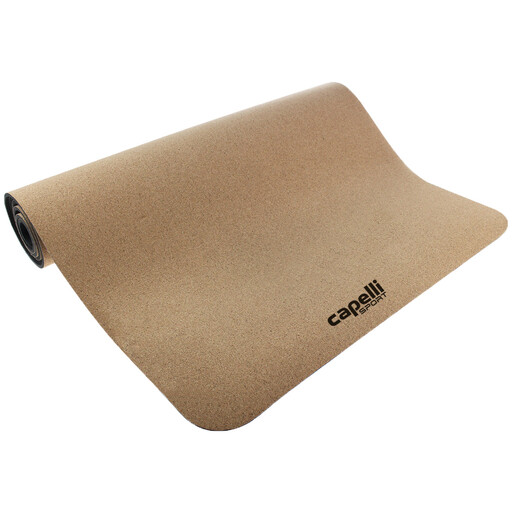
Why it suits this profile: Combining cork and TPE, this mat is for anyone looking for a different surface texture for yoga, workouts and more sweat-inducing sessions.
The material combination and 5-mm thickness are clearly stated. After exercising, dry the mat and clean it according to the care instructions.
Cork-and-TPE construction, 61 × 183 cm dimensions and a size designed for a wide range of workouts.
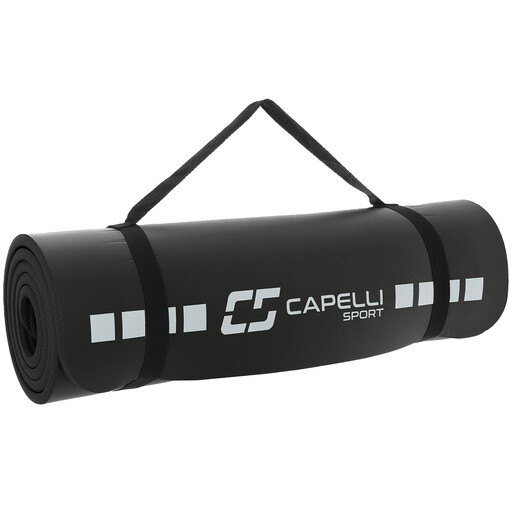
Why it suits this profile: This 12-mm NBR mat is designed for fitness, Pilates, stretching and floor exercises where extra cushioning is needed.
The thickness, NBR material and dimensions are clearly stated. Before using it regularly for balance exercises, bear in mind that the softer cushioning may affect stability.
12-mm NBR foam, 61 × 183 cm dimensions and an elastic carrying strap.
We’ve put together a complete, regularly updated list of products that meet these strict selection criteria and fully comply with the safety regulations in force in the EU.
For many people, 4 to 6 mm offers a good balance for yoga, Pilates, fitness and stretching. If you need more cushioning for floor exercises, you could choose a 12-mm mat. For balance poses, avoid a mat that’s too soft.
Most of the models in this selection can be cleaned with a damp cloth. If needed, mild soap is suitable, provided the product’s care instructions allow it. The mat must be completely dry before you roll it up. Harsh cleaning products can damage the material and surface.
How long it lasts depends on how often you exercise, the floor, how it’s stored and how well it’s cared for. Friction, direct sunlight, heat and sharp objects can damage the surface more quickly. Check the mat regularly for cracks, peeling or permanent deformation to help you decide when it’s time to replace it.