
Lieferung heute & morgen

Qualitätsgarantie

Willkommens-Angebote freischalten: KOSTENLOSE Lieferung | Bis zu 80 % RABATT | Kostenlose 30-Tage-JoyPlus-Testphase
App herunterladen
A slipping mat during Downward-Facing Dog or aching knees in Pigeon Pose—these issues can disrupt your concentration and break your flow. Choosing the right yoga mat is crucial for a safe and enjoyable practice. However, the market is filled with a vast array of materials, thicknesses, and surface textures.
As a Joybuy Product Recommendation Officer, my job is to help you navigate this diverse product landscape. This guide outlines objective criteria and presents a selection of mats to provide you with a solid basis for choosing your new home workout mat or studio companion.
Three key factors determine if a mat suits your needs: material, thickness, and surface texture.
The material affects grip, weight, durability, and maintenance.
The thickness of the mat, measured in millimetres (mm), directly impacts cushioning and balance.
Ensuring a fitness mat is non-slip is essential for safety. The grip is achieved through a combination of material and surface texture. Dual-sided textures often provide stability on various floor types. A practical accessory is a sports mat with a carrying strap, which makes transporting and storing the rolled-up mat much easier.
Based on the criteria above, we have compiled a selection of mats with different specialities.
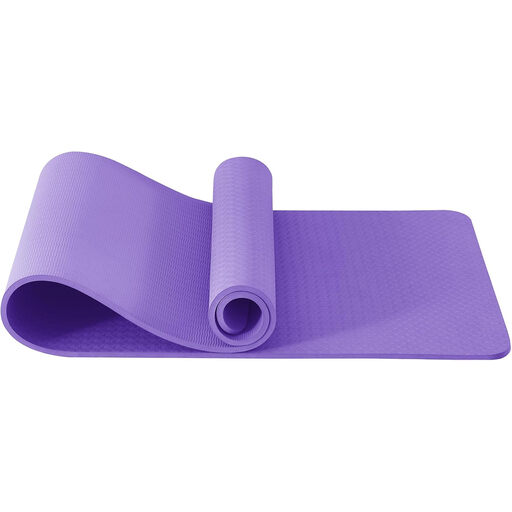
What sets it apart: With a thickness of 10 mm, this mat offers exceptional cushioning. The high-density TPE material is designed to withstand pressure and quickly return to its original shape. The dual-sided non-slip texture ensures stability during your exercises.
Advantages:
Best for: Individuals seeking maximum joint protection for their practice, especially for Pilates, gymnastics, or gentle yoga styles.

What sets it apart: This mat combines a natural cork surface with a TPE base. According to the manufacturer, the cork layer absorbs moisture to enhance grip, which is advantageous during intense workouts. An integrated polyester mesh is designed to increase tear resistance.
Advantages:
Best for: Yogis who value a firm grip during sweaty practices like Hot Yoga or Vinyasa Flow and prefer natural materials.

What sets it apart: At 6 mm thick, this model offers a balanced combination of cushioning and stability. Weighing just 750g and including a carrying strap, it is specifically designed for on-the-go use. The dual-sided anti-slip surface provides the necessary grip.
Advantages:
Best for: All-rounders looking for a versatile and easily portable mat for workouts at the studio, at home, or while travelling.
If the featured models don't meet your needs or you're looking for a specific colour, there are more options to explore. A wide range of mats offers a suitable solution for every requirement.
Discover our selection of black gym mats and find more models for your workout.
Most TPE and cork mats should be wiped down with a damp cloth after use. For heavier soiling, a mild soap solution can be used. It's important to let the mat air-dry completely before rolling it up. Machine washing is generally not recommended. Always follow the manufacturer's care instructions.
Yoga mats are often thinner and focus on a non-slip surface to ensure stability in poses (asanas). An exercise mat or general fitness mat is frequently thicker to provide more cushioning for floor exercises like crunches or Pilates. However, the lines are often blurred, and many mats are suitable for both activities.