
Lieferung heute & morgen

Qualitätsgarantie

Willkommens-Angebote freischalten: KOSTENLOSE Lieferung | Bis zu 80 % RABATT | Kostenlose 30-Tage-JoyPlus-Testphase
App herunterladen
A yoga mat should stay firmly in place during your workout, provide enough comfort and be easy to store wherever you use it. However, eye-catching designs, blanket claims about non-slip performance or seemingly extra-thick padding do not automatically make a mat the right choice. What matters are clear details about material, dimensions, thickness, surface texture and care.
A textured surface can improve grip on the floor. However, its performance may change when the mat becomes damp. For PVC models with an embossed surface, it is specifically pointed out that the surface may become more slippery when wet or exposed to heavy perspiration. The mat should therefore be placed on a clean, dry and level surface.
A 12 mm yoga mat provides more cushioning for floor-based exercises, but may offer less direct contact with the floor during balance and standing positions. A 6 mm yoga mat often provides a good compromise between comfort and stability. Thinner models, such as a 4-mm mat, are easier to transport and suit users who prefer a firm footing.
PVC, TPE and NBR have different properties. PVC mats are often dimensionally stable and easy to care for. TPE mats are frequently chosen for their low weight and elasticity. With NBR foam, softer cushioning is usually the main focus. Environmental claims should only be taken into account when specific certificates or verifiable manufacturer information are available. For the PVC selection described here, for example, no specific environmental certification is stated.
For yoga, Pilates and stretching on a hard floor, 4 to 6 mm are practical starting points for many users. Anyone who frequently trains on their knees, on their back or while seated may wish to consider a thicker fitness mat or exercise mat. With a 12-mm mat, check whether the additional height affects stability during balance exercises.
A thick mat cannot replace a suitable surface. Before exercising, the floor should be level, dry and free from sharp objects. For a permanent workout area, interlocking gym mats may be more suitable than a single roll-up mat. According to the product details, the individual PE foam tiles can be connected to one another and are suitable for workout areas and protecting the floor beneath fitness equipment.
The standard size of approximately 183 × 61 cm is suitable for many yoga and Pilates exercises. An XXL yoga mat, for example measuring 190 × 100 cm, provides more room to the sides for larger movements, but also requires more storage space.
A yoga mat with a carry strap is practical for travelling to a studio, gym or park. Allow the mat to dry completely before rolling it up. For the products described, cleaning with a damp cloth and mild soap is generally sufficient. Avoid harsh cleaning products, prolonged direct sunlight, naked flames and sharp objects.
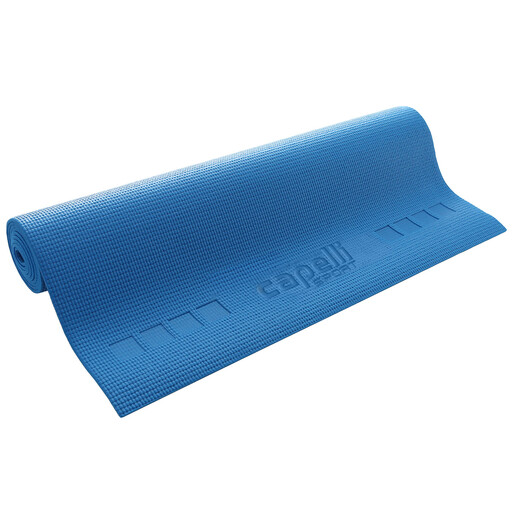
Why this product suits the profile: The 4-mm PVC mat, measuring 68 × 24 inches, is designed for yoga, Pilates, fitness and floor exercises. It is suitable for shoppers looking for a relatively flat, easy-to-store base.
The thickness and material are clearly specified. However, the embossed surface should be used with caution when wet.
PVC construction, textured surface and easy cleaning with a damp cloth.
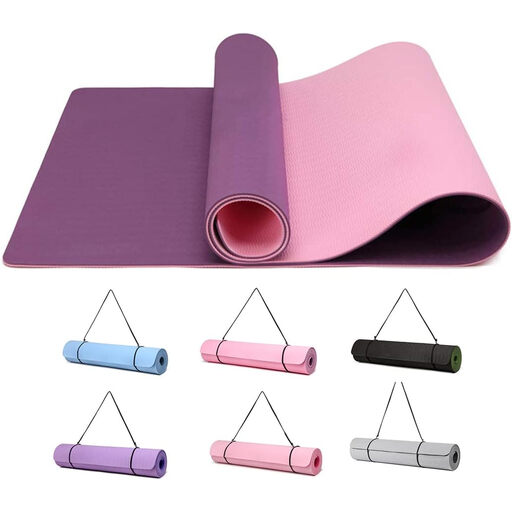
Why this product suits the profile: This model combines a thickness of 6 mm, a weight of around 0.7 kg and a carry strap. It is designed for yoga, Pilates, gymnastics, HIIT and general fitness training.
The double-sided texture is clearly described. Even so, it does not replace a dry, level workout surface.
TPE material, 6 mm thickness, carry strap and a manageable weight for use at home, in the studio or outdoors.
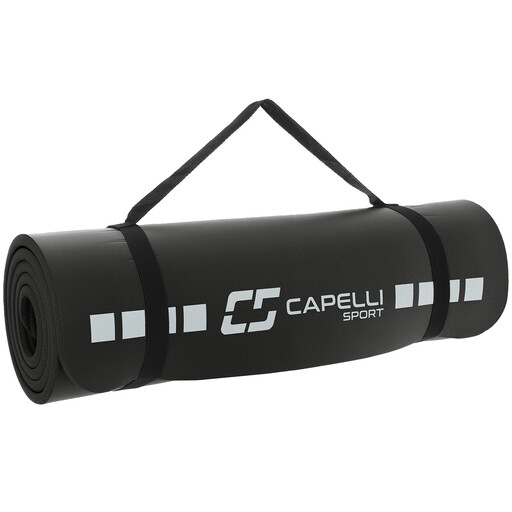
Why this product suits the profile: The 12-mm NBR mat provides a more heavily cushioned base for fitness, Pilates, stretching and floor exercises. An elastic carry strap makes storage and transport easier.
The specific NBR thickness of 12 mm makes the level of cushioning clear. For demanding balance positions, the additional height should be taken into account.
NBR foam, 12 mm thickness, 61 × 183 cm and a textured surface with a carry strap included.
We have put together a complete, regularly updated list of products that fully meet these strict selection criteria and the safety regulations applicable in the EU.
For many yoga, Pilates and fitness exercises, 4 to 6 mm is a practical starting point. A 12-mm mat can provide more distance from a hard floor during floor exercises, but usually feels less direct during standing balance exercises. Your decision should depend on your main type of training and your personal comfort requirements.
After training, wipe the surface with a damp cloth and, if necessary, mild soap. Then allow it to air-dry completely before rolling up the mat. Direct, prolonged exposure to sunlight, harsh cleaning products and high temperatures can affect the material.
Its lifespan depends on how often it is used, the surface it is placed on, cleaning and material care. Wear, tears or a permanent loss of surface grip are signs that the mat should no longer be used. Sharp objects, uneven floors and naked flames should always be avoided.