Family cooks making small portions of dressing
If you’re mixing yoghurt and seasoning for a meal, a suitably sized container and less washing-up are important. A recipe from Emmi kocht einfach describes the preparation as a matter of stirring.


For a smooth yoghurt dressing made with yoghurt, oil and seasoning, a hand whisk is usually all you need; a blender isn’t essential. If you want to finely blend in fresh herbs or other ingredients, a hand blender with a suitable container is a compact option. A stand or personal blender is worth considering if you’ll also use it for other blended recipes and its container size suits your portions.
If you’re mixing yoghurt and seasoning for a meal, a suitably sized container and less washing-up are important. A recipe from Emmi kocht einfach describes the preparation as a matter of stirring.
If you want to finely blend herbs or other ingredients into your dressing, the blending attachment, a suitable container and how easy the parts are to clean are all important considerations.
If you make smoothies or other blended recipes as well as dressing, the container size and the space it takes up should suit those additional uses. The SWR describes hand blenders as particularly practical for smaller quantities.
A good fit if: You’re mixing yoghurt, oil and seasoning, and the herbs are already finely chopped.
The trade-off: You won’t need a blending appliance, but it won’t purée any pieces.
A good fit if: You want to purée herbs or other ingredients into the dressing, even in smaller quantities.
The trade-off: The container shape, splashing and cleaning the particular blending attachment all matter.
A good fit if: You regularly make smoothies or other blended recipes too, and the container is suitable for the quantity you need.
The trade-off: The container and motor base take up space, and need cleaning after use.
The key factors are whether you simply want to mix ingredients or purée them, the size of your portions and which parts will need cleaning afterwards.
| Priority | What to check before buying | Who is this important to? |
|---|---|---|
| Small portions | Typical quantity and container shape; consider whether you need to purée anything at all. | If I’m just mixing a small amount for a family meal, I don’t want to wash an unnecessarily large container. Around 36% of consumers put making small portions simply at the top of their list. |
| Ingredients with texture | The blending attachment, a suitable container and, if relevant, whether a chopper attachment is actually included. | If I want to finely blend fresh herbs into my dressing, I check whether the appliance can purée them. Around 29% of consumers prioritise finely blending herbs or other ingredients. |
| Cleaning | Which parts are removable and which the instructions say are dishwasher-safe. | After eating, I want to be able to clean the parts that come into contact with the dressing without any awkward upkeep. Around 21% of consumers put easy cleaning first. |
| Other blended recipes | The usable capacity of the specific container, the space it needs and the uses you actually have planned. | If I also make smoothies or other blended recipes, the appliance should suit the quantities and uses I have in mind. Around 14% of consumers give the greatest importance to making other blended recipes. |
A recipe from Emmi kocht einfach describes yoghurt dressing as something you stir together. If you don’t want to purée any ingredients, an appliance may not solve a problem you actually have.
Before buying, decide whether you want to finely purée herbs or other ingredients, or whether simply mixing them is enough.
An extra appliance takes up storage space and means more parts to clean.
Braun’s product page gives conflicting power figures for the MQ50201M. The wattage alone doesn’t tell you how finely it will blend herbs into a dressing.
Instead, compare the specific features, what’s included and the instructions for each model.
What’s included and the care instructions vary by model. COMPUTER BILD criticised the Kenwood HDP106WG for being difficult to clean and described its blending attachment as not dishwasher-safe.
Check the full model number, what’s included in the box and the care instructions for every individual part.
These notes relate to the product ranges and models mentioned, not every appliance made by each brand.
Hand blenders for compact food preparation.
MultiQuick hand blenders with accessories that vary by model.
A compact personal blender also designed for drinks.
Triblade hand blenders, including the HDP106WG.
ProMix hand blenders are another option for preparing food in a container.
This selection features hand blenders for herbs or other ingredients you want to purée into yoghurt dressing. For the specific appliance, check whether it is required to carry a CE marking under the relevant harmonised EU rules, and whether the parts that come into contact with food meet EU requirements. Your Europe explains the requirements for CE marking; EUR-Lex sets out the requirements for food-contact materials.
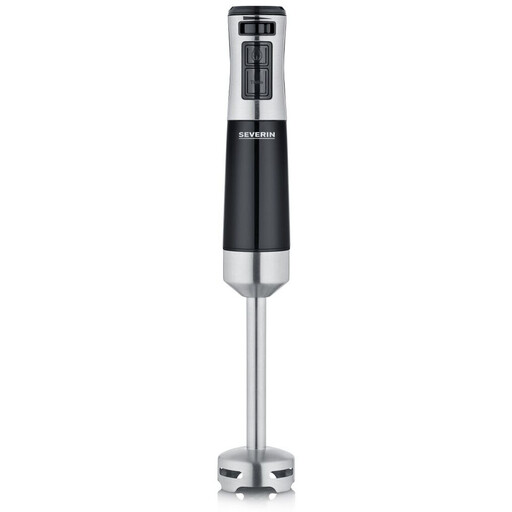 No image available
For ingredients you want to purée or chop; removable parts make them easier to clean.
600 W; variable speed control; removable blending attachment; removable parts stated to be dishwasher-safe.
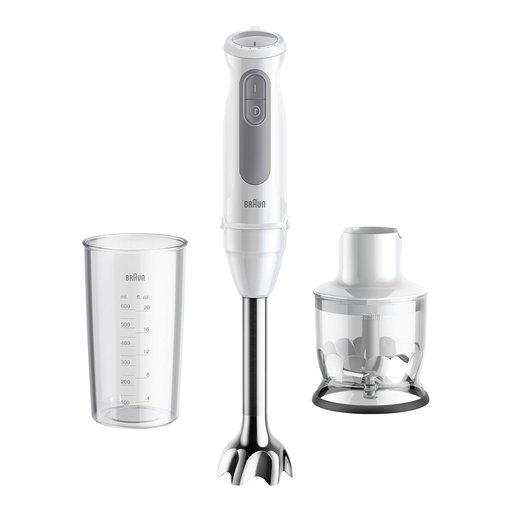 No image available
For dressing with herbs or other ingredients that need finely chopping; the set includes a chopper and a measuring beaker.
21 speed settings and a Turbo function; 350 ml chopper; 600 ml measuring beaker. The conflicting power figures aren’t a reliable basis for comparison.
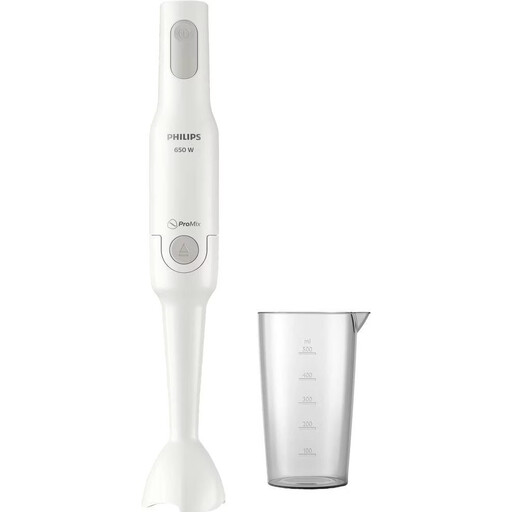 No image available
For puréed ingredients in the mixing beaker; according to the product description, the removable parts are dishwasher-safe.
650 W; mixing beaker; one-button release.
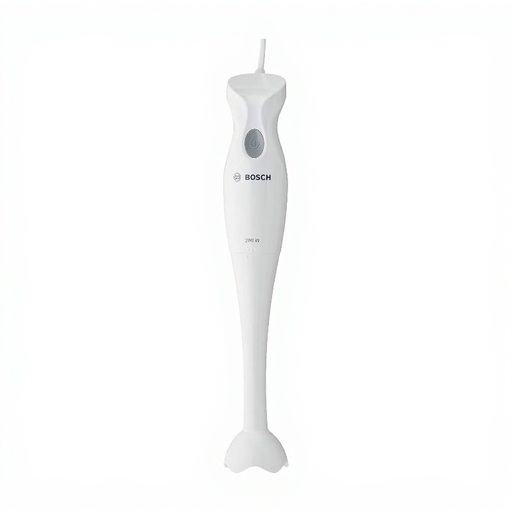 No image available
For smaller quantities in a suitable container; the instructions recommend a tall, narrow container.
280 W; removable blending attachment with splash guard; the blending attachment is described as dishwasher-safe.
 No image available
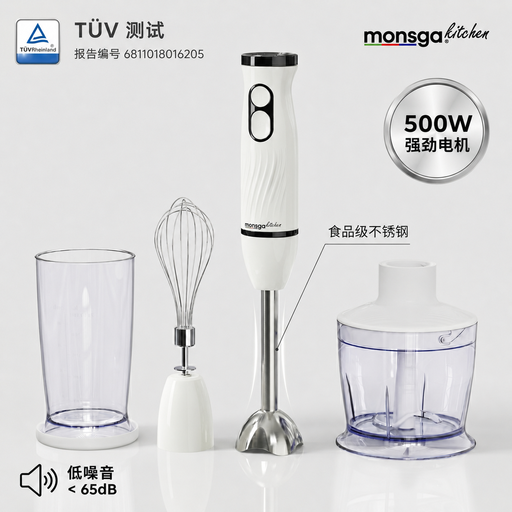
For dressing you want to whisk or purée with the blending attachment; a chopper is also listed.
Normal and Turbo modes; 500 ml chopper and 500 ml beaker; 1.5 m cable. The removable accessories are stated to be dishwasher-safe.
No, not necessarily. A recipe from Emmi kocht einfach describes the preparation as a matter of stirring. If you don’t want to purée any ingredients, you can start by mixing the dressing by hand.
Check the instructions for the exact model and each accessory, as a removable blending attachment isn’t automatically dishwasher-safe. Bosch says that the MSM6B150’s blending attachment is removable; Braun refers users to the instructions for information on whether the MQ50201M is dishwasher-safe.
Keep it as cold as possible until you’re ready to use it. The German Federal Institute for Risk Assessment explains that refrigeration slows the growth of most bacteria; this doesn’t establish a general shelf life for this particular dressing.
If a product is faulty, your statutory rights are against the seller; a guarantee is a separate, voluntary benefit. The Verbraucherzentrale says that online orders generally come with a 14-day cancellation period from the date you receive the goods. Cancelling an online order is not the same as exercising your rights when a product is faulty.
For the specific appliance, check whether the relevant harmonised EU rules require it to carry a CE marking. Your Europe explains that this marking is only required for products covered by rules that require it; EUR-Lex sets out EU requirements for materials that come into contact with food.