Small portions of dressing
If you only make a little dressing after your shop, the key is whether a whisk or blending attachment is suitable for your quantity and the container you’re using.


For a simple yoghurt dressing with chopped herbs, a whisk is usually all you need. If you want to purée the herbs finely, an immersion blender with a suitable, fairly tall container is an obvious choice. A small countertop blender is more worthwhile if you also use it regularly for drinks. With any electric appliance, check that the recipe quantity is suitable for the container and the usage instructions, and find out how each part should be cleaned.
If you only make a little dressing after your shop, the key is whether a whisk or blending attachment is suitable for your quantity and the container you’re using.
Think about whether you want the herbs chopped and left in the dressing, or blended more finely with an immersion blender or chopper.
If you also want to purée, chop or make drinks, check which attachments and containers are actually included, and how much storage space you’ll need.
A good fit if: You’re mixing yoghurt, an acidic ingredient and seasoning, then adding chopped herbs.
Worth considering: The herbs won’t be finely puréed electrically; on the plus side, there’s no extra appliance to clean.
A good fit if: You want to purée a small quantity in a suitable container, then put the blender away.
Worth considering: You guide the blending foot yourself. The supplied beaker also takes up space, and its inclusion doesn’t automatically mean it’s suitable for your smallest portions.
A good fit if: You regularly want to chop herbs or other ingredients separately as well as make dressing.
Worth considering: The extra attachment means more parts to store and clean.
A good fit if: You also regularly use this type of appliance for drinks, and its container is suitable for the amount of dressing you make.
Worth considering: You blend in its own container rather than directly in a suitable mixing bowl; a drinks bottle doesn’t tell you whether the blender can handle a small enough quantity of dressing.
| Priority | What to check before buying | Who is this important for? |
|---|---|---|
| Small quantities and container | Check the recipe quantity against the container shape and the guidance on minimum and maximum fill levels; don’t assume that capacity means it’s suitable for a small quantity. | If I only make a little dressing, the container needs to suit the amount. Around 33% of consumers put portion size first. |
| Herb texture | Decide whether you want to add the herbs chopped, purée them with the blending foot or chop them separately; check what’s included with the specific version. | If I want to choose the texture of the herbs, it matters whether they stay chopped or are processed more finely. Around 27% of consumers put herb texture first. |
| Cleaning | For each model, check which parts are removable and which the instructions say are dishwasher-safe; consider the motor and attachments separately. | If I use the blender often, the number of parts I need to clean after making food matters to me. Around 20% of consumers put cleaning effort first. |
| Other tasks and storage | Check that the attachments and containers suit the tasks you plan to do regularly; confirm the full model version. | If I also want to chop ingredients or make drinks with the appliance, the extra parts should genuinely suit my routine. Around 20% of consumers put versatility first. |
The stated capacity doesn’t tell you whether your smallest quantity of dressing will blend properly.
Before buying, check the recipe quantity against the fill and usage instructions for the specific model.
An extra container can take up storage space.
A separate chopper isn’t included with every version.
Choose the attachment only if you’ll actually use the chopping function, and check what’s included against the full model number.
Cleaning instructions for a blending foot don’t automatically apply to the motor or every attachment.
Check the instructions for every part of the specific appliance that comes into contact with food.
The ErgoMixx models offer a useful point of comparison for immersion blenders with different accessories.
The MultiQuick range includes versions with different accessories; the MQ 55254 M is a set with several attachments.
WMF offers both immersion blender sets with several attachments and a small countertop blender for drinks.
The Daily Collection ProMix HR2531/00 is a specific model for which Philips Germany provides support information.
This selection includes immersion blenders and sets for puréed dressing, as well as versions with accessories for other food preparation tasks.
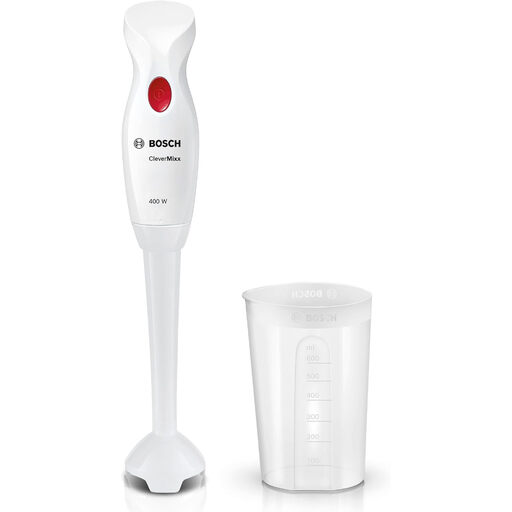 No image available
A good fit if you want to finely purée herbs with an immersion blender and can use a tall, narrow container.
The product name specifies 400 W and a removable blending foot. A tall, narrow container is recommended for blending.
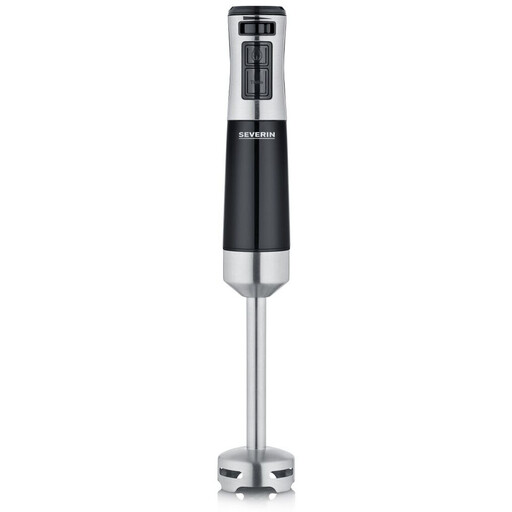 No image available
A suitable option if you want to make dressing or sauces with an immersion blender.
The product name specifies 600 W, stepless speed control and a removable blending shaft.
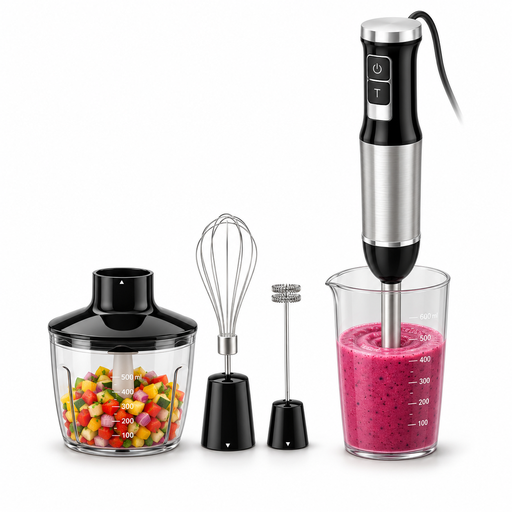 No image available
If you want to chop herbs separately and blend the dressing base, a set with a chopper is worth considering for those extra steps.
The product name specifies 1000 W, a 5-in-1 design and 6 speed settings.
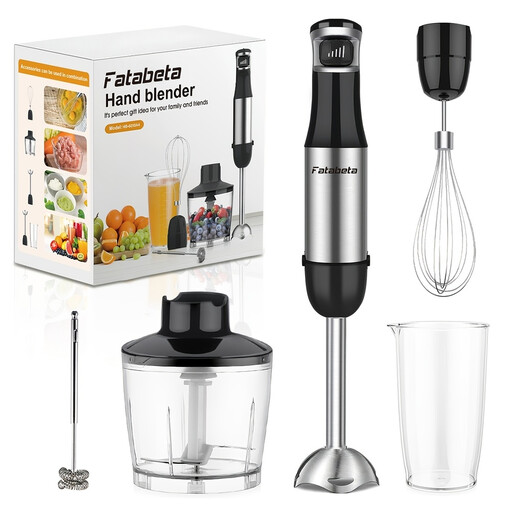 No image available
This set is an option if you want to chop or whisk ingredients as well as blend them.
The product name specifies five speed settings, a chopper, a whisk and a milk frother.
 No image available
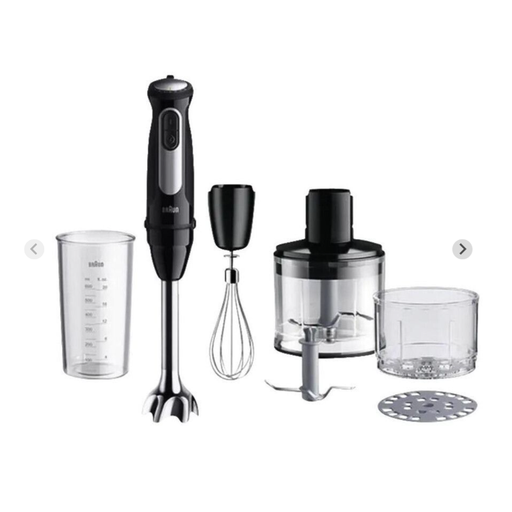
A good fit if you want to blend or purée the dressing base with an immersion blender.
When blending liquids or semi-liquid ingredients, the blending shaft should be fully immersed.
No. You can mix yoghurt dressing with chopped herbs using a whisk. The Federal Centre for Nutrition describes this preparation method; finely puréeing the herbs is a separate step.
The Federal Centre for Nutrition recommends washing and chopping fresh herbs shortly before eating. Follow the instructions for the specific appliance when cleaning the blending foot and accessories: ‘removable’ doesn’t automatically mean ‘dishwasher-safe’.
For a fault, contact the seller about your statutory rights, which are separate from a voluntary guarantee. The consumer advice centre says the first step is to ask for the fault to be remedied through repair or replacement. For goods bought online, you generally have a right to cancel within 14 days of receiving them; conditions and exceptions apply.
Electrical waste shouldn’t go in household rubbish. The Federal Environment Agency lists local collection points, such as recycling centres, and suitable retail take-back points. Whether a retailer will accept your appliance depends on the circumstances.