Overnight planners
If you start a batch in the evening, a timer with automatic switch-off can make the process easier to plan. Rommelsbacher lists an individually adjustable running time and a switch-off function for the JG 80.


An electric yoghurt maker leaves your hob free while the yoghurt ferments; an unpowered insulated system can do the same, but you’ll need to prepare hot water first. For a predictable overnight batch, a timer and automatic switch-off are useful, while the container size and programmes should suit your recipes. Fermentation time depends on the ingredients and the appliance instructions; the yoghurt then needs to be chilled.
If you start a batch in the evening, a timer with automatic switch-off can make the process easier to plan. Rommelsbacher lists an individually adjustable running time and a switch-off function for the JG 80.
An electric yoghurt maker needs a space to sit and a power socket, but it doesn’t tie up your hob during fermentation. An insulated system requires you to prepare hot water beforehand; My.Yo describes an unpowered system with heat insulation.
If you want to store individual portions, jars may be a good fit; for a larger batch, consider a container with a suitable capacity. Severin lists 14 jars of 150 ml each for the JG 3520, while Rommelsbacher lists different container formats for the JG 80.
A good fit if: you want to set the batch time on the appliance and keep your hob free during fermentation.
Bear in mind: The appliance needs space and electricity; the temperatures on the Rommelsbacher JG 80 are preset and cannot be adjusted freely.
A good fit if: you can prepare hot water before starting a batch and don’t want to use a power socket during fermentation.
Bear in mind: The heat is added in advance; an electric timer or automatic switch-off isn’t part of this type of system.
A good fit if: portion jars are important to you and you can keep track of when fermentation should end.
Bear in mind: An on/off switch isn’t the same as a confirmed automatic timer; the Severin JG 3520 has no display.
| Priority | What to check when buying | Who is it important to? |
|---|---|---|
| Predictable end to fermentation | Check the adjustable running time and automatic switch-off separately. | If I start a batch in the evening, I want to plan the running time and know when to chill it. Consumers who value a predictable overnight process most are likely to account for around 36 %. |
| Keeping the hob free | For insulated systems, factor in preparing hot water; for electric appliances, plan for a suitable space and power socket. | If I only have one hob, I want to be able to use it for other food while the yoghurt ferments. Consumers with this priority are likely to account for around 29 %. |
| Portions or batch size | Check the size and number of containers supplied; don’t add their capacities together as if they could all be used at once. | If I want to store yoghurt in portions or make a larger batch, I need containers in a suitable format. Consumers for whom portion or batch size is the deciding factor are likely to account for around 21 %. |
| Different batches | Compare the programmes and temperature settings with the requirements of the culture you’re using. | If I want to make different types of yoghurt, I want to know whether the programmes or settings are suitable. Consumers with this as their main priority are likely to account for around 14 %. |
An insulated system uses heat added beforehand. If you only have one hob, you’ll need to do the heating before fermentation begins.
Check whether you can prepare the water and ingredients at the time you want to start.
Preparing the hot water takes extra time and energy.
When a programme ends, the yoghurt isn’t automatically stored at room temperature or chilled.
Plan your start time so you can chill the finished yoghurt in line with the appliance and culture instructions.
The containers supplied may be in different formats or intended for separate batches. Their individual capacities don’t automatically add up to the amount the appliance can make at once.
Compare the stated batch capacity with the number and size of the containers supplied.
The JG 80 is designed for households that want to choose between smaller jars and larger containers, and adjust the running time.
The JG 3520 is designed for portion jars; the JG 3521 offers programmes as well as additional time and temperature settings.
This unpowered, insulated system is described as suitable for batches of up to 1 litre, provided you can prepare hot water beforehand.
The JM 2 is described as coming with several portion jars and a timer; the JM 3 differs by offering an adjustable temperature, according to the manufacturer.
This Joybuy selection includes yoghurt makers with different container sizes, some with adjustable running times. Check each model’s listed features and container formats against your overnight routine.
 No image available
The two larger glass containers are ideal if you don’t want to divide your batch between lots of small individual jars.
The title lists glass containers of 2,000 ml and 1,400 ml. The description lists eight fermentation modes, an adjustable time of up to 240 hours and an audible signal when the programme ends.
 No image available
The combination of portion jars and a larger inner pot gives you two container formats for your batch.
The description lists nine 100 ml jars, a 1.6 l inner pot, a programmable running time of 1 to 99 hours and automatic switch-off. The temperature control is specified as 21–48 °C.
 No image available
The eight jars are a good option if you want to divide your batch into individual portions.
The title lists eight jars with a total capacity of 1,440 ml and a 48-hour timer. The description lists adjustable temperature and automatic switch-off.
 No image available
The stated 1.5 l capacity is useful if you’re planning to make a larger batch.
The title lists a 1.5 l capacity and 20 W, as well as a sieve and lid. The description explains that the sieve is for making Greek yoghurt.
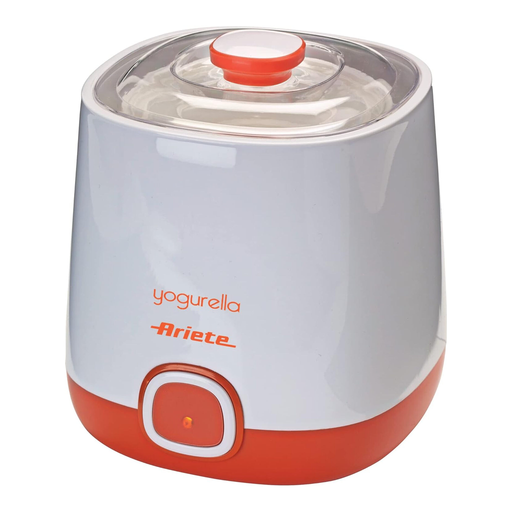 No image available
The stated 1 l capacity is a useful guide if you want to keep your batch size small.
The title lists a 1 l capacity and 20 W. The description lists an adjustable timer and a filter for Greek yoghurt.
No. My.Yo describes fermentation using heat insulation without electricity, but you need to prepare hot water before starting. Plan this step around using your only hob.
Automatic switch-off doesn’t chill the batch. Remember to put the finished yoghurt in the fridge, following the appliance and culture instructions.
Compare the appliance’s batch capacity with the size and number of containers supplied. You can’t automatically add up individual container capacities to work out how much can be made at once.
It depends on the type of milk and the relevant instructions. The Federal Centre for Nutrition points out that raw milk must always be boiled before consumption; it isn’t the same as commercially available milk that has already been heat-treated.
Your statutory rights are a claim against the seller; a voluntary manufacturer’s warranty is subject to its own terms. The Verbraucherzentrale distinguishes between these two claims. If there’s a fault, repair or replacement may be available in the first instance.