Households with just one hob
If you need to keep your only hob free while the yoghurt ferments, consider whether the appliance can sit somewhere else or whether you can manage with an existing multi-cooker being occupied for a while.


If you want to keep your only hob free while the yoghurt ferments, a separate electric appliance could be a good option. A non-electric insulated yoghurt maker needs hot water to get started, while a multi-cooker is occupied for the duration of its yoghurt programme. For breakfast ready in advance, you’ll also need to think about suitable containers, starting the yoghurt the night before and making room for it to chill afterwards. The Verbraucherzentrale recommends leaving its yoghurt mixture to ferment overnight, then storing it in the fridge.
If you need to keep your only hob free while the yoghurt ferments, consider whether the appliance can sit somewhere else or whether you can manage with an existing multi-cooker being occupied for a while.
If you want to start the yoghurt the night before and take chilled portions out in the morning, consider the containers, fridge space and appliance programme together.
If you’d like to make varieties with suitable plant-based drinks as well as natural yoghurt, check the programmes specifically listed for the appliance and read its instructions.
First, decide whether you need to keep your hob free while the yoghurt ferments. Then consider the container style, whether you’ll prepare it the night before and which programmes are available to see how well the appliance fits your breakfast routine.
| What matters when buying | What to check | Who is it especially important for? |
|---|---|---|
| Keeping the hob free | Check where the appliance can sit while the yoghurt ferments and whether a non-electric model needs water heating first. You won’t be able to use a multi-cooker for other cooking tasks while its yoghurt programme is running. | If I still need my only hob while the yoghurt ferments, I’m looking for a method that won’t tie it up for the whole time. Around 33% of consumers put keeping the hob free first. |
| Getting breakfast ready in time | Check whether you can set the programme duration and, if applicable, whether the appliance switches off automatically. Allow time for chilling after fermentation. | If you want chilled yoghurt in the morning, you’ll need to start it the night before. Around 27% of consumers prioritise this predictable breakfast routine. |
| Portions and fridge space | Compare the number and size of the containers, as well as the availability of replacement jars. Check that the finished portions will fit in your fridge. | If I want to prepare individual breakfast portions or store a larger batch, I pay particular attention to the containers and lids. Around 20% of consumers prioritise portioning and storage. |
| Ingredients and programmes | Check the instructions to see whether the appliance is designed for the ingredients you want to use. A dedicated programme doesn’t guarantee the same consistency with every plant-based drink. | If you want to use different ingredients, compare the programmes on the specific model with your recipes. Around 20% of consumers prioritise having the right choice of ingredients and programmes. |
According to the manufacturer, the My.Yo insulated yoghurt maker needs no electricity while the yoghurt ferments, but it uses the heat from boiling water to get started.
Bear this preparation step in mind if you’ll need your only hob for other tasks at the same time.
Individual jars and larger containers may be different ways to use the same appliance, so you can’t necessarily add their capacities together as the amount you can make at one time.
Check the instructions to see which containers can be used in one batch and how much fridge space the finished portions will need.
Programmes apply to specific models and don’t prove that every recipe or plant-based drink will work in the appliance.
Choose an appliance based on the programmes it specifically offers, and check the recipe and ingredient guidance in the instructions.
The JG 80 Jona combines small jars and larger containers, with programmes for yoghurt and cream cheese.
The JG 3518 is designed for individual portions prepared in advance, while the JG 3521, considered separately, offers automatic programmes.
With a 1-litre capacity, this non-electric insulated yoghurt maker is designed for households that don’t want to occupy a plug socket while the yoghurt ferments.
The JM 3344 is a straightforward yoghurt maker for breakfast portions prepared in jars.
A multi-cooker with a dedicated yoghurt programme could be an option if you want one appliance to handle several cooking tasks.
The Joybuy products below include yoghurt makers with larger containers, as well as options for preparing individual portions in advance.
 No image available
Suitable for larger batches if you’d like to portion out the yoghurt yourself once it has fermented.
 No image available
Could suit a planned batch if you’d like to choose between using the inner pot and portioning the yoghurt into jars.
 No image available
The jars are handy for individual portions prepared in advance, and the timer is listed as a feature to help you plan when to make them.
 No image available
The 1.5 l container could be ideal for making enough yoghurt for several portions; according to the product name, the strainer is designed for Greek yoghurt.
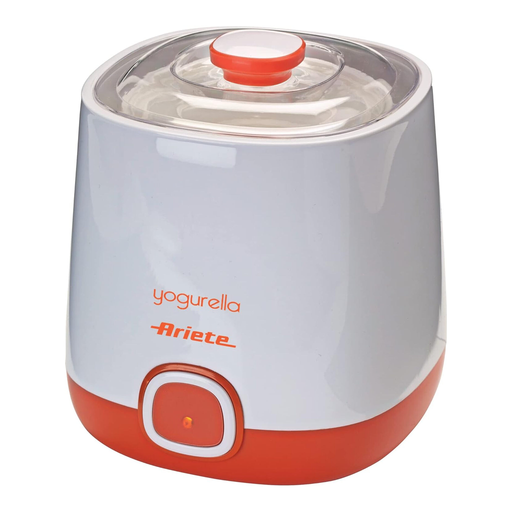 No image available
The 1-litre container is handy if you’d like to store a whole batch together; according to the product description, a special filter is designed for Greek yoghurt.
No, not if you’re starting a new batch and want it ready for that same breakfast. The Verbraucherzentrale recommends leaving the yoghurt to ferment overnight, then storing it in the fridge. So, prepare it the night before, following the appliance instructions.
For the recipe described there, pasteurised whole milk is briefly brought to the boil; UHT milk can be used straight away. Don’t apply this advice to plant-based drinks or appliances with different instructions without checking first.
According to the manufacturer, the My.Yo container needs no electricity while the yoghurt ferments, but it does use the heat from boiling water. If you need your only hob to heat the water, plan this step before you start making the yoghurt.
Use clean hands and containers, and store the finished yoghurt in the fridge. The Federal Centre for Nutrition highlights the importance of hygiene when handling food, and the Verbraucherzentrale’s yoghurt recipe recommends refrigerating it afterwards.
When you buy from a retailer as a consumer, you have a statutory right to a minimum two-year guarantee from the seller, starting when you receive the goods. The European Union explains this period for goods bought in the EU; this is separate from any additional manufacturer’s warranty.