Households eating at different times
If you prepare a batch and want to take out individual portions later, you can store sealable jars separately in the fridge. The Verbraucherzentrale recommends chilling the jars once the yoghurt is ready.


For yoghurt made overnight and eaten at different times, sealable individual jars are handy if you want to chill portions separately; a large container is a better fit for bigger batches to share. A timer with automatic shut-off makes it easier to plan, but it doesn’t replace chilling afterwards: the Verbraucherzentrale recommends putting the jars in the fridge once the yoghurt is ready.
If you prepare a batch and want to take out individual portions later, you can store sealable jars separately in the fridge. The Verbraucherzentrale recommends chilling the jars once the yoghurt is ready.
If you want to start a batch before going to bed, check that the running time and automatic shut-off suit your schedule. Rommelsbacher lists both as features of the JG 40.
If you alternate between individual portions and larger batches, compare the container sizes and settings available on each model. Unold lists four jars, adjustable temperature and running time for the Jogi 38726.
| What to look for | What to check before buying | Who it matters most to |
|---|---|---|
| Overnight timer | Check the running-time range and automatic shut-off on the specific model. | If I start a batch in the evening, I want to plan the running time and finish time to suit my schedule. Around 29% of consumers say timer controls matter most to them. |
| Separate individual portions | Compare the number and capacity of the supplied jars, as well as their lids. | If everyone wants to take out their own portion later, individual sealable containers are useful. Around 29% of consumers say separate portions are their top buying criterion. |
| Chilling after making | Plan when the finished containers will go in the fridge and whether there’s room for them. | If meals are eaten at different times, I need to plan when to move the finished batch into chilled storage. Around 24% of consumers say storage afterwards matters most to them. |
| Batch size and settings | Check the usable container capacity and whether the temperature and running time can be adjusted. | If I switch between smaller and larger batches, I want to choose containers and settings to suit. Around 18% of consumers say flexibility for different batch sizes matters most to them. |
Automatic shut-off stops the appliance, but it doesn’t chill the finished yoghurt. If you’re planning to eat it later, remember to allow time to move it into the fridge.
Before starting an overnight batch, plan when you’ll chill the containers once preparation is complete.
Lots of small jars, a few pots and one large container can all work differently when meals are eaten at different times. They also differ in how they need to be cleaned and how easy it is to portion the yoghurt later.
Count the individual portions you need, then check the number and size of containers and whether replacement pots are available for the exact model.
An adjustable running time doesn’t automatically mean you can choose the temperature freely too. Rommelsbacher says the programme temperatures on the JG 80 are fixed, while the Unold Jogi 38726 has a stated temperature range.
Compare the time and temperature settings separately if you plan to make different types of batch.
The JG 40 and JG 80 differ mainly in their choice of containers and programmes.
The Jogi 38726 is designed for small, portion-sized batches, with adjustable temperature and running time.
The JG 3510 is a straightforward model for households that prefer to manage the running time themselves.
According to the manufacturer, the Yogurella 0621/10 uses a container and filter basket to make Greek-style yoghurt.
This selection includes yoghurt makers with large containers, individual jars or adjustable settings. Check which container sizes and settings suit your overnight batch and the meals you’ll eat later.
 No image available
The containers are suited to larger batches for sharing.
Joybuy’s product details list two XXL glass containers, with capacities of 2.000 ml and 1.400 ml, plus a filter.
 No image available
The jars are handy if you want to divide a batch into individual portions.
Joybuy’s product details list a 1.6-litre SUS304 inner pot, nine borosilicate glass jars, temperature control and a timer.
 No image available
The jars are designed for separate portions that you can take out individually.
Joybuy’s product details list eight jars with a total capacity of 1.440 ml, a 48-hour timer and digital temperature control.
 No image available
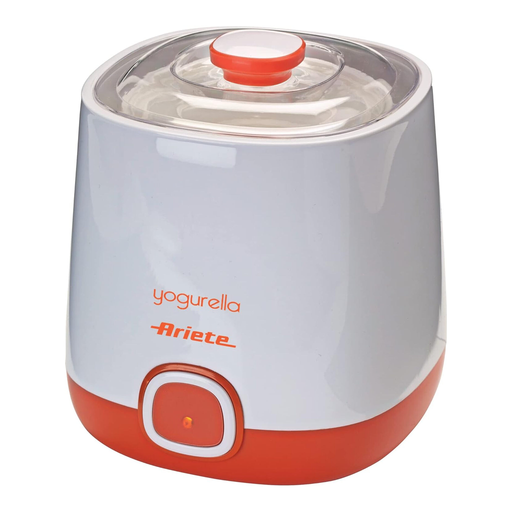
A single container works well if you want to store the batch together and portion it out yourself as needed.
Joybuy’s product details list a one-litre container and a power rating of 20 W.
 No image available
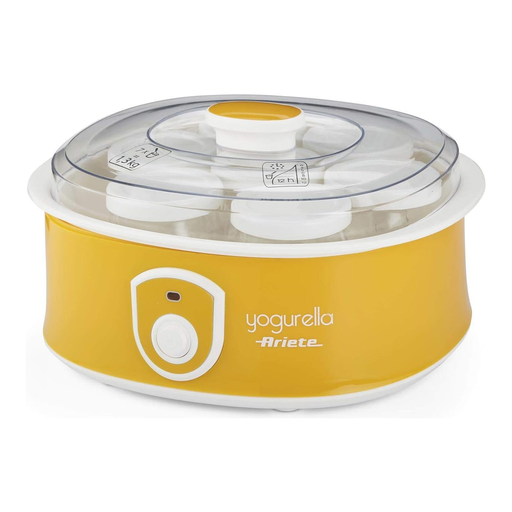
The jars are designed for portions that can be taken out individually.
Joybuy’s product details list seven individual jars, a total capacity of 1,3 litres and a power rating of 20 W. The appliance is listed as Grade A refurbished.
Instead, plan to move it into the fridge. The Verbraucherzentrale recommends keeping yoghurt chilled after preparation and suggests the middle shelf of the fridge at 5 bis 7 °C. An appliance’s automatic shut-off is not a cooling function.
Clean your hands, work surfaces and utensils thoroughly. The Verbraucherzentrale includes this as part of good kitchen hygiene for safe preparation. Also follow the cleaning instructions for your specific appliance.
It depends on the model. Unold sells compatible replacement pots for the Jogi; check the exact model compatibility and what’s included before buying.
The Bundesnetzagentur’s market surveillance guidance includes correct CE marking, product identification, accurate manufacturer details and a German instruction manual with the necessary information. Check these details for the specific appliance.
In Germany, electrical waste is collected separately and must not go in household rubbish. The Umweltbundesamt lists local collection points, which generally accept old appliances free of charge.