Hosts serving ready-made individual portions
If you want to fill and seal the jars at home, then serve them individually, compare the number of jars and their capacity. Rommelsbacher and Severin specify models supplied with individual portion jars.


If you want to portion the yoghurt at home and take it along in individual servings, choose a model based on the number and size of the jars supplied, as well as the lids provided. A large container is a better fit if you plan to portion the yoghurt later. Whichever option you choose, allow time and space to chill it after fermentation, and make sure you can keep it cool during transport. The Federal Institute for Risk Assessment recommends keeping perishable foods chilled while travelling.
If you want to fill and seal the jars at home, then serve them individually, compare the number of jars and their capacity. Rommelsbacher and Severin specify models supplied with individual portion jars.
The finished portions need to be chilled between preparation and serving, and kept cool while you’re on the way. The Federal Institute for Risk Assessment highlights the importance of keeping food sufficiently chilled during storage and transport.
If you sometimes make a small batch and sometimes a larger one, check the specific containers and programmes included. Rommelsbacher and Steba list different sets of jars and containers.
First decide whether you want to take along individually filled jars or make a larger batch to portion later. The Federal Institute for Risk Assessment recommends keeping perishable foods chilled during transport.
A good fit if: you want to seal several small portions at home and take them along individually.
Keep in mind: the jars and lids take up space in the fridge and during transport, and need to be washed.
A good fit if: you want to make a larger batch and portion it later.
Keep in mind: you’ll need extra containers and time to portion the yoghurt into individual servings.
A good fit if: you only make small batches occasionally and don’t want to buy another appliance. The Verbraucherzentrale explains how to make yoghurt in screw-top jars.
Keep in mind: the fermentation time and subsequent chilling need to fit the recipe you choose and when you plan to serve it.
| Buying priority | What to check | Who is it important to? |
|---|---|---|
| Small individual portions | Count the jars supplied and compare their stated capacity with your preferred portion size. Only plan extra batches if you have enough time. | If I want to give each guest their own small jar, the number of suitable containers matters to me; around 36% of consumers prioritise the number of individual portions. |
| Chilling and transport | Check the lids, how much space the jars need in the fridge, and how you’ll keep them cool until they’re eaten. | I want to keep the filled jars chilled all the way to the shared meal; around 29% of consumers put chilling and transport first. |
| Ready in time | Allow for the fermentation time and subsequent chilling. Check whether the specific model has a timer and automatic shut-off. | If the portions need to be ready for a set dinner time, I need to plan when to ferment and chill them; around 21% of consumers prioritise this schedule. |
| Other uses | Check whether the package includes small jars, larger containers and different programmes. If buying extra jars, make sure they’re compatible with the exact model. | If I want to use the yoghurt maker for other quantities or batches, suitable containers and functions matter to me; around 14% of consumers prioritise versatility. |
A large total capacity doesn’t tell you how many small containers are included. For example, the Rommelsbacher JG 80 comes with four 125 ml jars as well as larger containers.
If you want to bring individual portions ready to serve, first count the small containers included with the specific model.
If there aren’t enough containers for everyone, you’ll need suitable extra jars or time to make another batch.
Once fermentation is complete, the yoghurt still needs to be chilled. The Federal Institute for Risk Assessment recommends keeping perishable foods chilled while travelling.
Allow separate time for fermentation, chilling and transport.
You’ll need space to chill the yoghurt and a suitable way to keep the portions cool during the journey.
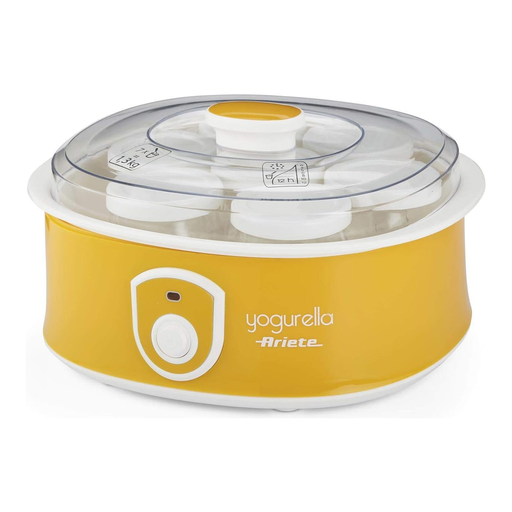
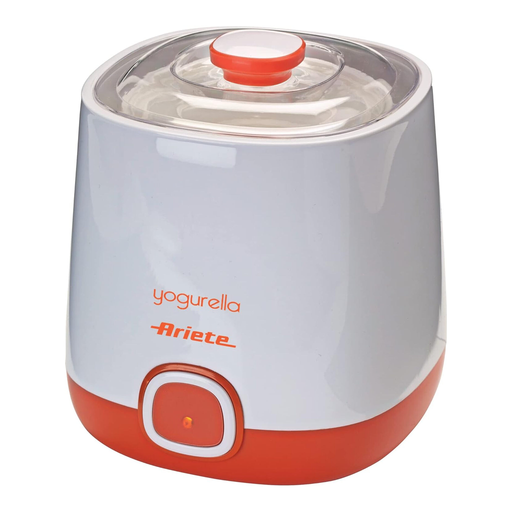
Ariete describes the Yogurella 0617/00 as having seven jars, while the 0621/10 comes with containers and a filter. The model number is therefore crucial if you’re specifically looking for a jar-based model.
Check the full model number and what’s included before choosing a product as an alternative to a model with individual portion jars.
With a container-based model, you may need separate jars for individual portions.
The JG 40 and JG 80 mainly differ in the containers supplied.
The JG 3518 is an example of a yoghurt maker with individually sealed portions.
The JM 2 is designed to make a larger number of individual portions in sealable jars.
Yogurella models differ in the type of containers they use.
The range includes yoghurt makers with individual jars, as well as models with larger containers for making a batch that you can portion later.
 No image available
Nine borosilicate glass jars let you make separate portions. Check that their capacity suits your preferred portion size.
Features listed include a 1.6-litre inner pot, temperature control, a timer and an OLED display.
 No image available
Eight individual jars are a handy option if you want to prepare portions separately. Check that the number of jars matches your guest list.
The product lists digital temperature control and a 48-hour timer.
 No image available
An option if you’re considering a product described as refurbished. Before buying, check that you’re happy with this condition.
The product name specifies 1.3 l and 20 W.
 No image available
The container is suited to making a batch that you can divide into small portions before serving.
Features listed include a 1.5-litre container, strainer insert and lid. You’ll need to portion the yoghurt afterwards if you want individual servings.
 No image available
The container-based design is a good fit if you want to make a batch and portion it later.
Joybuy’s product description lists 1 l and 1.5 l containers, plus a filter. You’ll need to transfer the yoghurt into smaller containers afterwards if you want individual portions.
Plan to have at least as many usable individual containers as you want to serve portions, and compare the capacity of each jar rather than just the total volume. Rommelsbacher lists eight 150 ml jars for the JG 40, while Steba lists twelve 0.2-litre jars for the JM 2.
Allow time to chill the yoghurt before transporting the jars. In its recipe, the Verbraucherzentrale keeps the jars in the fridge until it’s time to eat. The Federal Institute for Risk Assessment recommends keeping perishable foods chilled while travelling and gives a fridge storage temperature of 2 °C to a maximum of 7 °C.
No. Rommelsbacher explains that you can theoretically make yoghurt using fewer jars, but recommends filling the unused jars with water to help distribute the temperature evenly. This is a recommendation from the manufacturer for this specific model.
The wattage alone doesn’t tell you the measured energy use per batch. Rommelsbacher explains that the JG 40’s heating element switches on as needed after the initial heating phase. If there’s a fault, remember that your statutory consumer rights are separate from any voluntary guarantee; § 438 BGB gives a two-year limitation period from delivery under the general rule.