For small portions that can be stored separately, an electric yoghurt maker with suitable individual jars is a good choice, provided you have a suitable place to put it and access to a power socket during the renovation. If there’s no socket available, an insulated yoghurt maker may be an alternative, but it requires heat to be prepared in advance and separate containers for portioning. For electric appliances, check that the specific version on offer has the required CE marking before you buy. Jar size, timer settings and the space the appliance takes up are also worth considering.
Which approach is right for you?
Preparing small portions
If you want to make a few portions directly in individual containers and then chill them separately, the right jar capacity and the option to fill only some of the jars matter more than a large overall capacity. Severin, Rommelsbacher and Clatronic list different types of portion containers in their product information; the Clatronic JM 3344 manual also explains how to make smaller batches.
Renovating a kitchen without a permanent appliance space
You’ll need to weigh up worktop space, storage and available sockets against the effort of decanting and chilling the yoghurt. An insulated maker that doesn’t need to be plugged in works differently from an electric model with individual portion jars. Severin, Rommelsbacher and My.Yo describe these different designs in their product information.
Experimenting with yoghurt recipes
If you want to adjust the setting time or temperature to suit a particular recipe, consider whether extra controls are worth the space and effort they require. Rommelsbacher and Steba list programmes or adjustable settings on certain product ranges. Check that these suit your recipe and yoghurt culture.
What should you look for when buying?
First, decide whether you want the yoghurt to ferment in individual containers inside the appliance or whether you’re happy to decant it afterwards. Then check whether there’s a power socket where you plan to put it and what controls your recipe actually requires.
| What matters to you |
What to check before buying |
Who is this especially important for? |
| Small individual portions |
Check the jar capacity, lids and whether the instructions allow you to fill only some of the jars. |
If I want to make and store a few portions separately, the jars need to suit my needs. Around 36% of consumers say small individual portions are their main priority. |
| Space and power |
Check the appliance dimensions, available sockets and fridge space for the finished portions. |
During a kitchen renovation, I need a practical place to put the appliance. Without a suitable socket, I’ll need a design that works with my heat source and the way I plan to decant the yoghurt afterwards. Around 29% of consumers say space or power supply is their main priority. |
| A simple process |
Check the instructions for a timer, automatic shut-off and details of how the appliance is designed to be used. |
If I don’t want to keep track of when fermentation ends, a suitable timer is important to me. Around 21% of consumers say a process that’s easy to plan is their top priority. |
| Temperature and programmes |
Compare the temperature range and programme descriptions with the requirements of your recipe or culture. |
For recipes with specific temperature requirements, I want to be able to adjust the settings precisely rather than use extra programmes I don’t need. Around 14% of consumers want adjustable settings. |
Common buying mistakes
-
Confusing overall capacity with the right portion size
A one-litre container and several individual portion jars divide up a batch in different ways. If your appliance has one container and no individual jars, you’ll need to decant the finished yoghurt separately.
Start by deciding how many portions you need and what size they should be. Then check that the containers and lids fit the appliance and will fit in your fridge.
-
Assuming ‘no electricity’ means ‘no heat to prepare’
An insulated yoghurt maker retains heat, but you need to provide that heat as part of the preparation. It doesn’t remove the need to prepare the heat or to use separate containers for portioning.
Before you start, work out how you’ll provide heat during the renovation and chill the finished batch afterwards.
-
Treating a guarantee, statutory rights and replacement jars as the same thing
A voluntary guarantee and your statutory rights are different. Replacement containers must also be specifically compatible with the model you own.
Check the guarantee terms and replacement-jar compatibility separately. The Verbraucherzentrale explains the difference between a guarantee and your statutory rights.
Brands and product ranges to consider
Severin
The JG 3518 is an electric yoghurt maker with individual jars, suited to anyone who’s happy with straightforward controls.
- The manufacturer lists seven 150 ml jars and compatible replacement jars, EG 3513 and EG 3514.
- The manufacturer’s information doesn’t confirm a timer with automatic shut-off. Also check that the jar size suits your portions.
Rommelsbacher
The JG 80 Jona combines small portion jars with additional containers and functions.
- The manufacturer lists four 125 ml jars, programmes, a timer and automatic shut-off.
- The extra large containers and a sieve need storage space. Make sure the number of jars suits the size of batch you usually make.
Clatronic
The JM 3344 is a simple electric yoghurt maker with individual jars and straightforward controls.
- The manufacturer’s website and manual list seven 160 ml jars. The manual also explains how to make a smaller batch.
- The product information doesn’t confirm a timer with automatic shut-off.
Steba
The JM 3 is designed for buyers who want to adjust the temperature and running time to suit specific recipe requirements.
- The manufacturer lists a temperature setting of 20–55 °C, a timer from 1–48 hours and automatic shut-off at the end.
- With a stated footprint of 36.5 × 18.5 cm, you’ll need to allow for the space it takes up before buying.
My.Yo
This non-electric insulated yoghurt maker is a different type of appliance, designed for situations where there’s no permanent power connection at the place you want to use it.
- The manufacturer describes a one-litre batch made without plugging the yoghurt maker in.
- The batch isn’t made in individual portion jars. You’ll need to prepare the heat and portion the yoghurt separately afterwards.
Yoghurt makers at Joybuy
This selection includes electric yoghurt makers with individual jars for separate portions, as well as a model with large containers that you can decant the batch from afterwards. Before buying an electric appliance, check that the specific version on offer has the required CE marking. The type of appliance alone doesn’t confirm this.
 No image available
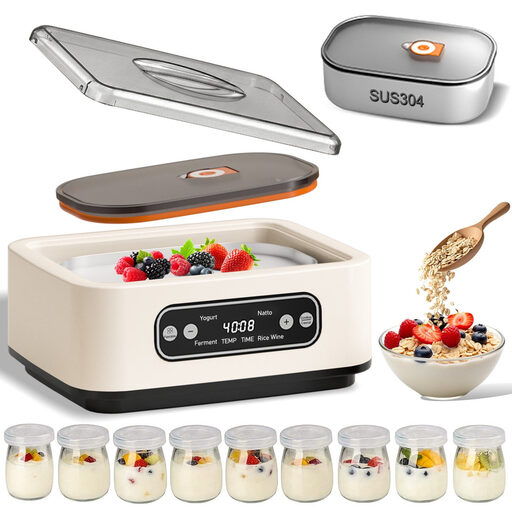
Fosmet yoghurt maker, 1.6 l, SUS304, 9 borosilicate glass jars
Nine individual jars are a good fit if you want to make separate portions.
The product name lists a SUS304 inner container, temperature control, a timer and an OLED display.
View at Joybuy
 No image available
Yoghurt maker, 1.6 l, SUS304 inner container, 9 borosilicate glass jars
The nine jars listed in the product name give you individual containers for separate portions.
The product name also lists temperature and timer controls, as well as an OLED display.
View at Joybuy
 No image available
FOHERE yoghurt maker with 8 jars, 1,440 ml, temperature control and 48-hour timer
Eight individual jars are a good choice if you want to divide the batch into portions straight away.
The product name lists digital temperature control, a 48-hour timer and automatic shut-off.
View at Joybuy
 No image available
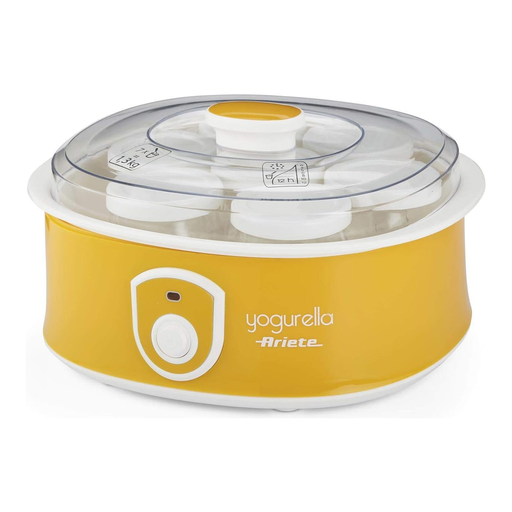
Ariete yoghurt maker, 1.3 l, 20 W (refurbished, Grade A condition)
This item is listed as refurbished, Grade A condition. If you need small individual portions, check which containers and lids are included with the version on offer before buying.
View at Joybuy
 No image available
FOHERE yoghurt maker with two XXL glass containers, 2,000 ml and 1,400 ml
The large containers are a good fit if you’re happy to decant the yoghurt into smaller containers after making it.
The containers listed in the product name hold 2,000 ml and 1,400 ml.
View at Joybuy
Frequently asked questions
Can I fill just some of the jars when making a small batch?
The Clatronic JM 3344 manual specifically explains how to make a smaller batch and gives quantities per jar. Don’t assume this applies to other models: always follow the instructions for the one you have.
What should I do with the portions after fermentation?
Chill the finished yoghurt. The Verbraucherzentrale recommends storing dairy products such as yoghurt on the middle fridge shelf at 5–7 °C and advises throwing away yoghurt with visible mould. Advice about unopened shop-bought products after their best-before date isn’t a guarantee of how long homemade yoghurt will keep.
Which milk should I use if my temporary kitchen has limited equipment?
The method described by the Verbraucherzentrale allows you to use UHT milk as it is; briefly bring pasteurised whole milk to the boil first. The Bundeszentrum für Ernährung advises that raw milk must be boiled before consumption. Also follow the instructions for your appliance and yoghurt culture.
Is CE marking required for an electric yoghurt maker in Germany?
Electrical equipment covered by the Low Voltage Directive 2014/35/EU and designed for 50 to 1,000 V AC is subject to its conformity and CE marking requirements. The consolidated directive on EUR-Lex dated 30 May 2026 and section 7 of the German Product Safety Act provide the relevant framework. Check the specific marking on the version on offer. CE marking isn’t an independent quality award. The Low Voltage Directive alone doesn’t make CE marking mandatory for a non-electric insulated yoghurt maker.
Are a guarantee and statutory rights the same thing?
No. Your statutory rights cover claims against the seller for faulty goods; a guarantee is an additional voluntary promise with its own terms. The Verbraucherzentrale explains the difference between these two types of protection. For replacement jars, also check that compatibility with your specific model is explicitly stated.


