What should you look for when buying?
First, decide whether you want to take out finished portions individually or make a larger batch. Then choose containers and a programme finish time that fit your routine.
| What you need |
What to check |
Who is it important to? |
| Sealable individual portions |
Compare the number of jars, capacity and lids. Rommelsbacher lists eight 150 ml jars for the JG 40; Clatronic states that the JM 3344 comes with seven 160 ml jars. |
When we all have breakfast at different times, I want to take individual finished portions from the fridge; around 36% of consumers say sealable individual portions are their top buying priority. |
| A programme finish time you can plan around |
Check whether the specific model is listed as having a timer, end-of-programme signal and automatic shut-off. Rommelsbacher lists an 18-hour timer with an audible signal and shut-off for the JG 40. |
When making yoghurt overnight, I need to be able to set the programme to finish when someone can put the jars in the fridge; around 29% of consumers prioritise being able to plan when the programme ends. |
| The right quantity and containers |
Check exactly what’s included: Rommelsbacher lists four 125 ml pots and two 1.2-litre glass containers for the JG 80. These are different containers, not a stated combined total capacity. |
When the number of people having breakfast varies, I need containers for the right batch size; around 21% of consumers mainly look for flexible quantities and container shapes. |
| Other preparations |
Compare the programmes on the specific model with the relevant recipes and ingredient guidance. Rommelsbacher lists programmes for different preparations on the JG 80; Severin states that the JG 3521 has five automatic programmes. |
If I want to try making things other than plain yoghurt, I check which programmes are designed for them; around 14% of consumers put the choice of preparations first. |
Yoghurt makers at Joybuy
This selection includes yoghurt makers with individual jars for separate portions, as well as models with larger containers for bigger batches.
 No image available
Fosmet yoghurt maker, 1.6 l, SUS304 inner pot, 9 borosilicate glass jars
Nine jars let you prepare separate portions for different breakfast times.
Features listed include a 1.6-litre SUS304 inner pot, temperature control, a timer and an OLED display.
View at Joybuy
 No image available
Yoghurt maker, 1.6 l, 9 borosilicate glass jars
Nine jars are ideal for separate batches when you want to take finished portions out individually.
The model is listed with a 1.6-litre inner pot, adjustable temperature, a timer and an OLED display.
View at Joybuy
 No image available
FOHERE yoghurt maker, 8 jars, 1,440 ml
Eight jars provide separate containers for several portions in one batch.
The product name lists digital temperature control and a 48-hour timer.
View at Joybuy
 No image available
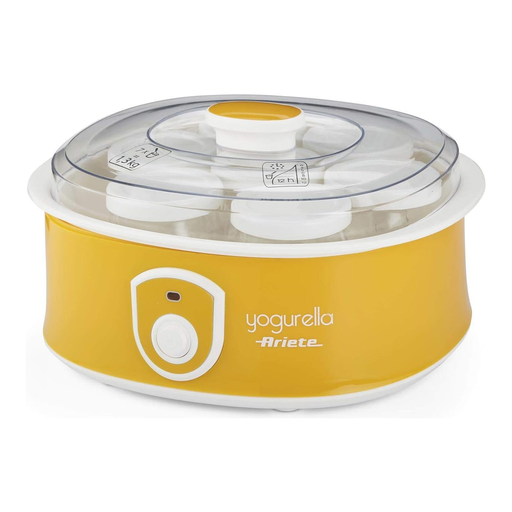
Ariete yoghurt maker, 1.3 l, 20 W (Refurbished A)
Seven portion jars make it easy to prepare separate servings for breakfast.
The product description lists the machine as refurbished, so bear this condition in mind when choosing.
View at Joybuy
 No image available
FOHERE yoghurt maker with 2 XXL glass containers, 2,000 ml and 1,400 ml
The two large containers are better suited to bigger batches; you’ll need to portion out the yoghurt afterwards if you want separate breakfast servings.
The containers are listed as 2,000 ml and 1,400 ml.
View at Joybuy
Frequently asked questions
Can finished yoghurt stay in the switched-off machine until breakfast later?
Finished yoghurt should be stored in the fridge. The Verbraucherzentrale advises keeping jars of homemade yoghurt chilled until they’re ready to eat; for dairy products such as yoghurt, it recommends the middle shelf of the fridge at 5 to 7 °C. Set the programme to finish when someone can put the jars in the fridge.
What should I bear in mind when using raw milk to make yoghurt?
The Federal Institute for Risk Assessment recommends heating raw milk before drinking it, as it may contain pathogens. People who are particularly vulnerable should also heat certified raw milk before consumption. A yoghurt maker programme is not a proven substitute for this step.
What should I know about cleaning a yoghurt maker?
Follow the instructions for the specific model. The Severin JG 3521 instructions say to unplug the machine and let it cool down before cleaning; the base must not be immersed in liquid. For other models, check their individual cleaning instructions.
What applies if the product develops a fault: a guarantee or statutory warranty?
In Germany, statutory warranty rights are set out by law and apply against the seller; a guarantee is an additional voluntary service with its own terms. If there’s a fault, you should first request that the seller remedy it by repairing or replacing the product. The Verbraucherzentrale explains the difference between the two.
Can a faulty electric yoghurt maker go in household waste?
No. The Federal Environment Agency says electrical waste must be collected separately; you can take it to a recycling centre, for example. Check which return options are available locally.


