If everyone in your cookery class needs their own ready-made pot, first compare the number and size of the jars supplied with the number of portions you need: according to the manufacturers, the Severin JG 3518 comes with seven 150 ml jars, the Rommelsbacher JG 40 with eight 150 ml jars, and the Steba JM 2 with twelve 0.2 l jars. A timer can make planning easier, but it doesn’t replace chilling the yoghurt afterwards or making room for it in the fridge. A machine with larger containers is a better fit if you plan to divide a single batch among the group later.
Which machines suit different needs?
For classes with individual portions
You want to give each participant their own small pot. Compare the number, capacity and lids of the jars supplied; manufacturer specifications show that Severin, Rommelsbacher and Steba offer different configurations.
For classes with a set serving time
You need to finish making the yoghurt before the class starts, then allow time and space for it to chill. A timer and automatic shut-off are separate features: Rommelsbacher lists both for the JG 40, as does Steba for the JM 2.
For classes with different recipes
You want to make individual portions as well as a shared batch, or use other available programmes. Check the features of each model: according to the manufacturer, the Rommelsbacher JG 80 combines small portion pots with larger containers and several programmes.
What should you look for when buying?
For a weekend cookery class, it’s not just the size of the machine that matters. You’ll also need to consider the number of individual portions and the steps involved before serving the yoghurt chilled.
| What you need |
What to check |
Who is it important to? |
| Number and size of pots |
Compare the number of jars supplied per batch, the capacity of each jar and whether lids are included. |
If I want to give everyone their own small portion, the number of pots needs to suit the group. Around 36% of consumers put the quantity and size of individual portions first. |
| A predictable finish time |
Check whether the specific model has a timer and automatic shut-off, then make room in the fridge. |
If the class starts at a set time, I want to plan the preparation and chilling together. Around 29% of consumers prioritise a predictable class schedule. |
| Cleaning and chilling |
Make room for all the finished pots and follow the cleaning instructions for the pots, lids and machine. |
If I want to serve the portions chilled, I need space for the pots and a straightforward cleaning routine. Around 21% of consumers prioritise hygienic storage and serving. |
| Other recipes and containers |
Check which small pots, large containers and programmes are available with each model. |
If I want to switch between individual portions and a shared batch during the class, I check which container sizes are actually included. Around 14% of consumers prioritise being able to make different recipes during classes. |
According to the manufacturer, the Rommelsbacher JG 40 has eight 150 ml portion jars, as well as a timer and shut-off function. The Steba JM 2 is listed with twelve 0.2 l jars and an automatic shut-off. A timer can end or control the cycle, but it won’t chill the finished portions. The German Federal Institute for Risk Assessment recommends storing perishable foods in the fridge at between 2 °C and no more than 7 °C.
Common assumptions to avoid
-
Assuming total capacity means the same number of individual portions
The Rommelsbacher JG 80 is designed for different formats: it comes with four small 125 ml pots and two 1.2 l containers. The larger containers don’t automatically give you more small, separately filled pots for the class.
First work out how many individual portions you need, then compare that with the number of small pots available per batch. If you need more than four small portions, plan to make additional batches or transfer the yoghurt into pots later.
Depending on the size of your group, you may need extra compatible pots or to make another batch.
-
Confusing the end of the programme with chilled yoghurt ready to serve
Automatic shut-off ends the machine’s operation, but it doesn’t chill the yoghurt. The German Federal Institute for Risk Assessment recommends storing perishable foods in the fridge at between 2 °C and no more than 7 °C.
Plan backwards from serving time, allowing for both the cycle and the chilling afterwards. Remember to check the instructions for your chosen machine, too.
You’ll also need time and enough fridge space to chill the yoghurt.
-
Assuming similarly named models are identical without checking
The Ariete product listing at Joybuy differs in power and containers from the manufacturer’s specifications for the Yogurella 0621/10. The model name alone therefore doesn’t prove that they’re the same version.
Before deciding, compare the full model number, key specifications and what’s included with the specific product listing.
Brands and suitable models to consider
Severin
According to Severin, the JG 3518 comes with seven 150 ml portion jars. The JG 3521 is a separate model, and the manufacturer lists five automatic programmes for it.
- With the JG 3518, you can easily compare the number of jars supplied with the number of portions you need for your class.
- The JG 3521’s programmes aren’t features of the JG 3518. If you need more than seven portions per batch, the JG 3518 won’t have enough jars for the job.
Rommelsbacher
According to Rommelsbacher, the JG 40 combines eight 150 ml jars with a timer and shut-off function. The JG 80 comes with four 125 ml pots, two 1.2 l containers and several programmes.
- The JG 40 comes with more small portion jars than the JG 80, while the JG 80 lets you use different container sizes.
- The JG 80’s large containers aren’t extra small portion pots. The programme temperatures are fixed, although you can adjust the running time.
Steba
Steba lists the JM 2 with twelve 0.2 l glass pots, a timer and automatic shut-off.
- The twelve separate pots give you suitable containers for the same number of portions per batch.
- Allow for the space the machine takes up, room in the fridge and the effort involved in cleaning several pots. Also check whether any extension accessories sold separately are included with the specific product.
Ariete
The manufacturer’s datasheet for the Yogurella 0621/10 lists two 1 l containers and a strainer insert. It’s designed for making a shared batch, not for supplying small individual pots.
- You can divide a shared batch into individual portions for the class afterwards.
- The Ariete listing at Joybuy differs in power and containers from the manufacturer’s datasheet. Check the exact version rather than assuming the specifications for model 0621/10 apply.
Yoghurt makers at Joybuy
This selection includes machines with small individual jars, as well as models for making a shared batch that can be divided into portions afterwards.
 No image available
Fosmet yoghurt maker, 1.6 l, SUS304, 9 jars
The nine small jars are designed for separate portions in a cookery class.
Nine 100 ml borosilicate glass jars; adjustable temperature, timer and OLED display.
View at Joybuy
 No image available
FOHERE yoghurt maker with 8 jars, 1440 ml
The eight jars provide separate containers for one class batch.
The description lists digital temperature control, a timer of up to 48 hours and automatic shut-off. The jars are described as dishwasher-safe.
View at Joybuy
 No image available
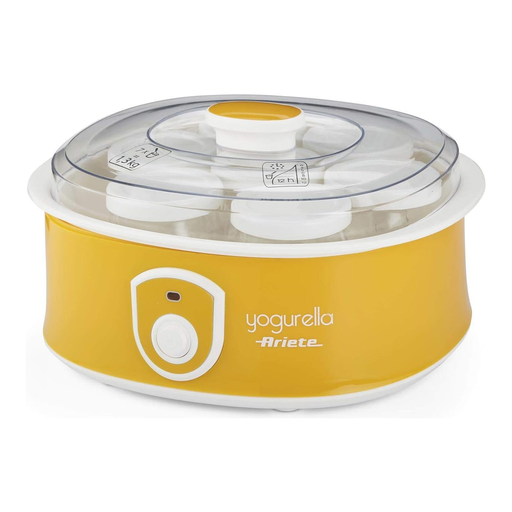
Ariete yoghurt maker, 1.3 l, 20 W, refurbished
The seven portion jars are suitable for separate portions in a cookery class; this product is listed as refurbished.
The description lists seven portion jars with lids, a capacity of 1.3 l and 20 W. Don’t assume these specifications are the same as those for the Ariete Yogurella 0621/10.
View at Joybuy
 No image available
FOHERE yoghurt maker with 2 XXL glass containers
The two large containers are designed for making a shared batch that can be divided into portions afterwards.
Containers of 2000 ml and 1400 ml, eight programmes and adjustable running times. The product description states that the machine is intended for domestic use; the warranty may not apply if it’s used commercially.
View at Joybuy
 No image available
Yoghurt maker, 1.5 l, 20 W, with strainer insert
The single container is better suited to a shared batch that you can divide into individual portions for the class later.
The description lists a capacity of 1.5 l, 20 W and a strainer insert for draining.
View at Joybuy
Frequently asked questions
Are the four small pots supplied with the Rommelsbacher JG 80 enough for eight portions in a cookery class?
No, not in a single batch using the four small pots supplied. The two 1.2 l containers included are a different size, so plan to make additional batches or divide the yoghurt into portions later.
Can I leave the yoghurt in the machine after it switches off until the class?
The shut-off function doesn’t chill the yoghurt. Make room in the fridge: the German Federal Institute for Risk Assessment recommends storing perishable foods in the fridge at between 2 °C and no more than 7 °C. Also follow the instructions for your chosen model.
What should I clean before and after making a batch?
Keep your hands, work surfaces and kitchen utensils clean. The Verbraucherzentrale (German consumer advice centre) recommends cleaning kitchen utensils when preparing food. You should also follow the instructions for the specific model when cleaning the pots, lids and electrical appliance.
Does the person running a cookery class in Germany always need a hygiene certificate?
No, the words ‘weekend cookery class’ alone don’t mean that one is required. Section 43 of the German Infection Protection Act (IfSG) requires the certificate it covers for the first commercial performance of certain activities. Section 4 of the German Food Hygiene Regulation (LMHV) sets out expertise requirements for handling perishable foods. Whether these requirements apply to a particular class depends on how it’s actually run. The regulations are published on the Federal Ministry of Justice’s ‘Gesetze im Internet’ portal.


