What should you look for when buying?
First, decide how you’ll use the yoghurt after freezing. The Federal Centre for Nutrition recommends measuring out frozen food in portions. The consumer advice centre also recommends leaving room for expansion when freezing liquids in jars.
| What matters to you |
What to look for when buying |
Who is it important for? |
| Texture and how you’ll use it frozen |
Decide whether you’ll serve the portion frozen or thaw it for later. Check that the separate container is suitable for freezing, and leave room for expansion. |
If I’m preparing a supply, it needs to suit how I plan to use it; that’s why around 36% of consumers prioritise how the food will be used after freezing. |
| Number and size of jars |
Compare the number of jars and their individual capacity, and check what’s included with the specific model. |
If I want to make lots of small portions directly in the machine, suitable individual jars are essential; around 29% of consumers prioritise portioning during fermentation. |
| Fermentation controls |
Check whether a timer is enough, or whether your recipe needs adjustable time and temperature settings. |
If I want to adapt fermentation to different recipes, I need the right settings; around 21% of consumers prioritise recipe controls. |
| Space, cleaning and extra containers |
Check the appliance’s dimensions, cleaning instructions and whether you have room for suitable freezer containers. |
If worktop and storage space are limited, the appliance and its accessories need to fit into everyday life; around 14% of consumers prioritise space and maintenance. |
Joybuy products for small frozen portions
The products below suit two different approaches: making yoghurt directly in several jars, or fermenting it in larger containers first and portioning it afterwards. Only use the containers supplied for freezing if they’re explicitly stated to be suitable.
 Image unavailable
Fosmet yoghurt maker, 1.6 l SUS304, 9 borosilicate glass jars
The nine jars let you make individual batches; check whether their size suits your portions.
The product name specifies a 1.6-l SUS304 inner pot and nine borosilicate glass jars.
The jars aren’t suitable for freezing just because they’re used for fermentation.
View at Joybuy
 Image unavailable
FOHERE yoghurt maker with 8 jars (1,440 ml), temperature control and 48-hour timer
The eight jars are designed for separate batches; check whether the capacity and number suit your needs.
The product name specifies a total capacity of 1,440 ml, digital temperature control and a 48-hour timer.
This doesn’t confirm that the jars supplied are suitable for freezing.
View at Joybuy
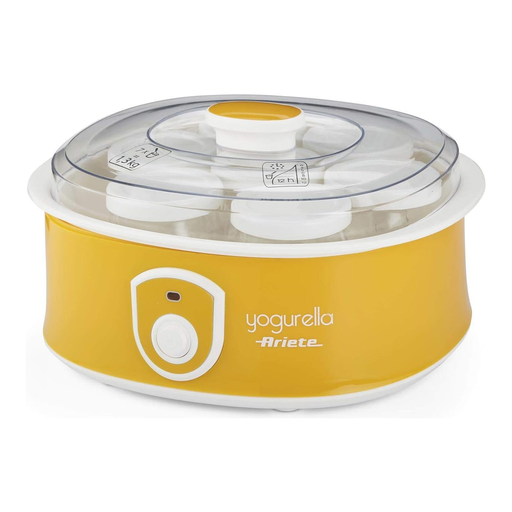 Image unavailable
Ariete yoghurt maker, 1.3 l, 20 W (refurbished A)
If you want to ferment individual portions directly, check exactly what’s included with this refurbished version.
The product name specifies a 1.3-l capacity, 20 W power and the “Refurbished A” version.
The containers supplied aren’t automatically suitable for freezing.
View at Joybuy
 Image unavailable
FOHERE yoghurt maker with two glass containers (2,000 ml and 1,400 ml)
This container-based option is a good fit if you want to decide on portion sizes after fermentation.
The product name specifies two glass containers with capacities of 2,000 ml and 1,400 ml.
Making small portions will require an extra transfer step; don’t assume the containers are suitable for freezing.
View at Joybuy
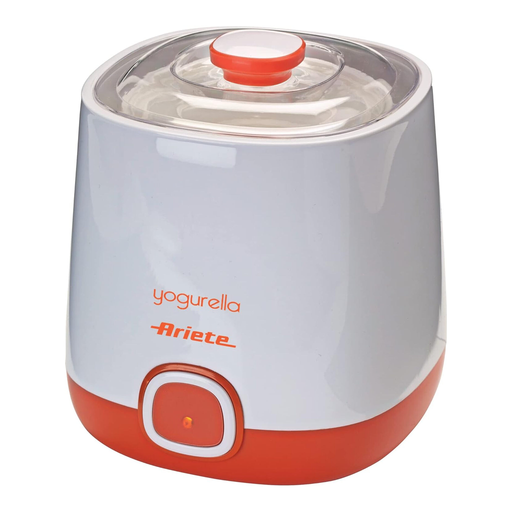 Image unavailable
Ariete 621 yoghurt maker, 1 l, 20 W, white
This container-based option is worth considering if you want to decide on portion sizes after fermentation.
The product name specifies a one-litre capacity, 20 W power and a white finish.
Check the model number and what’s included with the specific listing; similar model names alone don’t confirm that the versions are identical. The containers aren’t automatically suitable for freezing.
View at Joybuy
Frequently asked questions
Can I simply freeze the yoghurt jars supplied?
Only if the specific container is explicitly stated to be suitable for freezing. Approval for fermentation or fridge storage isn’t enough. For liquids in jars, the consumer advice centre recommends filling them to around three-quarters full to leave room for expansion.
Will frozen natural yoghurt be just like fresh yoghurt once thawed?
Don’t base your buying decision on that assumption. A yoghurt maker ferments the yoghurt, but doesn’t stir it while it freezes. For creamier frozen yoghurt, the Federal Centre for Nutrition recommends stirring repeatedly during freezing.
How do I clean the jars and the appliance base?
Follow the instructions for the specific model. For the Severin JG 3518 and JG 3520, the manufacturer’s instructions say to clean the jars and lids after use. Unplug the appliance before cleaning, and don’t immerse the base in liquid.
What should I look out for when it comes to electrical product safety in Germany?
Relevant electrical appliances must meet EU product requirements, including the required CE marking. Check the product identity, labelling, manufacturer information and German instruction manual on the specific listing. The Federal Network Agency includes these points in its market surveillance guidance.
Can I put an old yoghurt maker in the general waste?
No. The Federal Ministry for the Environment lists local collection points, manufacturers and, in certain circumstances, retailers as options for returning waste electrical equipment.


