Lunch box preppers
If you prepare yoghurt for several working days, look for individual jars that seal securely and can be taken with you chilled.


For small lunch box portions, the number and size of the individual jars, along with how they seal, matter more than the maker’s overall capacity. A timer is especially useful if you want a batch to finish at a planned time in the evening. A sealed jar won’t keep yoghurt cold, so remember to chill it after fermentation and during transport. Before buying, also check the labelling and safety information for the specific appliance.
If you prepare yoghurt for several working days, look for individual jars that seal securely and can be taken with you chilled.
If you start batches outside working hours, check whether the appliance you’re considering has a timer and automatic switch-off.
If you want to make smaller quantities or use other intended preparation methods, check that the specific appliance’s batch sizes, container sizes and programmes suit your needs.
First, compare the size, number and seals of the jars with your lunch box portions. Then plan how you’ll keep the yoghurt chilled and decide whether a timer or extra programmes would be useful in your daily routine.
| What matters | What to check before buying | Who is it most relevant to? |
|---|---|---|
| Jar size and number | Check the capacity, number of jars and type of lid, and make sure replacement jars are available for the exact model. | If I want to prepare several lunches in individual jars, the right portion sizes and a seal that’s suitable for taking them with me are essential. Around 36% of consumers put individual lunch box portions first. |
| Keeping yoghurt chilled on the go | Check in advance whether you can keep the yoghurt sufficiently chilled during the journey and at your destination. | If my yoghurt is on the go until lunchtime, I need to plan how to keep it chilled; a sealed jar is no substitute. Around 29% of consumers prioritise keeping it chilled until mealtime. |
| Timer and automatic switch-off | Check whether the specific model has a timer and automatic switch-off. | If I start a batch in the evening, I want to be able to plan when it finishes rather than having to monitor it myself. Around 21% of consumers prioritise being able to plan fermentation. |
| Small batches and programmes | Check the instructions to see whether partial filling is allowed and which containers are intended for the programmes you want to use. | If I want to make smaller quantities or use other preparation methods, the intended containers and programmes should be suitable. Around 14% of consumers put this flexibility first. |
A lid can help prevent spills, but it won’t keep yoghurt cold. The German Federal Institute for Risk Assessment points out that insufficient cooling during storage and transport can encourage the growth of harmful germs.
Plan how to keep the yoghurt chilled from the fridge until you eat it, and check the seal before packing the jar.
An appliance may come with large containers or lots of jars, but their capacities might not suit the lunches you’re planning. For example, the Rommelsbacher JG 80 comes with four 125 ml portion pots and larger containers; according to the manufacturer, the Steba JM 2 has twelve jars, each holding 0.2 l.
Compare the number of lunches you need per batch with the number and capacity of the jars actually included.
A timer ends the appliance’s running time, but it won’t cool the finished yoghurt afterwards.
Plan for the end of preparation and moving the yoghurt into the fridge as two separate steps.
The JG 3518 is worth considering if you want seven small jars that can be sealed individually.
The JG 40 combines portion jars with timer control; the JG 80 is aimed at people who want to use other intended preparation methods.
The JM 3344 is a straightforward option to consider if you want individual screw-top jars and smaller batches.
The JM 2 is better suited to several people or making a larger batch than to very small individual portions.
This Joybuy selection includes appliances with individual jars or containers for making yoghurt; larger containers may need to be decanted into smaller portions. Before buying, check the labelling and safety information for the specific appliance.
 No image available
The nine individual jars are designed for separate portions.
The product name lists a 1.6 L inner pot, temperature control, a timer and programmes for yoghurt, natto and rice wine.
 No image available
The nine individual jars are ideal for separate portions instead of one large yoghurt container.
The product name lists temperature and timer control, an OLED display, and programmes for yoghurt, natto and rice wine.
 No image available
Eight individual jars let you prepare several portions separately.
The product name lists digital temperature control, a timer of up to 48 hours and automatic switch-off.
 No image available
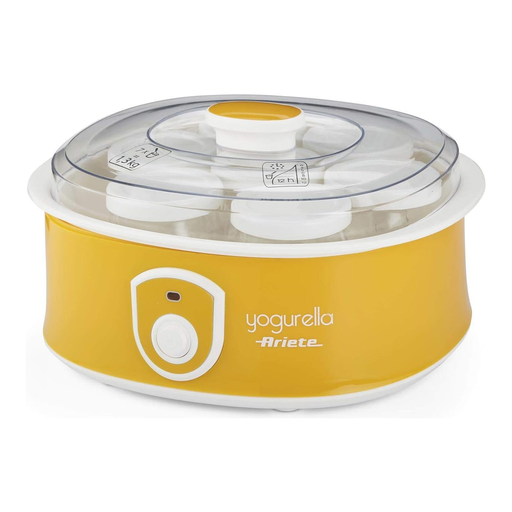
Seven individual jars with freshness lids are designed for separate portions.
The product name identifies this appliance as refurbished; check that the stated version suits your needs.
 No image available
The two large containers are better suited to bigger batches; you’ll need to decant the yoghurt separately for small lunch box portions.
The product name lists glass containers with capacities of 2000 ml and 1400 ml.
It depends on the appliance and its instructions. The Clatronic JM 3344 manual specifically gives quantities per jar for a smaller batch; for other models, check the relevant manual.
Homemade yoghurt should then be kept in the fridge until you eat it, as explained by the Verbraucherzentrale. Make sure it stays sufficiently chilled during transport too: a screw-top lid is no substitute.
No. You shouldn’t use raw milk in the same way as UHT milk. The Federal Centre for Nutrition says that raw milk must be boiled before drinking; for making yoghurt, also follow the ingredient and heating instructions in the relevant manual.
For electrical equipment covered by the EU Low Voltage Directive, the official EU legal summary describes requirements such as CE marking and clear safety information. Check the labelling and documentation for the specific appliance; you can’t assume from this alone that every individual model meets these requirements.
No. Electrical waste must be collected separately. The German Federal Ministry for the Environment describes return options at local collection points and, subject to legal requirements, in shops. The amendment to the Electrical and Electronic Equipment Act came into force on 1 January 2026.