For plain yoghurt in a lunchbox, a machine with suitable, sealable individual jars is handy if you want to prepare each portion directly in its own jar. A large container is better suited to making a bigger batch that you can portion yourself. Timers and extra programmes are only useful if you’ll actually use them. A lid won’t keep your yoghurt chilled while you’re out and about.
Which option is right for you?
Lunchbox portioner
You want to prepare plain yoghurt in individual, sealable jars and take it with you. Jar capacity, lids and a way to keep the yoghurt chilled while you’re out are key. The German Federal Institute for Risk Assessment (BfR) recommends keeping perishable foods chilled when transporting them, too.
Weekly batch planner
You prepare several portions at once, so first check how many jars or how much container capacity you get per batch, and whether it’ll fit in your fridge. The manufacturer’s details on jars and containers will help you find a machine that suits your needs.
Keep-it-simple yoghurt maker
You want to make plain yoghurt regularly and are weighing up straightforward controls against a timer, extra programmes and the effort involved in cleaning. Check the features of the specific model rather than assuming that one machine’s features apply to an entire brand.
What to look for when buying
Yoghurt maker with individual jars
Best for: Chilling several lunch portions in their own jars and taking them with you.
Consider: Check the jar size and how many are included. Each jar and lid needs washing after use, and the jars won’t keep the yoghurt chilled while you’re out.
Large container or multi-function machine
Best for: Making a larger batch to portion yourself, or using extra programmes for other recipes.
Consider: Smaller cups included with the machine may give you fewer portions that are ready to take with you. You may need to transfer the yoghurt or use additional compatible accessories.
Machine with a larger single container
Best for: Making a batch in one large container and portioning it into separate containers afterwards.
Consider: Check exactly which containers and accessories are included with the model variant on offer.
For perishable foods, the BfR recommends a fridge temperature of 2 °C to no higher than 7 °C, and keeping food chilled while you’re out and about. So, as well as choosing the right jar, plan how you’ll keep it cool until you’re ready to eat.
| Priority |
What to check before buying |
Who it matters to |
| Individual portions to take with you |
Check the capacity, lid and how you’ll keep the yoghurt chilled on the way. |
If I want to put jars straight into my lunchbox, the right portion size and a tightly sealing lid matter to me. Around 36% of consumers put individual portions to take with them first. |
| Size of the weekly batch |
Check that the number of portions you want matches the included accessories and the space in your fridge. |
If I’m preparing food for several weekdays, I want to know how many suitable portions I’ll get from a batch. Around 29% of consumers prioritise making a larger batch for the week. |
| Timing |
Check whether the specific model has a timer and automatic shut-off, and which programmes you can use. |
If I want more control over when the yoghurt is ready, I look for a timer and automatic shut-off. Around 21% of consumers prioritise straightforward timing. |
| Cleaning and accessories |
Check the cleaning instructions and whether compatible replacement containers are available; don’t assume the parts are dishwasher-safe. |
If I make yoghurt regularly, I want to know how many parts need cleaning and whether I can buy compatible replacement containers. Around 14% of consumers prioritise easy care and extra accessories. |
Yoghurt maker buying pitfalls
-
Confusing ‘leakproof’ with ‘safe to carry without chilling’
A lid keeps the contents in the jar, but it won’t keep them chilled. The BfR recommends keeping perishable foods chilled when transporting them, too.
Before you buy, plan how you’ll keep each portion cool until you’re ready to eat it.
You may need extra cooling equipment, such as an insulated bag or ice packs, for transport.
-
Assuming the total capacity tells you how many lunch portions you’ll get
A large container and several small cups call for a different approach to portioning than individual jars. The four small cups supplied with the Rommelsbacher JG 80 are 125 ml each, according to the manufacturer; the Steba JM 2 is supplied with twelve 0.2 l jars.
Check that the accessories actually included match your preferred portion size and the number of lunches you’re preparing.
If the containers supplied aren’t the right size for your portions, you may need to buy additional compatible ones.
-
Assuming the yoghurt programme makes raw milk safe
The BfR’s advice to boil raw milk explicitly applies to homemade yoghurt, too.
If you use raw milk, follow the BfR’s advice and boil it before processing.
Key brands to consider
Severin
According to the manufacturer, the JG 3518 and JG 3520 models are designed for making yoghurt in individual jars.
- The JG 3518 comes with seven 150 ml jars, and Severin lists compatible replacement jars for this model. The JG 3520 comes with 14 jars of the same size.
- The details on jars and replacement parts apply to the models listed, not necessarily to the whole range.
Rommelsbacher
The JG 40 and JG 80 models have different container and feature options.
- According to Rommelsbacher, the JG 40 comes with eight 150 ml portion jars and a timer with automatic shut-off. The JG 80 combines a 1.2-litre glass container with four smaller cups, and has programmes for different recipes.
- According to the manufacturer, each of the JG 80’s four small cups holds 125 ml. These details apply to the models listed, not every machine from the brand.
Steba
According to the manufacturer, the JM 2 is designed to make a batch in several individually portioned jars.
- Steba lists twelve 0.2 l screw-top jars, a timer with automatic shut-off, and a separately available set of six additional jars.
- A large number of jars takes up space to store and wash. More jars are only useful if you need them.
Ariete
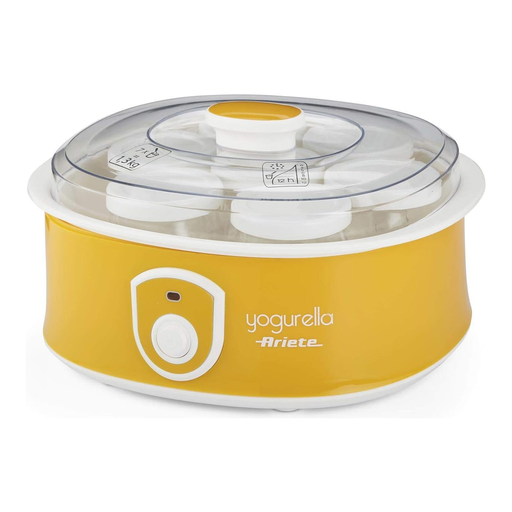
The manufacturer’s data sheet describes the Yogurella 0621/10 as a machine with larger containers rather than individual lunch jars.
- Ariete lists two 1 l containers and a strainer insert for making strained yoghurt.
- Check the exact model variant and what’s included: machines with similar names may have different capacities and accessories.
Yoghurt makers at Joybuy
The Joybuy products below range from machines with containers for larger batches to models with individual jars for portioning.
 No image available
FOHERE yoghurt maker with 2 XXL glass containers (2,000 ml and 1,400 ml)
Better suited to making larger batches that you can portion into lunch servings yourself.
The product name lists two XXL glass containers with capacities of 2,000 ml and 1,400 ml.
Joybuy
 No image available
Yoghurt maker with a 1.6 l SUS304 inner container and 9 borosilicate glass jars
The nine jars are useful if you want to divide a batch into individual portions.
The product name lists a 1.6 l inner container, temperature control, a timer and an OLED display.
Joybuy
 No image available
FOHERE yoghurt maker with 8 jars (1,440 ml) and a 48-hour timer
Eight jars can be handy if you want to divide a batch into individual portions.
The product name lists eight jars with a total capacity of 1,440 ml, digital temperature control and a timer of up to 48 hours.
Joybuy
 No image available
Yoghurt maker, 1.5 l, 20 W, with strainer and lid
A larger container is a better fit if you want to make a batch and portion it yourself afterwards.
The product name lists a 1.5 l capacity, 20 W, a strainer and a lid.
Joybuy
 No image available
Ariete yoghurt maker, 1.3 l, 20 W (refurbished, Variant A)
The stated container capacity may suit a larger batch that you can portion separately.
The product name lists a 1.3 l capacity and 20 W. Before buying, check the exact model variant and what’s included.
Joybuy
Frequently asked questions
Can I put a sealed jar of yoghurt in my lunchbox without keeping it chilled?
No. A lid doesn’t replace refrigeration. For perishable foods, the BfR recommends a fridge temperature of 2 °C to no higher than 7 °C, and keeping food chilled while you’re out and about. Plan how you’ll transport and store the yoghurt until you’re ready to eat it.
Which milk and starter should I use?
Follow the instructions for your chosen machine and use a suitable yoghurt culture or starter. If you want to use raw milk, the BfR recommends boiling it before consumption. This advice explicitly applies to raw milk used to make homemade yoghurt, too.
What rules apply to the machine and food containers?
In the EU, the CE marking indicates that the manufacturer declares the product complies with the relevant EU product rules; it is not an independent quality mark. Materials that come into contact with food must comply with the relevant EU regulations, including Regulation (EC) No 1935/2004.


